In 2026, many teams evaluating social media marketing management tools are no longer asking only, “Can this platform schedule posts?” They are asking a harder question: Can it help us govern multi-team social media operations at scale while keeping reporting, approvals, and execution connected?
That shift matters because social media is now tied to brand risk, paid spend, customer response, regional compliance, executive visibility, and campaign accountability. Publishing workflows span internal teams, agencies, legal reviewers, and regional operators. At the same time, leadership expects faster reporting and clearer decisions.
With FineReport + Dora, teams can ask for a report summary in chat, generate structured narratives from trusted report assets, receive scheduled briefings, and push exceptions to the right owner. Instead of treating social media management as a set of disconnected posting tasks, organizations can run it as a governed command center that combines reporting, control, and operational follow-through.
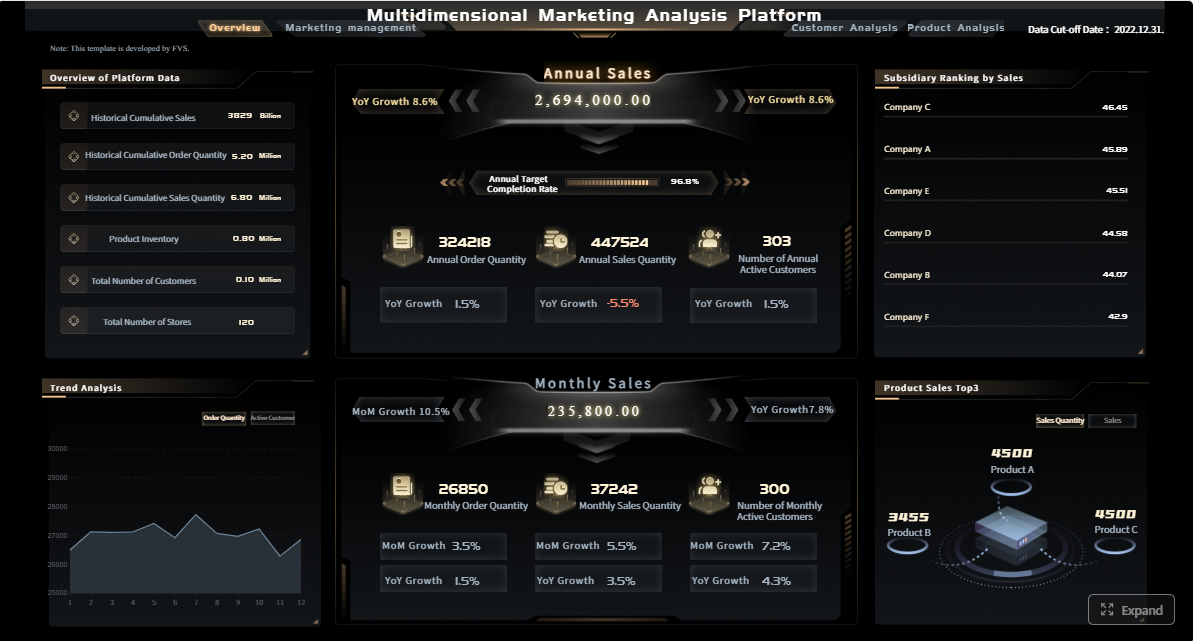 Click To Try The Dashboard
All reports in this article are built with FineReport
Why social media marketing management tools need stronger governance in 2026
As brands expand across more channels, business units, and markets, the operational burden of social media grows quickly. Teams must coordinate organic publishing, paid campaign timing, customer engagement, approvals, and performance reporting across many moving parts.
A simple scheduling tool may be enough for a small team. But enterprise and multi-brand organizations face different pressures:
- More channels to coordinate
- More stakeholders involved in review and approval
- More regional and legal requirements
- More pressure for faster reporting
- More risk when brand voice or response handling becomes inconsistent
This creates a common business problem: scattered workflows, inconsistent brand voice, weak audit trails, and delayed decisions.
A social team may publish from one platform, report from another, track approvals in email, escalate risks in chat, and summarize performance in spreadsheets. The result is not just inefficiency. It is a governance gap. Leaders struggle to answer basic but important questions:
- Which campaigns are underperforming by region or channel?
- Which posts were delayed because approvals stalled?
- Who approved a sensitive piece of content?
- Which business unit exceeded paid social thresholds?
- Where are sentiment or response-time risks increasing?
This is why the best social media marketing management tools in 2026 increasingly need a governed command center. That command center should combine three things:
- Visibility into cross-channel performance and operational status
- Control through roles, approvals, permissions, and auditability
- Execution so teams can assign owners, trigger follow-up, and resolve issues quickly
For enterprise decision-makers, this is where FineReport + Dora stands out. FineReport provides the trusted reporting and operational cockpit foundation. Dora adds an enterprise Data Agent layer that helps teams consume reports, monitor exceptions, summarize outcomes, and follow up through governed AI workflows.
What a governed social media marketing command center should include
A governed command center is not just a dashboard. It is a management framework that links metrics, workflows, ownership, and action.
Unified data and cross-channel visibility
Social media performance is often fragmented across platforms, teams, and tools. A governed command center should bring together:
- Campaign data
- Content calendars
- Engagement metrics
- Paid media spend
- Conversion signals
- Approval status
- Compliance exceptions
- Response time indicators
This unified view helps marketing leaders compare platform performance and spot risks earlier. Instead of reviewing each channel in isolation, they can understand how content, budget, and engagement behave across the full operating model.
Approval workflows, roles, and auditability
In many organizations, social media content passes through several hands before publication. Marketing drafts it. Brand reviews it. Legal may approve it. Regional teams localize it. Agencies may prepare versions for multiple markets.
Without clear workflow control, accountability breaks down.
A governed system should clarify who can:
- Create content
- Review content
- Approve content
- Publish content
- Analyze results
- Escalate risks
It should also ensure every important change is traceable. That matters for compliance, brand protection, and internal accountability. If a campaign creates risk, leaders need a usable audit trail, not scattered screenshots and email threads.
Real-time dashboards and exception alerts
Waiting for weekly reporting is too slow when campaign health changes daily. Teams need dashboard-style analysis views that show:
- Campaign pacing
- Missed approvals
- Abnormal spend
- Sentiment shifts
- Response delays
- Underperforming content clusters
- Region-specific exceptions
Just as important, they need alerts. The shift from reactive reporting to proactive management comes when the system can surface issues early and route them to the right owner.
Core framework and key metrics for governed social media management
The strongest social media marketing management tools do not just collect activity. They standardize the KPIs and report elements that management uses to make decisions.
Below is a practical framework for a governed social media command center.
Reach and visibility metrics
-
Report Element: Reach by channel, campaign, region, and audience segment
Definition: The volume of users exposed to campaign content across platforms and business units.
Business value: Helps leaders understand distribution efficiency and compare channel effectiveness.
AI use: Dora can summarize channel-level reach shifts, explain where visibility dropped, and include this section in a scheduled management briefing. -
Report Element: Impression trend and posting frequency
Definition: Total content exposure over time linked to publication cadence.
Business value: Reveals whether underperformance is caused by weaker content, lower frequency, or timing issues.
AI use: Dora can produce a structured report summary that connects content velocity with visibility changes.
Engagement and audience response metrics
-
Report Element: Engagement rate by content type
Definition: Relative interaction level across posts, formats, and campaigns.
Business value: Identifies what content drives audience response and where creative strategy needs adjustment.
AI use: Dora can explain chart changes, compare content types, and highlight abnormal drops for follow-up. -
Report Element: Sentiment and response delay indicators
Definition: Trends in audience tone and the time taken to respond to comments or direct inquiries.
Business value: Supports brand reputation management and customer experience oversight.
AI use: Dora can monitor threshold breaches, summarize sentiment changes, and push exception notifications to owners.
Paid efficiency and conversion metrics
-
Report Element: Spend pacing and cost efficiency
Definition: Paid social spend against plan, including cost per click, cost per lead, or other selected efficiency KPIs.
Business value: Helps marketing leaders manage budget discipline and detect waste early.
AI use: Dora can flag abnormal spend patterns, generate chart-based answers, and route a follow-up summary to campaign managers. -
Report Element: Conversion contribution by campaign and platform
Definition: The downstream business value created from social campaigns, such as leads, registrations, or purchases.
Business value: Connects social activity to commercial impact instead of vanity metrics alone.
AI use: Dora can produce management narratives that explain which campaigns contributed most and which need intervention.
Operational governance metrics
-
Report Element: Approval cycle time
Definition: The time from content creation to final approval.
Business value: Exposes bottlenecks in review flows and shows whether governance is slowing execution too much.
AI use: Dora can summarize overdue approvals, identify patterns by team or region, and issue a periodic briefing. -
Report Element: Compliance status and exception counts
Definition: The number of posts, campaigns, or approval steps that breached defined rules or missed required checks.
Business value: Protects the brand and supports audit-ready operations.
AI use: Dora can act as a Risk Alert Officer by detecting exceptions, pushing alerts, and logging follow-up activity. -
Report Element: Content velocity and backlog
Definition: The rate of content throughput and the number of pending items in draft, review, or scheduled status.
Business value: Helps managers maintain operational rhythm and resource balance.
AI use: Dora can generate a daily summary of stalled items and recommend where managers should intervene.
How an AI Data Agent Automates Report Consumption
Traditional social media management platforms often focus on execution features such as scheduling, inbox management, or monitoring. Those matter. But in larger organizations, another problem appears: even when the data exists, teams still waste time manually reading dashboards, summarizing campaign results, tracking approval delays, and chasing owners for follow-up.
This is where Dora adds a practical enterprise AI layer.
Dora is not a replacement for FineReport. FineReport provides the trusted reporting, KPI definitions, operational cockpit views, and governed data foundation. Dora turns those assets into a scenario-specific AI assistant or digital employee.
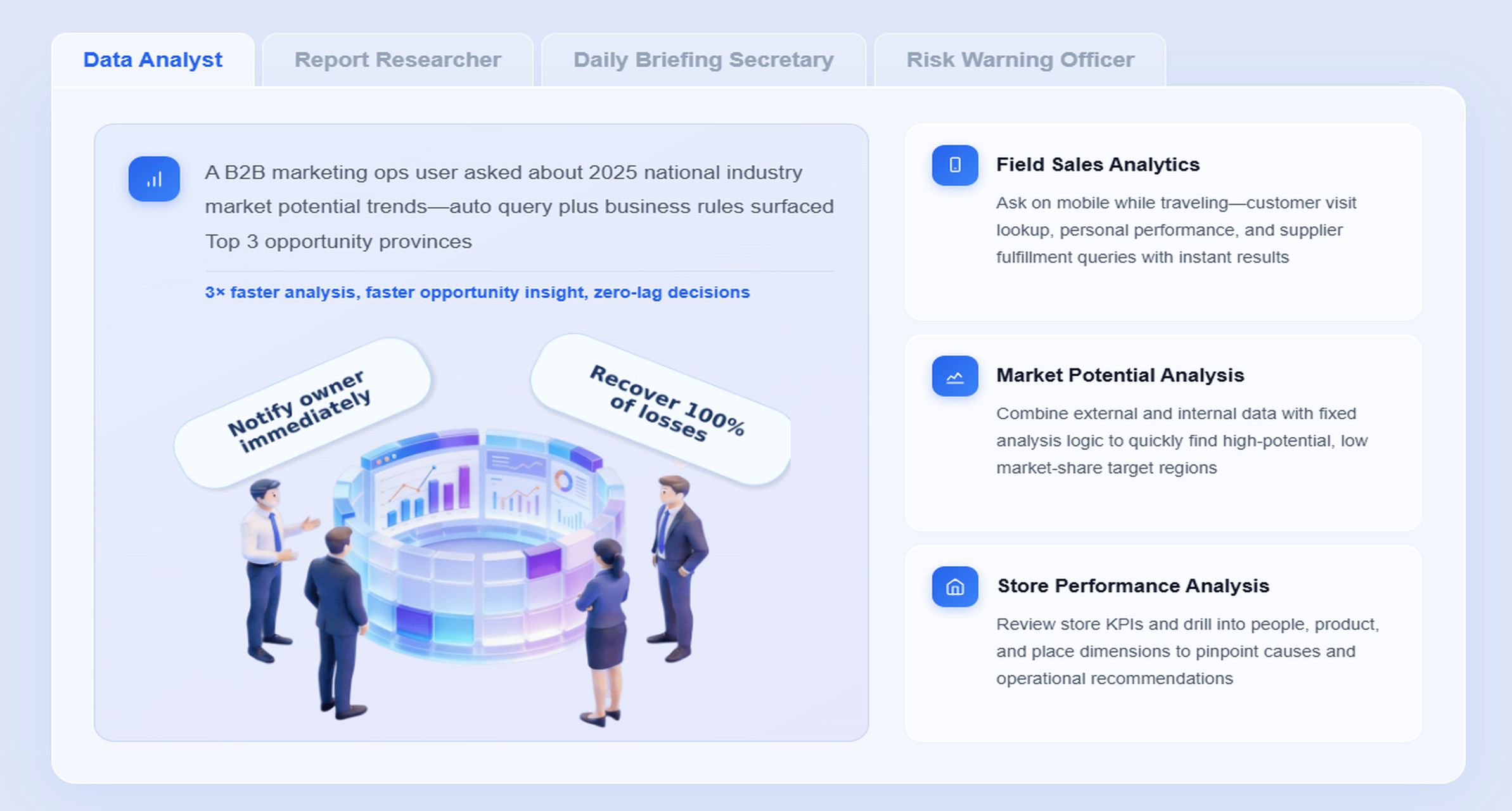
For this social media governance scenario, the most relevant Dora digital employees are:
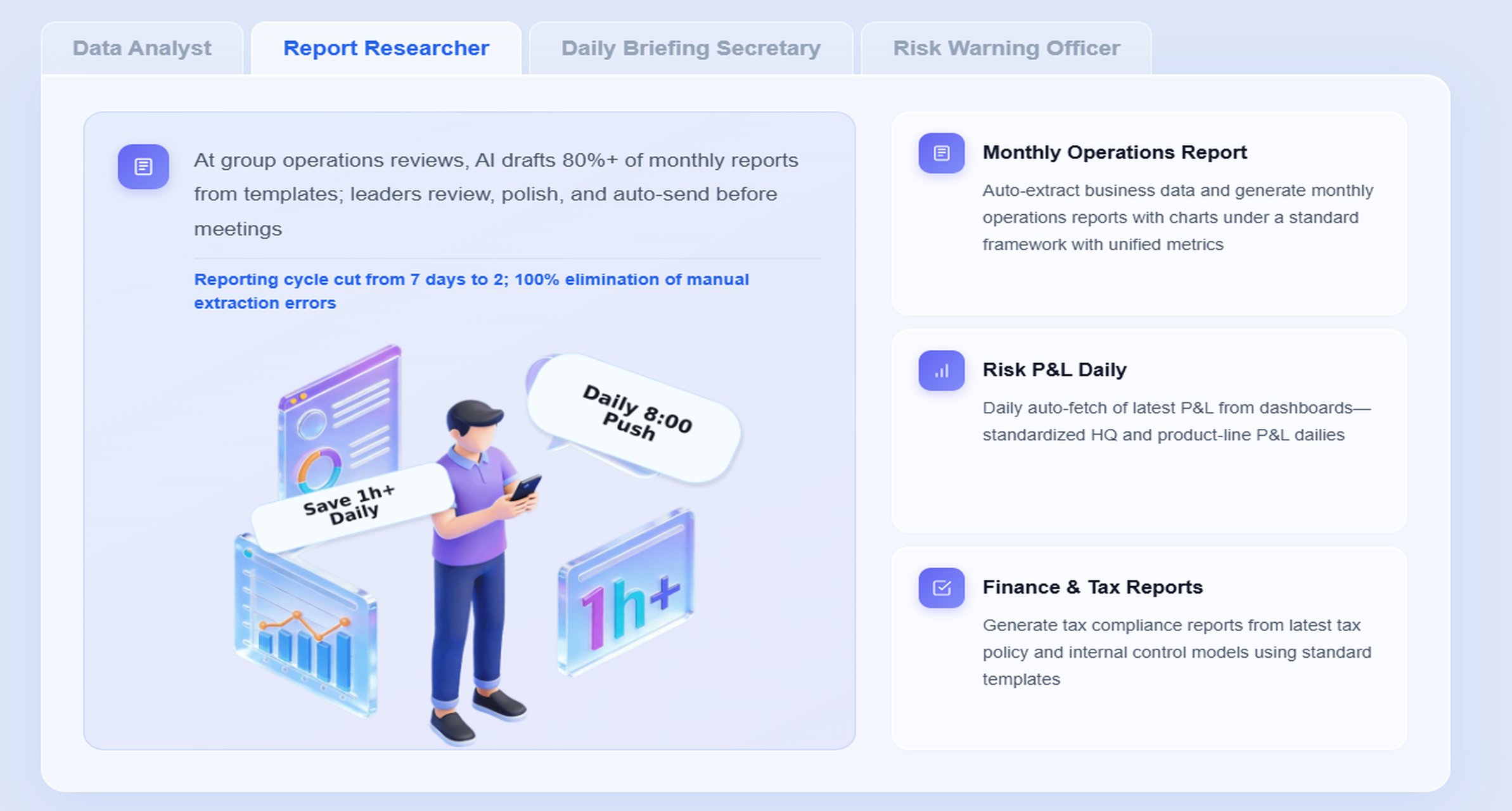
- Daily Briefing Secretary
- Report Researcher
- Risk Alert Officer
- Data Analyst digital employee
A concrete chat-style example
A social media director could ask:
“Summarize this week’s social media performance report, highlight campaigns with abnormal spend or sentiment decline, list approvals overdue by more than 24 hours, and show which regional owners need follow-up.”
That request reflects a real management need. It combines reporting, exception detection, and operational action in one governed flow.
A practical Dora workflow for social media governance
-
Retrieve trusted FineReport report or operational cockpit data
Dora accesses approved FineReport assets such as campaign dashboards, approval monitoring reports, spend analysis views, and sentiment tracking cockpits. -
Understand KPI definitions, templates, filters, and governance rules
Because FineReport standardizes metrics and report logic, Dora can interpret business terms such as overdue approval, abnormal spend, escalation threshold, campaign owner, and regional responsibility more consistently. -
Generate a structured report summary through chat
Dora creates a structured report summary for leaders, including campaign highlights, channel comparisons, exceptions, and trend explanations in readable business language. -
Detect exceptions and abnormal changes
Dora checks for threshold breaches such as delayed approvals, cost spikes, sentiment deterioration, low response compliance, or underperforming campaigns. -
Push alerts and suggested actions to responsible users
Using governed AI workflows, Dora can notify the right owner, share a relevant report section, and provide a suggested follow-up path instead of leaving issues buried in dashboards. -
Produce follow-up records and periodic briefings
Dora can support daily or weekly summaries, helping management review what was flagged, what was resolved, and what remains open.
Why this AI workflow lands better in enterprises
Many AI demos look impressive because they answer a prompt. But enterprise reporting scenarios require more than a prompt. They require:
- Trusted metrics
- Semantic consistency
- Access control
- Standard report templates
- Governed execution rules
- Repeatable workflows
That is why FineReport + Dora is practical. FineReport builds the governed reporting foundation. Dora adds the enterprise Data Agent layer for chat-based AI assistant experiences, structured summaries, exception pushes, and follow-up workflows.
This is also where FanRuan’s approach aligns with fourth-generation Agentic BI:
- Natural-language request
- Trusted semantic layer
- Governed query or Skill execution
- Structured summary, answer, alert, action, and follow-up
Compared with raw prompt-only approaches, this model offers stronger enterprise fit because it is designed around permissions, KPI governance, report templates, and data quality. It also supports more controllable and auditable workflows through Skills-based execution, helping reduce token waste and improve stability in repeatable reporting scenarios.
Why FineReport + Dora stand out among the best options
When buyers search for the best social media marketing management tools, they often compare scheduling, listening, publishing, and analytics features. Those are valid criteria. But governance-focused organizations need to evaluate something broader: Can the platform support both executive visibility and disciplined operational control?
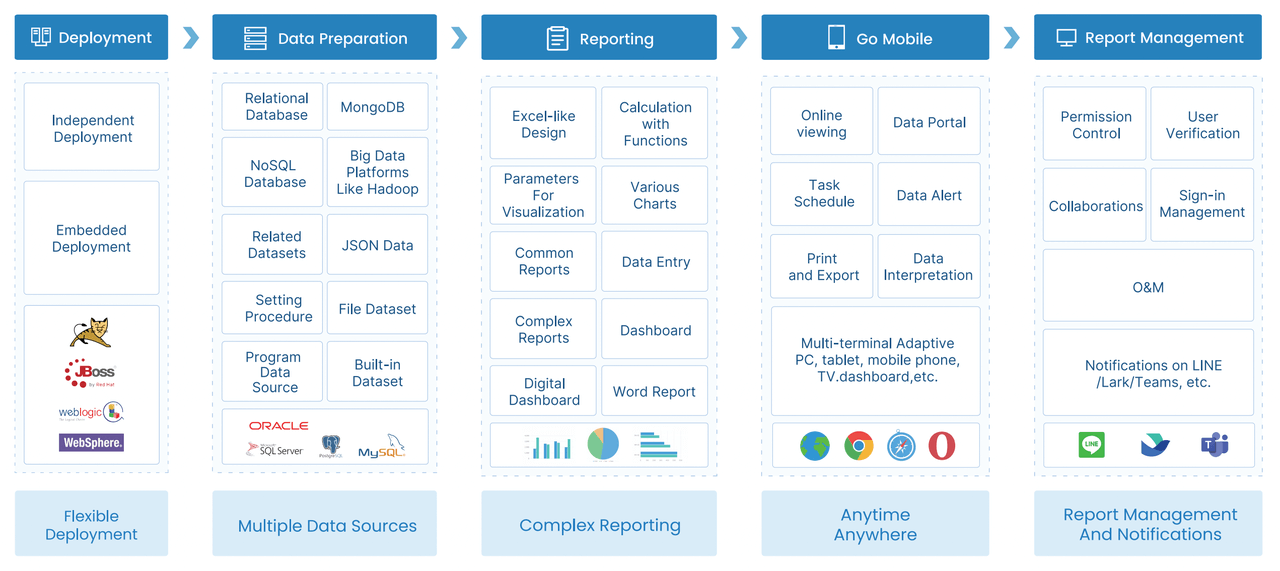
FineReport for governed reporting, dashboards, and data orchestration
FineReport acts as the reporting foundation for a social media command center.
It helps organizations:
- Centralize social metrics from multiple systems
- Build executive dashboards and operational cockpits
- Standardize KPI definitions across business units
- Support drill-down analysis by campaign, region, business unit, and content type
- Build formatted management reports for weekly, monthly, and quarterly review
- Automate recurring reporting workflows
For example, a CMO may want a board-level summary of campaign outcomes, while regional managers need drill-down analysis into local execution, approvals, and exceptions. FineReport supports both the management reporting layer and the detailed operating view.
This is especially important when a business cannot rely only on prebuilt social reports from channel tools. Enterprise teams often need custom metrics, cross-system views, and audit-oriented reporting logic that reflect their own governance model.
Dora for workflow control and operational execution
Dora adds the AI assistant and digital employee layer on top of trusted reporting assets and existing enterprise data.
In this scenario, Dora supports:
- Natural-language query over trusted reporting assets
- Chat-based report consumption
- Report, cockpit, metric, and exception retrieval from FineReport
- Structured report summaries and chart explanations
- Scheduled daily or weekly briefings
- Exception alerts and push notifications
- Follow-up support for repeatable workflows
For social media operations, that means Dora can function as a Daily Briefing Secretary for recurring management updates, a Report Researcher for structured campaign summaries, or a Risk Alert Officer for abnormal spend, sentiment, or approval delays.
Instead of requiring managers to manually inspect every dashboard and compile status messages, Dora helps compress time from insight to action.
Why the combined approach solves governance gaps better
Many traditional social media management platforms are strong at channel-level execution. But governance-heavy teams often need a more configurable management framework.
The combined FineReport + Dora approach solves that by connecting analytics with action:
- Teams can see issues in a FineReport dashboard or formatted report
- Dora can summarize the issue in business language
- Dora can identify the relevant owner based on workflow rules
- Alerts and summaries can be pushed on a scheduled basis
- Follow-up can be tracked through a governed AI workflow
This matters because governance is not only about seeing a metric. It is about being able to act on it with control and accountability.
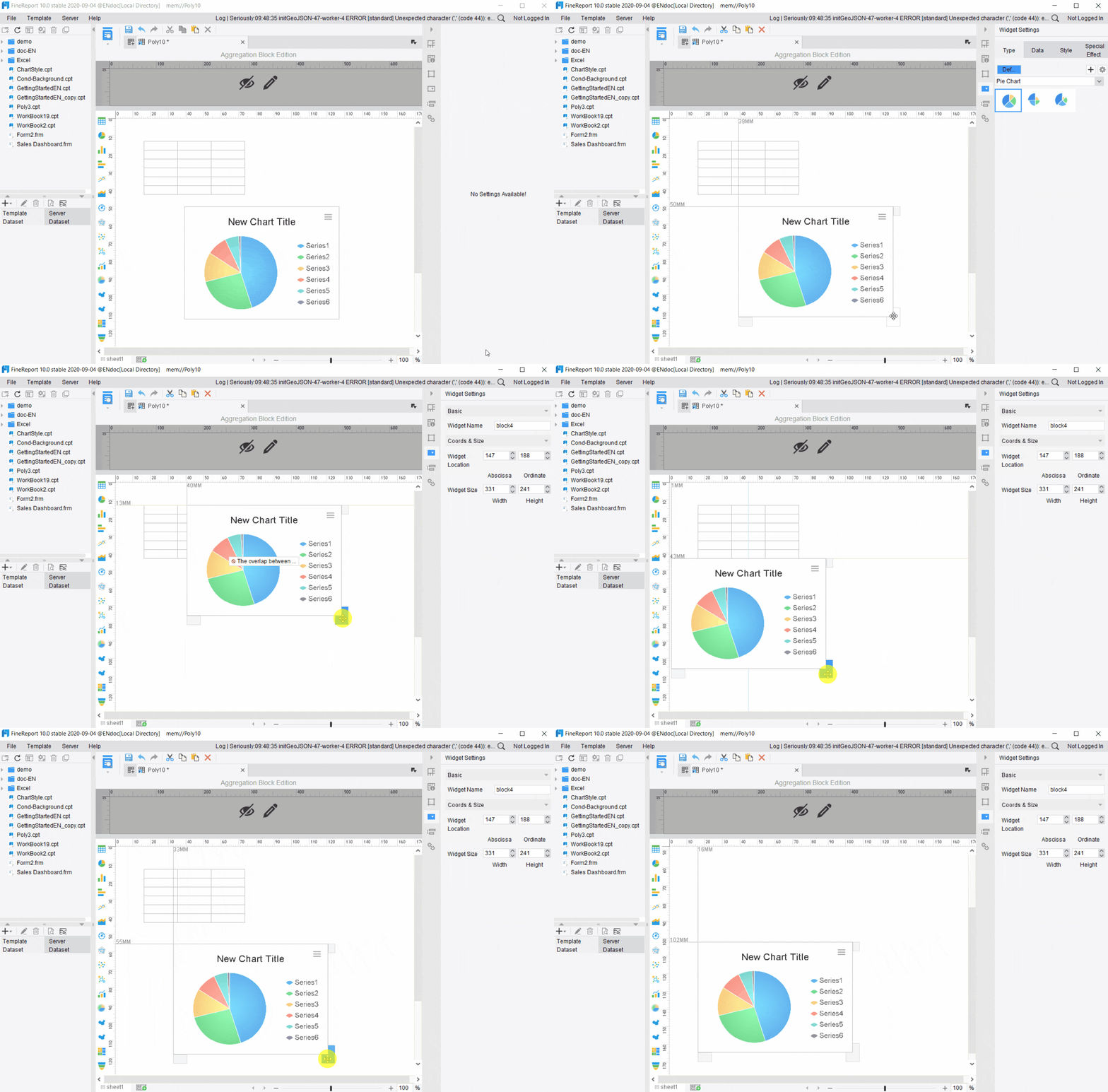
How to build the system step by step
A governed social media command center should be implemented as a business operating model, not only as a software rollout.
Map stakeholders, channels, and governance rules
Start by identifying every participant in the social media lifecycle:
- Corporate marketing
- Brand team
- Legal and compliance
- Regional teams
- Customer service
- Paid media managers
- Agency partners
- Executive reviewers
Then define the rules:
- Who drafts content
- Who reviews and approves
- What requires legal escalation
- Which channels require regional control
- Who owns performance reporting
- Which thresholds trigger alerts
- How exceptions are escalated
This governance mapping is essential because both reporting and AI workflows depend on clearly defined roles and business logic.
Design the data model and command center dashboards
Next, define the core KPI structure. For most organizations, that includes:
- Reach
- Engagement
- Conversion
- Paid efficiency
- Content velocity
- Approval cycle time
- Compliance status
- Sentiment and response quality
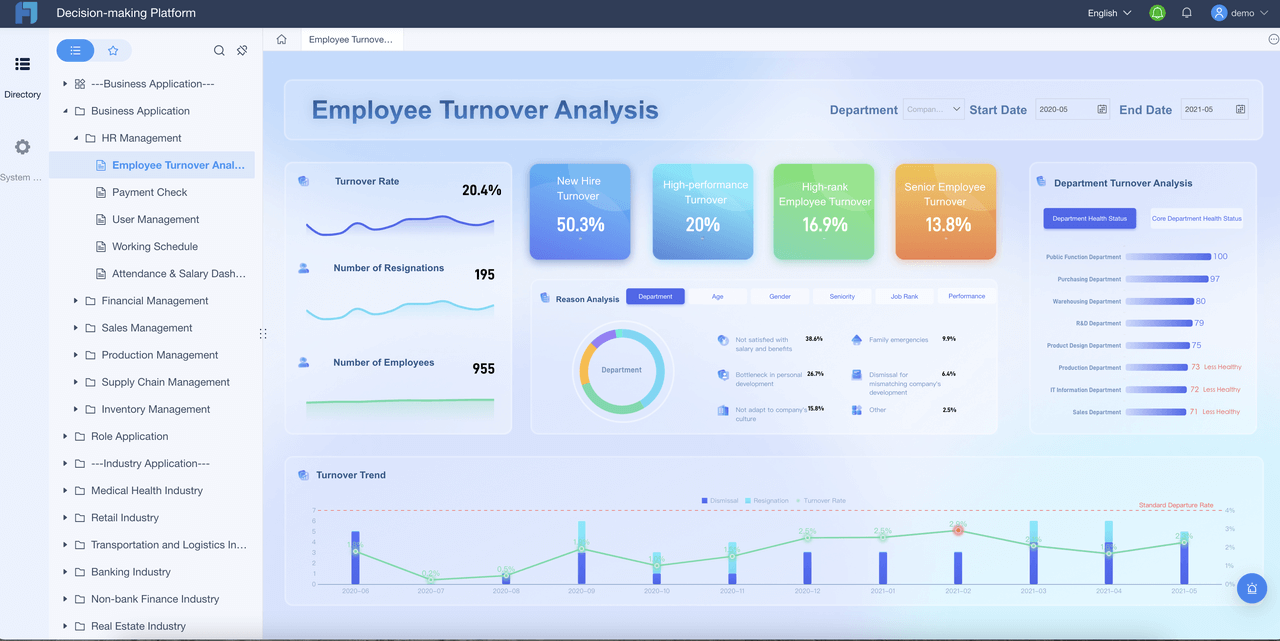
Then structure different FineReport views for different audiences:
Executive dashboard
A concise operational cockpit for senior leaders showing overall channel performance, business-unit comparison, key risks, and exception status.
Management dashboard
A deeper view for directors and team leads with campaign-level drill-downs, backlog visibility, approval performance, and owner-level issues.
Operator dashboard
A practical workbench for channel managers and coordinators showing pending approvals, delayed tasks, exception queues, and platform-specific execution status.
This layered structure makes reporting more usable and gives Dora clearer trusted assets to summarize and query.
Launch workflows, alerts, and adoption practices
Do not try to automate everything at once.
Start with one business unit, one campaign type, or one reporting process where governance value is obvious. Examples include:
- Regional campaign approvals
- Paid social spend exception monitoring
- Weekly social performance briefings
- Sentiment risk escalation
- Agency content review workflows
Then train teams on:
- Approval logic
- Dashboard interpretation
- Exception response protocols
- Owner responsibilities
- AI-assisted report consumption
As usage expands, Dora can gradually support more Skills-based workflows, while FineReport continues to anchor the reporting and semantic foundation.
How FineReport + Dora compare with common social media management software choices
Where traditional tools work well
Many traditional platforms are effective for:
- Scheduling
- Inbox and engagement management
- Social listening
- Content calendars
- Basic reporting
- Quick deployment for smaller teams
That is why many organizations begin there. These tools are often easy to adopt and useful for everyday channel execution.
Where governance-focused teams need more
The limitations appear when organizations require:
- Custom approval workflows
- Enterprise-grade auditability
- Multi-entity oversight
- Executive reporting across regions and brands
- Configurable KPI governance
- Cross-system reporting orchestration
- Strong permission boundaries
- Operational follow-up linked to reporting exceptions
In those environments, a tool that is excellent for posting may still be weak for governed management.
This is where FineReport + Dora becomes a stronger fit. FineReport supports custom reporting, cockpits, reporting automation, and data orchestration. Dora adds an enterprise Data Agent layer that helps users query, summarize, alert, and follow up on top of those governed assets.
How to choose the best fit for your business
When evaluating social media marketing management tools, use these decision criteria:
- Company size: Small teams may prioritize speed and simplicity; larger teams need structure and control.
- Regulatory pressure: Heavily governed industries need stronger approvals, audit trails, and exception handling.
- Agency involvement: Multi-party collaboration increases the need for role clarity and traceability.
- Geographic complexity: Multi-region operations need standardized reporting with local visibility.
- Reporting maturity: If executives demand consolidated management reporting, basic channel reports may not be enough.
- Integration quality: The tool should fit your existing data, reporting, and workflow environment.
- Governance depth: Look beyond posting features and assess workflow control, permissions, and audit readiness.
- Executive visibility: Senior leaders need more than campaign screens; they need decision-ready dashboards and summaries.
Actionable best practices
1. Standardize KPI definitions, report templates, and business terms
If teams define engagement, conversion, compliance status, or approval delay differently, governance breaks down. Standardized FineReport templates and KPI logic give both users and Dora a trusted semantic layer.
2. Start with high-value recurring reporting scenarios
The best AI/Data Agent use cases are repeatable and high-friction. Start with weekly campaign reviews, exception briefings, approval backlog summaries, or spend monitoring before expanding into broader automation.
3. Treat data quality as part of the AI implementation
Dora can only provide useful summaries and alerts when the underlying data is reliable. Clean source mappings, consistent taxonomy, and validated report logic are not optional. They are core to enterprise AI landing successfully.
4. Define exception thresholds, ownership rules, and escalation paths
An alert without an owner is just noise. Configure thresholds for abnormal spend, delayed approvals, negative sentiment, or response delays, then assign responsible roles and escalation logic.
5. Preserve permission governance and use human review where needed
AI outputs should respect FineReport access boundaries. Sensitive campaign data, regional metrics, and compliance-related views should remain permission-controlled. For AI-generated narratives, use human review first, then gradually expand approved Dora Skills over time.
FineReport + Dora solution pitch
Building this manually is complex. FineReport helps teams standardize trusted reports, operational cockpits, templates, and reporting workflows. Dora turns those assets into an AI assistant that can answer report questions in chat, generate structured summaries, push scheduled briefings, monitor exceptions, and follow up with responsible owners.
For social media governance, that means organizations can move beyond disconnected tools and spreadsheets toward a practical management system:
- FineReport builds the trusted reporting foundation
- Dora turns that foundation into a scenario-specific AI assistant or digital employee
- Teams gain both visibility and execution support
FineReport + Dora is not only a reporting upgrade; it is a practical fourth-generation Agentic BI path. FineReport provides governed reports and operational cockpits. Dora provides the AI assistant layer for scenario execution, with more controlled Skills, lower token waste, faster execution paths, and more stable workflows than prompt-only agents.
Get Ready-to-Use Dashboard Templates in Fine Gallery
The strongest Dora pitch is scenario + product + service: FineReport provides the trusted reporting foundation, Dora provides the AI digital employee, and implementation service connects data, governance, semantic setup, Skills, report templates, permissions, and rollout.
Final recommendation for teams choosing in 2026
If your organization only needs post scheduling, inbox handling, and lightweight reporting, many common social tools may be sufficient.
But if you operate in a multi-team environment with compliance needs, executive reporting demands, regional complexity, or process-heavy workflows, you likely need more than channel execution. You need a governed social media management system.
That is when FineReport + Dora becomes the right choice.
It is especially well suited for teams that need to:
- Standardize reporting across brands, regions, or business units
- Strengthen approval control and auditability
- Give executives timely dashboard visibility
- Detect and push exceptions to the right owners
- Reduce manual effort in report consumption and follow-up
- Connect analytics with operational accountability
Before selecting a platform, audit your current workflow gaps, reporting blind spots, and approval risks. If the problem is not just execution but governance, then the best social media marketing management tools for your business may be the ones that combine reporting discipline with AI-assisted operational follow-through.
FAQs
In 2026, these tools are used not only for scheduling and publishing but also for reporting, approvals, monitoring, and cross-team coordination. The best options help organizations manage social operations with stronger visibility, control, and accountability.