Construction supply chain management software helps contractors and project teams control the flow of materials, vendors, purchasing, deliveries, and cost commitments across active jobs. For operations directors and procurement teams, the value is practical: fewer surprise shortages, better delivery coordination, tighter committed-cost visibility, and less time chasing updates across email threads, spreadsheets, and disconnected systems.
In a construction business, supply chain performance is directly tied to schedule performance. If steel, MEP components, concrete, fixtures, or specialty materials arrive late, the impact is not limited to procurement. It affects labor utilization, subcontractor sequencing, rework risk, and project margins. That is why many firms are moving beyond basic purchasing tools and building a more complete reporting and operational cockpit for procurement, logistics, and site delivery visibility.
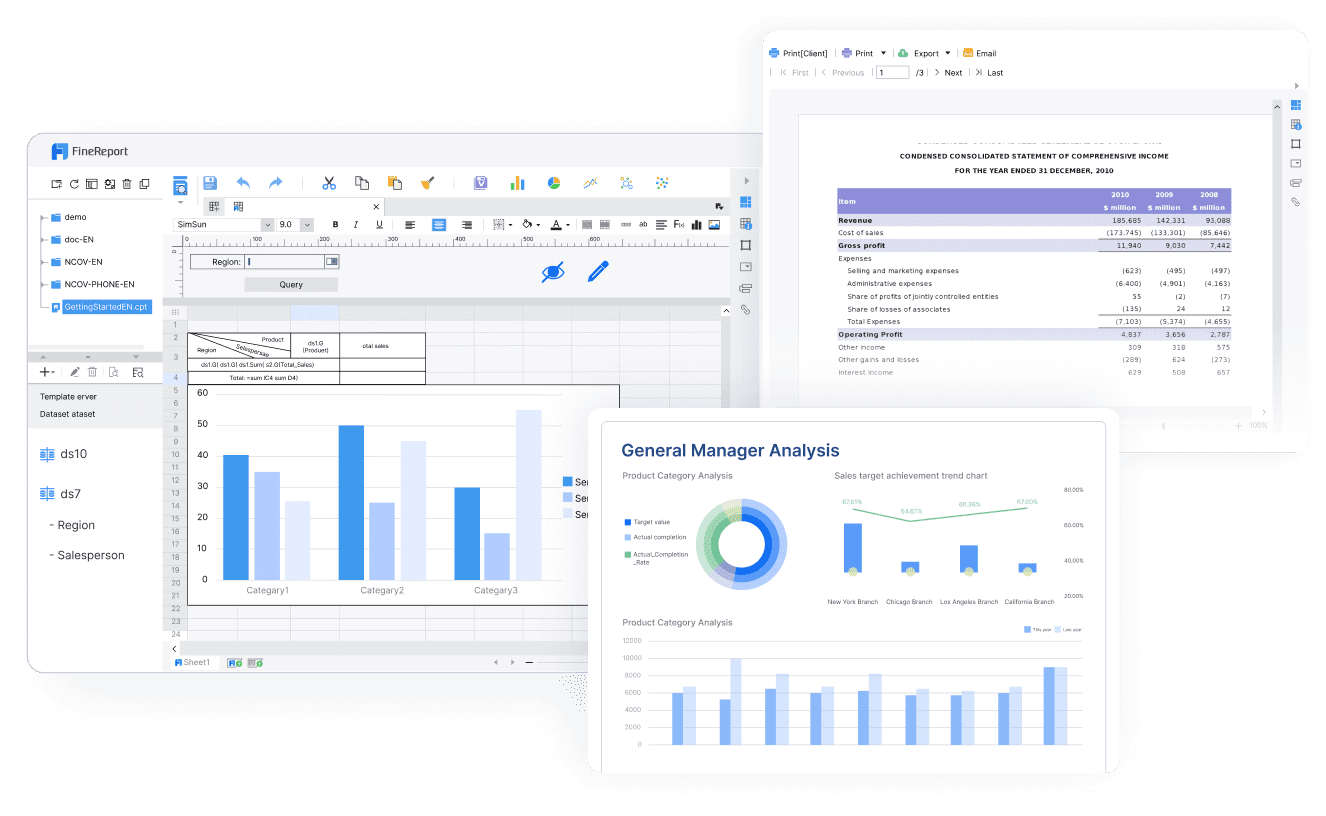
With FineReport + Dora, teams can ask for a report summary in chat, generate structured narratives from trusted report assets, receive scheduled briefings, and push exceptions to the right owner. Instead of manually assembling supplier updates and material status reports every day, firms can standardize construction supply chain reporting in FineReport and use Dora as an enterprise Data Agent to summarize, alert, follow up, and support execution.
Click To Try The Dashboard
All reports in this article are built with FineReport
What Construction Supply Chain Management Software Does in a Construction Business
Construction Supply Chain Management Software is a system used to plan, track, and control how materials, suppliers, purchase orders, deliveries, inventory, and cost commitments move through a construction project. In practical terms, it gives operations directors, procurement managers, and project teams one place to manage the chain from demand planning to on-site receipt.
It typically connects these business activities:
purchasing and requisitions
supplier selection and performance tracking
purchase order approval workflows
lead-time monitoring
shipment and delivery scheduling
warehouse or yard inventory visibility
site receiving and discrepancy logging
committed cost and budget reporting
cross-team coordination between office and field
This is where construction-specific software differs from general procurement tools. A generic procurement platform may handle vendor records, PO approvals, and invoice matching well, but construction teams also need to manage project schedules, material staging, site readiness, substitutions, phased delivery windows, subcontractor dependencies, and cost-code alignment by job.
In construction, supply chain visibility matters because schedules, budgets, and subcontractors are tightly linked. A delayed purchase can trigger idle crews. A partial delivery can force resequencing. A missing approval can create downstream cost escalation. A substitution can affect both installation quality and budget reporting. The software must therefore support both transaction control and operational coordination.
From an enterprise reporting perspective, this also means firms need more than static dashboards. They need trusted, scenario-specific visibility:
Which long-lead materials are at risk this week?
Which suppliers are missing delivery dates?
Which POs are approved but not yet shipped?
Which jobs have receiving discrepancies affecting cost and schedule?
Which project teams need follow-up today?
That is the type of reporting foundation FineReport supports, and where Dora can act as an AI assistant on top of trusted supply chain data and report assets.
How Supply Chain Management Works Across the Construction Lifecycle
Construction supply chains should be managed as an end-to-end operating process, not as isolated purchasing events. The lifecycle starts before materials are ordered and continues through delivery, receipt, issue resolution, and reporting.
Preconstruction planning and sourcing
During preconstruction, teams need to forecast material demand based on design packages, project timelines, cost targets, and known constraints. This is where many supply chain problems begin: long-lead items are identified too late, procurement plans are disconnected from schedule milestones, and sourcing assumptions do not reflect actual supplier capacity.
A strong construction supply chain process in this stage should help teams:
forecast material demand by project phase
identify long-lead and high-risk items early
align sourcing plans with bid and award timelines
estimate committed spend before field execution starts
adjust procurement plans when design changes occur
compare supplier options based on price, lead time, and reliability
For operations directors, this stage is about reducing preventable project risk. For procurement leaders, it is about building sourcing plans that reflect both commercial and operational reality.
Key report elements for preconstruction planning
Material demand forecast: Expected quantities and timing by project phase. Business value: Prevents reactive ordering and helps secure supply earlier. AI use:Dora can summarize demand changes by project, flag long-lead items, and include them in a scheduled management briefing.
Long-lead item tracker: List of materials with high supply risk or long procurement cycles. Business value: Improves schedule protection and escalation planning. AI use:Dora can explain which items are slipping against target dates and push exceptions to project owners.
Supplier bid comparison: Side-by-side view of quoted price, lead time, terms, and service history. Business value: Improves sourcing decisions beyond lowest-price selection. AI use:Dora can generate a structured report summary comparing suppliers for decision review.
Purchasing, vendor coordination, and delivery tracking
Once projects move into purchasing, the challenge shifts to execution discipline. Teams need standardized requisitions, approvals, supplier communication, and delivery planning. If this process runs through spreadsheets, emails, and phone calls, visibility disappears fast.
Construction Supply Chain Management Software should support:
standardized purchase orders and requisitions
approval routing by amount, project, or category
lead-time tracking against promised dates
supplier communication and status updates
shipment monitoring and delivery scheduling
documentation of substitutions or split deliveries
coordination with site readiness and installation sequence
The operational goal is simple: materials should arrive in the right quantity, at the right time, with the right documentation, for the right job and cost code.
Key report elements for purchasing and vendor coordination
PO status dashboard: Open, approved, partially fulfilled, delayed, and closed purchase orders. Business value: Gives procurement and operations a shared view of execution status. AI use:Dora can summarize overdue POs, explain aging trends, and answer chat-based questions by supplier or job.
Lead-time variance report: Compares planned vs actual supplier lead times. Business value: Improves supplier management and schedule forecasting. AI use:Dora can highlight recurring delivery risk and produce a chart-based answer for leadership review.
Delivery window tracker: Planned site delivery dates, confirmed windows, and readiness status. Business value: Reduces missed deliveries, congestion, and resequencing. AI use:Dora can generate daily briefings of upcoming deliveries and alert teams to conflicts or missing confirmations.
Receiving, inventory, and issue resolution on site
The last mile of the construction supply chain is often where hidden inefficiencies become visible. Materials may arrive late, incomplete, damaged, or without matching documentation. Field teams may not know what is coming. Warehouse staff may receive against outdated orders. Accounting may not see discrepancies until later.
Construction-specific software should help teams:
match deliveries to approved purchase orders
record shortages, overages, and damages
document quality issues and nonconformance
track inventory by yard, warehouse, or site
coordinate transfers between locations
support rapid issue escalation to suppliers and project teams
At this stage, reporting matters because the business needs more than transaction records. It needs operational exception management.
Key report elements for receiving and issue resolution
Receiving discrepancy log: Differences between ordered and received materials. Business value: Protects budget accuracy and accelerates vendor resolution. AI use:Dora can summarize unresolved discrepancies, categorize issue types, and push follow-up reminders.
Inventory by location report: Current stock levels across warehouse, yard, and project sites. Business value: Reduces emergency purchases and unnecessary transfers. AI use:Dora can answer natural-language questions about material availability and identify potential stockout risk.
Quality issue tracker: Records damaged items, failed inspections, and replacement status. Business value: Supports accountability and prevents installation delays. AI use:Dora can generate structured exception summaries and notify responsible owners of open actions.
Core Features to Look for in Construction Supply Chain Management Software Solutions
Not every platform that includes purchasing or inventory functionality is well suited for construction. Buyers should evaluate whether the system supports project-based supply chain workflows, field coordination, and reporting across multiple stakeholders.
Procurement and supplier management
A good platform should centralize supplier and purchasing processes while still reflecting construction job structures and approval logic.
Core capabilities to prioritize include:
centralized vendor records
supplier qualification and performance history
bid comparison workflows
contract and commitment tracking
purchase order creation and approvals
change and substitution documentation
supplier communication history
audit trails for procurement decisions
For procurement teams, the best systems reduce manual handoffs and enforce process discipline. For operations leaders, they create clearer links between commitments, delivery status, and project performance.
Inventory, logistics, and material tracking
Material visibility is critical in construction because stock can be spread across yards, warehouses, and active sites. Delivery timing also matters more than in many other industries because receiving capacity, crane schedules, and subcontractor sequencing are all constrained.
Look for features such as:
warehouse and yard inventory visibility
transfer tracking between locations
delivery scheduling and confirmation
shipment status monitoring
chain-of-custody records
mobile receiving support
lot or batch tracking where needed
issue and return management
These capabilities help teams avoid duplicate purchases, reduce lost materials, and manage site readiness more effectively.
Cost control, reporting, and integrations
Supply chain systems become far more valuable when they connect operational activity to budget and reporting. Construction firms need visibility not only into what was ordered, but also into what is committed, delivered, disputed, and still at risk.
Look for:
budget tracking by project and cost code
committed cost visibility
actual vs committed vs forecast views
ERP or accounting integrations
audit-ready reporting
mobile access for field and office users
role-based dashboards for different stakeholders
This is also where many firms outgrow point solutions. They may have the transaction data, but not the reporting layer to turn it into usable management visibility. FineReport is especially valuable here because it can standardize formatted reports, exception lists, management summaries, and operational cockpits across supply chain scenarios.
Common Frameworks and Evaluation Criteria for Selecting a Platform
A software search should start with operating reality, not vendor feature pages. The right platform is the one that fits how your procurement, logistics, project, warehouse, and finance teams actually work.
Process and workflow fit
Before comparing vendors, map the current process in detail. That includes:
who raises material requests
who approves purchases
how suppliers are selected
how PO changes are handled
how delivery dates are confirmed
how receiving is documented
how discrepancies are escalated
how costs are reported back to project controls
This step is critical because many implementation failures come from buying software before clarifying workflow requirements. Construction-specific approvals, job coding, delivery coordination, and field involvement should all be reflected in the future-state design.
Prioritize platforms that reduce manual handoffs and support construction-specific approvals rather than forcing teams into generic procurement logic.
Data, adoption, and implementation readiness
Even strong software will underperform if vendor data is incomplete, item masters are inconsistent, or user roles are not defined clearly. Before rollout, evaluate:
supplier and material data quality
integration requirements with ERP, accounting, or project systems
user permission design
reporting requirements by team
mobile needs for field users
training and change management capacity
This is also where AI readiness begins. If KPI definitions, exception rules, and report templates are not standardized, AI output will be inconsistent. Enterprises that want to use an AI assistant for supply chain reporting should first ensure the reporting foundation is governed.
Comparing all-in-one platforms vs specialized tools
There is no universal answer here. Some firms benefit from a broader construction management platform, while others need deeper supply chain functionality.
All-in-one platforms may be a better fit when:
teams want fewer systems overall
project documentation and coordination are tightly integrated
procurement complexity is moderate
internal IT capacity is limited
Specialized tools may be a better fit when:
material logistics are highly complex
supplier performance management is a strategic priority
delivery tracking needs are deep
multi-yard or multi-region inventory control is difficult
the business needs more specialized receiving or dispatch capability
The best decision depends on project volume, supplier complexity, internal team capacity, and reporting maturity.
How Leading Construction Platforms Fit Into the Picture
Many construction businesses evaluate construction supply chain management software alongside broader project and operations systems. That is sensible, but teams should be clear about what each platform solves well.
Where Procore and similar platforms add value
Broad construction management platforms can add value in areas such as:
project documentation
team coordination
RFIs and submittals
basic procurement workflows
field and office communication
project-level visibility
That breadth is useful, especially when firms want one platform to support multiple workflows across project delivery. However, depending on the business model, deeper supply chain functionality may still be needed for advanced procurement control, inventory visibility, yard management, supplier performance analysis, or detailed delivery logistics.
For enterprise teams, the question is often not whether a broad platform is useful. It is whether it provides enough depth for the supply chain operating model the business actually runs.
This is also where reporting maturity becomes a differentiator. Even if operational systems exist, leadership teams still need reliable supply chain reports, management summaries, and exception visibility. FineReport can sit on top of those trusted data assets and unify reporting views across procurement, logistics, inventory, and cost control.
What SMBs should compare before choosing software
Small and midsize construction firms should focus on practical fit rather than buying the widest feature set available. Good comparison criteria include:
ease of use for office and field teams
implementation speed
reporting depth
integration effort
support for approvals and delivery workflows
mobile accessibility
total cost of ownership
scalability as project count grows
A simple shortlist checklist for SMB buyers:
Does it support project-based purchasing?
Can it track deliveries and receiving issues?
Does it show committed costs clearly?
Can field users update status from mobile devices?
Will reporting be good enough for management reviews?
Can it scale to more suppliers, jobs, or regions later?
Avoid overbuying features that no one will implement. A system that teams adopt consistently is usually more valuable than a larger platform with low operational use.
For many construction firms, the real bottleneck is no longer just capturing supply chain data. It is consuming that data fast enough to act on it. Operations directors, procurement teams, and project leaders often spend too much time opening multiple reports, comparing project exceptions, and manually preparing update emails or meeting summaries.
FineReport builds the trusted reporting and operational cockpit foundation: procurement dashboards, long-lead item reports, delivery status lists, receiving discrepancy reports, committed cost summaries, and supplier performance scorecards. Dora turns those trusted assets into a scenario-specific AI assistant that helps users ask questions in natural language, retrieve the right report context, generate structured summaries, push alerts, and support follow-up.
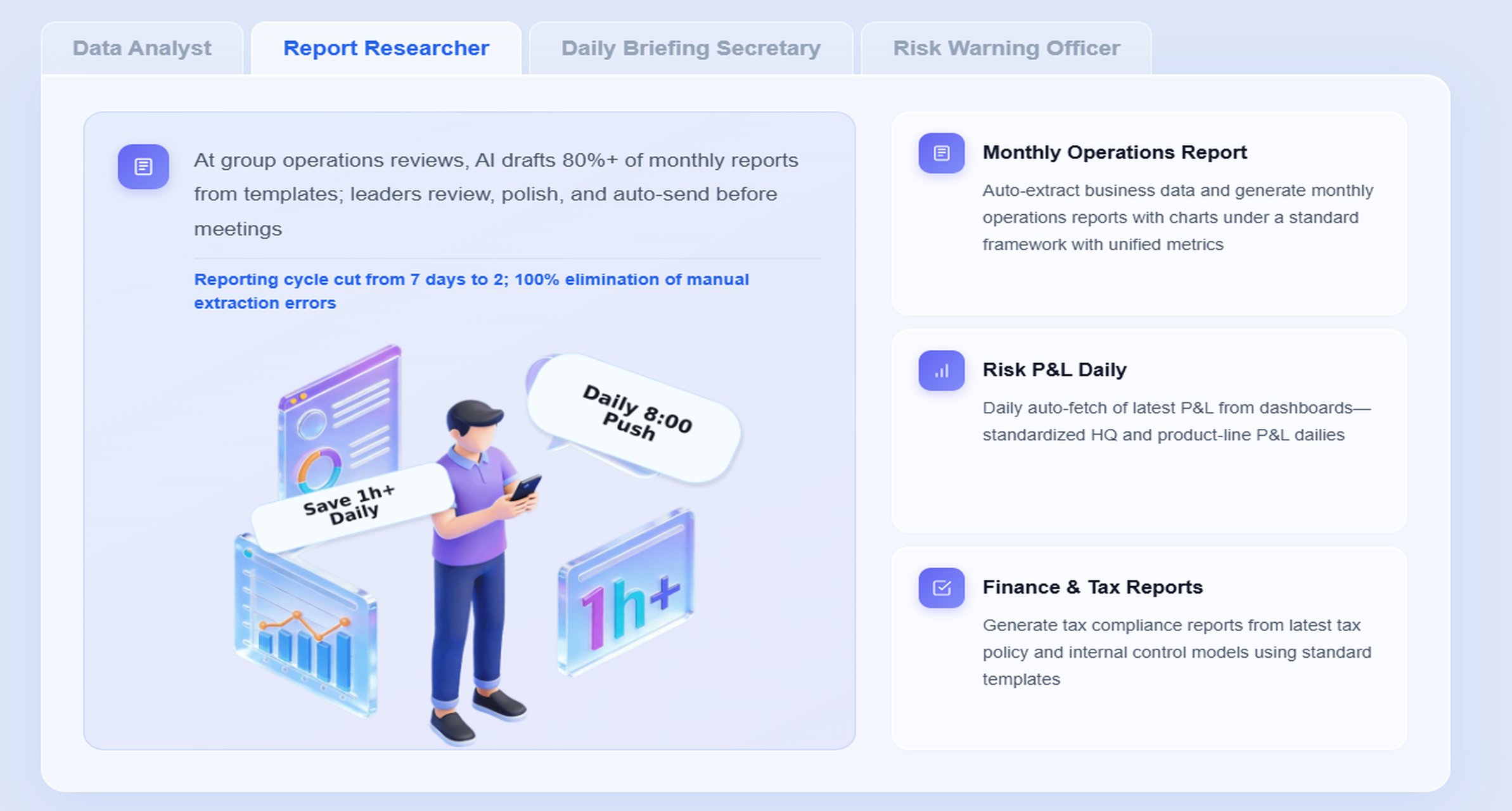
Daily Briefing Secretary for scheduled procurement and logistics summaries
Risk Alert Officer for delayed deliveries, shortages, and unresolved receiving issues
Report Researcher for structured report summaries based on FineReport outputs
A concrete chat-style example might look like this:
“Summarize this week’s construction supply chain report, highlight delayed material deliveries, list jobs with unresolved receiving discrepancies, and identify which procurement owners need follow-up today.”
Dora then works through a governed AI workflow instead of a loose prompt-only interaction.
A practical 6-step Dora workflow for construction supply chain reporting
Retrieve trusted FineReport report or operational cockpit data Dora accesses the approved supply chain dashboard, delivery tracker, and receiving discrepancy report built in FineReport.
Understand KPI definitions, filters, and business rules Dora uses the governed semantic layer to interpret terms such as delayed delivery, committed cost, shortage, partial receipt, long-lead item, and escalation threshold.
Generate a structured report summary through chat Dora produces a clear narrative: which jobs are at risk, which suppliers missed dates, which discrepancies remain unresolved, and what changed since the prior period.
Detect exceptions and threshold breaches Dora identifies abnormal lead-time variance, open shortages, overdue approvals, repeated supplier issues, or cost-impacting delivery delays.
Push alerts and suggested actions to responsible users
The AI assistant can send scheduled summaries, exception alerts, or follow-up prompts to procurement managers, operations directors, or project owners.
Create follow-up records for review Dora supports repeatable reporting workflows by logging what was flagged, who was notified, and what still requires management attention.
Why this matters in practice:
business users no longer have to search across multiple reports manually
executives get timely structured summaries instead of raw tables only
procurement leaders receive scheduled briefings with priority exceptions
IT teams can govern semantics, permissions, templates, and Skills rather than answering every ad hoc reporting request
AI outputs remain more controllable because they rely on trusted FineReport assets and governed workflows
This is an important enterprise distinction. Dora should not be treated as a generic chatbot. It is an Agentic BI layer that works on top of governed reports, KPI definitions, permission rules, and reusable Skills. That gives it stronger enterprise fit for reporting scenarios such as weekly procurement reviews, delayed material alerts, supplier exception follow-up, and project leadership briefings.
For operations directors, the ROI is concrete: Dora is not an AI experiment. It is a landed AI digital employee for recurring reporting work such as weekly material risk summaries, procurement exception reviews, supplier delay alerts, and owner follow-up tracking.
For IT teams, the role changes as well. Instead of manually producing every report variation, IT can focus on data connections, semantic layers, data quality, permissions, report templates, and reusable agent Skills that support stable reporting workflows.
For business users, Dora lowers friction. They can ask for report explanations in chat, receive scheduled summaries, and get timely exception pushes without waiting on analysts to compile updates manually.
Actionable Best Practices
Rolling out construction supply chain management software successfully requires more than software configuration. It requires process discipline, reporting standards, and governance.
1. Standardize report templates, KPI definitions, and exception rules
If different teams define delayed delivery, shortage, committed cost, or unresolved discrepancy differently, reporting becomes inconsistent. Standardize these terms early. This improves operational management and makes AI-generated summaries far more reliable.
2. Start with high-value recurring reports before automating everything
Do not begin with every report in the business. Start with a few recurring scenarios with clear business value, such as:
weekly procurement status reports
long-lead item risk dashboards
delivery exception briefings
receiving discrepancy follow-up reports
These are ideal scenarios for FineReport standardization and Dora-based scheduled summary or alert workflows.
3. Treat data quality as part of the implementation, not a later cleanup
Supplier records, item descriptions, delivery statuses, and project coding need to be accurate. Poor source data will weaken both reporting and AI output. Data quality should be managed as part of the operating model.
4. Preserve permission governance in all report and AI workflows
Construction reporting often contains supplier pricing, project financials, or contract-sensitive details. Ensure AI outputs respect FineReport access boundaries so users only receive the data they are authorized to see.
5. Use human review for AI-generated narratives and expand gradually
AI-generated summaries are highly useful, but teams should begin with review checkpoints for management-facing narratives and exception workflows. As semantics, templates, and Skills mature, automation can expand safely and predictably.
Building this manually is complex. FineReport helps teams standardize trusted reports, operational cockpits, templates, and reporting workflows. Dora turns those assets into an AI assistant that can answer report questions in chat, generate structured summaries, push scheduled briefings, monitor exceptions, and follow up with responsible owners.
In a construction supply chain scenario, that means enterprises can build a trusted reporting foundation for:
procurement status by project
long-lead item risk
supplier performance
delivery scheduling
receiving discrepancies
inventory by location
committed cost visibility
escalation and follow-up tracking
Then Dora can act as the enterprise Data Agent layer that helps teams consume and execute on those reports faster.
This combination is especially practical because many firms already have supply chain, ERP, project, or accounting systems in place. FineReport can unify trusted reporting across those data sources. Dora can then provide the AI assistant layer on top of those governed assets. In some enterprises, Dora can also be introduced on top of existing trusted BI and reporting assets when the reporting foundation is already mature.
FineReport + Dora is not only a reporting upgrade; it is a practical fourth-generation Agentic BI path.FineReport provides governed reports and operational cockpits. Dora provides the AI assistant layer for scenario execution, with more controlled Skills, lower token waste, faster execution paths, and more stable workflows than prompt-only agents.
Get Ready-to-Use Dashboard Templates in Fine Gallery
The strongest Dora pitch is scenario + product + service: FineReport provides the trusted reporting foundation, Dora provides the AI digital employee, and implementation service connects data, governance, semantic setup, Skills, report templates, permissions, and rollout.
For operations directors and procurement teams evaluating Construction Supply Chain Management Software, the key question is not just which platform captures transactions. It is which approach helps your business see risk earlier, coordinate faster, and turn trusted reports into timely action.
It is used to plan, track, and control materials, suppliers, purchase orders, deliveries, inventory, and committed costs across construction projects. The goal is to reduce delays, improve coordination, and give teams clearer visibility from sourcing to on-site receipt.
Construction-focused tools account for project schedules, phased deliveries, site readiness, subcontractor dependencies, and job cost codes. General procurement platforms often handle purchasing well but do not give enough visibility into field execution and project-specific logistics.
Key features include purchase order workflows, supplier performance tracking, delivery scheduling, inventory visibility, receiving logs, and committed cost reporting. Strong reporting, mobile access, and exception alerts are also important for office and field coordination.
It helps teams identify long-lead risks early, monitor missing approvals, track shipments, and coordinate deliveries with site readiness. This makes it easier to prevent shortages, avoid idle labor, and respond faster when materials slip.
Yes, FineReport can centralize trusted supply chain dashboards and operational reports, while Dora can summarize updates, send scheduled briefings, and route exceptions to the right owner. Together they help teams spend less time chasing status updates and more time acting on them.
Product Trial
FineReport
Pixel-perfect reports · Interactive dashboards · Easy data entry · Digital twins