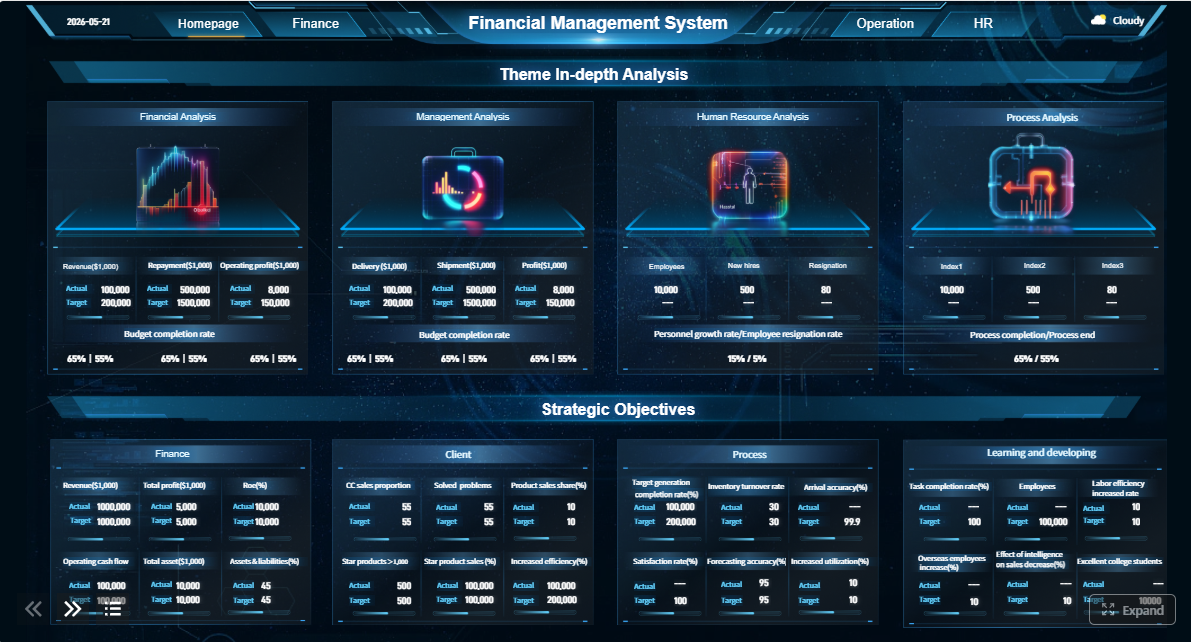
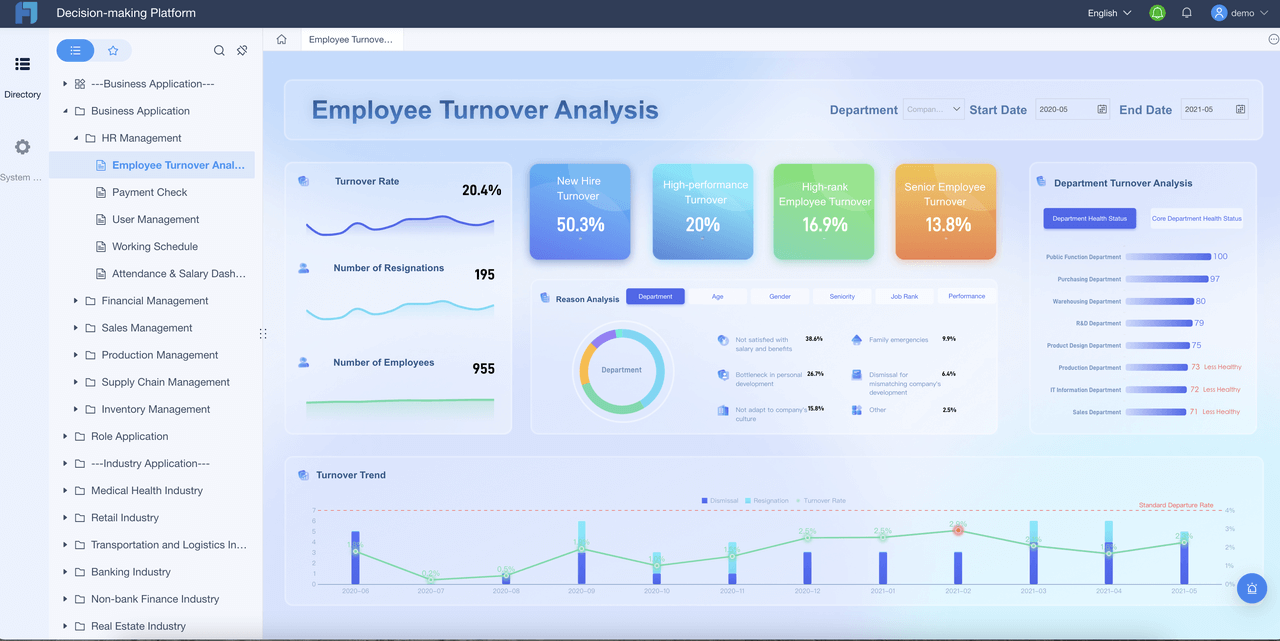
Enterprise finance teams do not struggle because they lack reports. They struggle because reporting packs are often inconsistent, slow to prepare, hard to interpret, and disconnected from follow-up action. A strong financial reporting template solves that by standardizing what gets reported, how it is presented, and who acts on it.
With FineReport + Dora, teams can ask for a report summary in chat, generate structured narratives from trusted report assets, receive scheduled briefings, and push exceptions to the right owner. That makes financial reporting templates more than static formats. They become governed reporting workflows supported by an enterprise Data Agent.
Click To Try The Dashboard
All reports in this article are built with FineReport
What enterprise financial reporting templates should cover
Enterprise financial reporting templates should be built around decision use, governance, and repeatability. A monthly pack is not the same as a quarterly leadership review, and neither should be confused with an annual statutory or board package. The right template framework helps finance teams reduce rework while improving consistency across entities, functions, and reporting cycles.
At a practical level, monthly, quarterly, and annual packs should support three audiences:
Executives, who need concise insight on performance, risk, liquidity, and action priorities
Finance leaders, who need detail, reconciliation confidence, and forecast control
Business unit owners, who need accountability views tied to revenue, cost, and corrective action
Standardized templates improve more than presentation. They improve:
Consistency, because everyone works from the same KPI definitions and commentary structure
Speed, because less time is wasted rebuilding layouts every cycle
Audit readiness, because supporting schedules, reconciliations, and review checkpoints are embedded
Decision-making, because leaders see the same core metrics in the same sequence every period
It is also important to distinguish three reporting types:
Management reporting focuses on internal performance, budget variance, operations, and actions
Statutory reporting supports accounting and regulatory compliance under applicable standards
Board reporting translates financial results into strategic implications, risks, and capital decisions
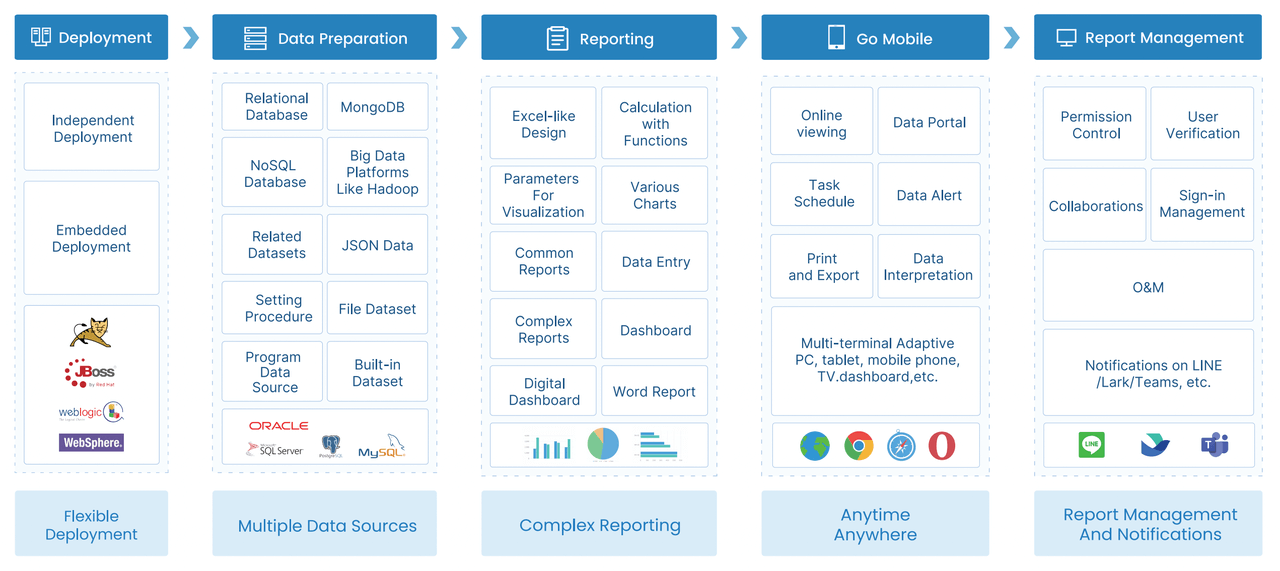
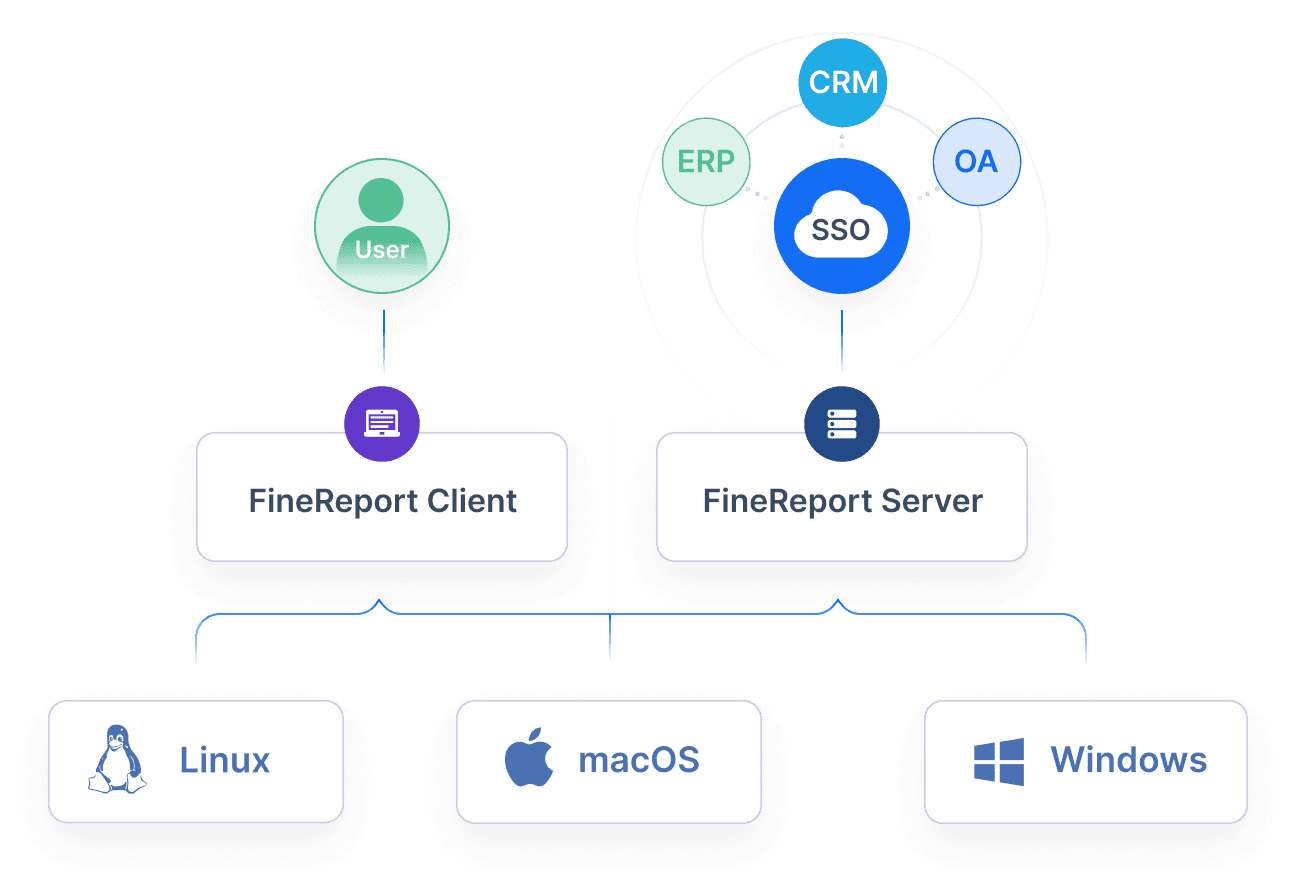
FineReport helps finance teams standardize these reporting layers through governed report templates, formatted statements, management packs, and operational cockpits. Dora then adds the AI assistant layer so users can query the pack in natural language, get structured summaries, and receive scheduled reporting briefings without manually reading every page.
Core sections to include in monthly reporting packs
Monthly reporting packs should be concise, decision-oriented, and repeatable. They should help leaders understand current performance, the main causes of variance, and what needs immediate action.
Executive summary and KPI dashboard
The executive summary is usually the most important page in a monthly pack. It should surface the handful of metrics leadership needs first rather than burying them in detailed schedules.
Key items typically include:
Revenue
Gross margin
EBITDA or operating profit
Cash position
Working capital
Actual vs budget variance
Actual vs forecast variance
Major operational or financial risks
For an enterprise template, this section should not be just charts. It should combine numbers with concise commentary and action signals.
Report Element: Revenue and margin dashboard Definition: A summary of top-line performance and profitability, typically compared with budget, prior month, and prior year. Business value: Helps leaders assess growth quality, pricing performance, and earnings momentum. AI use:Dora can summarize the dashboard, explain major margin shifts, and generate a management narrative for the monthly briefing.
Report Element: Cash and working capital overview Definition: A view of cash balance, receivables, payables, inventory, and cash conversion indicators. Business value: Gives finance and operating leaders early warning on liquidity pressure and operational discipline. AI use:Dora can highlight collection delays, inventory buildup, or payable concentration and include these in scheduled briefings.
Report Element: Risks, opportunities, and required actions Definition: A short list of the most material issues affecting the month. Business value: Keeps leadership focused on decisions instead of data overload. AI use:Dora can pull exception items from FineReport cockpits and turn them into structured action summaries.
In many enterprises, the monthly reporting template fails because this summary page reads like a data dump. A better design starts with the few insights that matter most and links each to an owner or next step.
Income statement, balance sheet, and cash flow views
A monthly financial reporting template should always include the three core financial views, but presented in management-friendly format.
These pages should show:
Current month actuals
Prior month comparison
Budget comparison
Latest forecast comparison
Year-over-year comparison
Year-to-date where relevant
They should also include commentary for:
Unusual movements
One-off items
Reclassifications
Timing differences
Estimate changes
Report Element: Income statement summary Definition: A structured profit and loss view covering revenue, cost of sales, gross profit, operating expenses, and net result. Business value: Provides the clearest monthly picture of operating performance. AI use:Dora can explain why gross margin declined, summarize cost overruns, and produce a chart-based answer tied to the FineReport source report.
Report Element: Balance sheet summary Definition: A statement of assets, liabilities, and equity with key movement commentary. Business value: Supports liquidity management, solvency review, and balance sheet discipline. AI use:Dora can identify material movement in receivables, accruals, provisions, or debt balances and push those findings to reviewers.
Report Element: Cash flow view Definition: A monthly view of operating, investing, and financing cash movements. Business value: Helps finance teams distinguish profit performance from actual cash generation. AI use:Dora can summarize cash drivers and flag whether cash underperformance is driven by collections, capex, or financing timing.
FineReport is particularly useful here because finance teams often need highly formatted reporting outputs that match enterprise review standards. Instead of rebuilding packs manually in spreadsheets and slide decks, teams can generate trusted statement views and structured comparison layouts from governed templates.
Department and cost center analysis
Monthly packs should also include accountability. Finance leaders and business unit owners need to see which departments or cost centers are driving spending, headcount movement, or budget overrun.
Typical content includes:
Operating expenses by department
Headcount and vacancy trends
Budget variance by function
Material spend drivers
Named owners for exceptions
Follow-up deadlines
Report Element: Cost center variance table Definition: A breakdown of actual vs budget spend by department, team, or legal entity. Business value: Improves cost ownership and speeds corrective action. AI use:Dora can summarize the top adverse variances, identify the responsible owners, and prepare a follow-up note for finance review meetings.
Report Element: Headcount and personnel cost analysis Definition: A view of approved headcount, actual headcount, open roles, overtime, and personnel spending trends. Business value: Connects labor cost performance to workforce planning decisions. AI use:Dora can explain whether overspend is driven by hiring, overtime, benefit costs, or reallocation across functions.
Report Element: Threshold and action ownership view Definition: A section that shows which variances breach review thresholds and who owns the response. Business value: Prevents reporting from ending at observation. AI use:Dora can act as a Risk Alert Officer, pushing exception notifications and reminding owners about unresolved issues.
This is where enterprise reporting often breaks down. The numbers are visible, but responsibility is not. Standardized financial reporting templates should connect variance, threshold, owner, and action status in one flow.
The final part of a monthly pack should look forward, not just backward. Finance reporting templates should capture how new information changes the outlook and what teams are doing about it.
Recommended sections include:
Updated full-year forecast
Scenario assumptions
Revenue and cost outlook changes
Mitigation plans
Open issues from prior month
Status of corrective actions
Report Element: Forecast revision summary Definition: A view of how the latest actuals affect expected full-year or rolling forecast performance. Business value: Helps leadership respond early rather than waiting for quarter-end surprises. AI use:Dora can summarize what changed in forecast assumptions and explain the financial impact in plain language.
Report Element: Open action tracker Definition: A list of issues raised in prior reporting cycles and their current status. Business value: Ensures reporting drives execution and not just review. AI use:Dora can generate periodic summaries of unresolved items and push follow-up requests to responsible owners.
What to include in quarterly financial reporting templates
Quarterly financial reporting templates usually need more depth than monthly packs. They support leadership review, broader performance narratives, control checkpoints, and preparation for external communication.
Deeper variance analysis and trend reporting
A strong quarterly template should expand the monthly structure with more trend-based analysis and segment insight.
Important additions include:
Quarter-to-date performance
Year-to-date performance
Segment, region, or product line views
Budget vs actual vs forecast comparisons
Prior-year quarter comparisons
Trend charts that show momentum and volatility
Report Element: Quarter-to-date and year-to-date trend analysis Definition: A view of cumulative performance through the quarter and year. Business value: Helps leaders see whether a monthly result is isolated or part of a broader pattern. AI use:Dora can summarize sustained trends, explain whether variances are widening or narrowing, and generate commentary for quarterly reviews.
Report Element: Segment and business line reporting Definition: Breakdowns by product, geography, channel, or business unit. Business value: Supports portfolio decisions and resource allocation. AI use:Dora can compare segment performance and produce a structured report summary for leadership meetings.
Report Element: Driver-based variance analysis Definition: Analysis of price, volume, mix, cost, and productivity impacts. Business value: Moves the discussion from what happened to why it happened. AI use:Dora can guide users through variance drivers in chat and link back to FineReport source schedules.
Business performance narratives for leadership
Quarterly packs need better storytelling than monthly packs because the audience is often broader and more strategic. The template should translate financial results into business implications.
Common narrative topics include:
Pricing performance
Volume trends
Product or customer mix changes
Operating leverage
Strategic initiative progress
Market and competitive conditions
Report Element: Leadership commentary page Definition: A concise narrative connecting performance outcomes to business drivers. Business value: Helps executives and board stakeholders interpret numbers in context. AI use:Dora as a Report Researcher can draft a structured quarterly narrative using trusted FineReport charts, KPI definitions, and business terms.
Report Element: Financial-to-operational linkage Definition: A section tying financial outcomes to operational metrics such as utilization, fulfillment, churn, yield, or production efficiency. Business value: Improves cross-functional decision-making. AI use:Dora can explain how operational shifts influenced financial outcomes and include those links in management summaries.
Compliance, controls, and close process checkpoints
Quarterly templates should also include finance control confidence. This matters especially before board review, lender reporting, or external disclosures.
Key elements include:
Status of major reconciliations
Control exceptions
Significant judgment areas
Close calendar adherence
Pending review issues
Items requiring escalation
Report Element: Reconciliation and close checklist Definition: A status view of key account reconciliations, close milestones, and outstanding tasks. Business value: Reduces reporting risk and helps leaders assess reporting readiness. AI use:Dora can send scheduled close-status briefings and flag overdue review items to controllers or finance operations leads.
Report Element: Judgment and exception log Definition: A list of material estimates, unusual items, and control concerns. Business value: Gives leadership visibility into areas that may affect external reporting or board presentation. AI use:Dora as a Risk Alert Officer can monitor exception lists, summarize risk items, and route them to reviewers.
Annual reporting pack essentials for enterprise finance teams
Annual financial reporting templates need the highest level of rigor because they support audit readiness, disclosure quality, board communication, and enterprise-wide financial review.
Full-year financial statements and supporting schedules
Annual packs should provide full-year statements with deeper support than monthly or quarterly formats.
They typically include:
Annual income statement
Annual balance sheet
Annual cash flow statement
Consolidation views
Supporting schedules
Major adjustments and true-ups
Accounting policy considerations
Bridge analyses from prior year to current year
Report Element: Full-year statement set Definition: The annual financial statements and core supporting schedules. Business value: Forms the basis for executive review, audit preparation, and external stakeholder communication. AI use:Dora can summarize the annual result, identify major year-over-year shifts, and generate structured narratives for management review.
Report Element: Bridge and movement analysis Definition: A walk from prior-year results to current-year outcomes across major lines. Business value: Helps explain performance drivers clearly to stakeholders. AI use:Dora can convert bridge analyses into plain-language explanations for executives or board materials.
Audit readiness and disclosure support
Annual reporting templates should also organize evidence. A good annual pack is not only readable; it is reviewable.
Key support components include:
Reconciliations
Disclosure checklists
Supporting schedules
Evidence references
Estimate and reserve documentation
Impairment assessments
Contingency support
Approval records
Report Element: Audit support index Definition: A structured mapping of report lines to supporting documents and reconciliations. Business value: Improves internal review efficiency and external audit readiness. AI use:Dora can help users retrieve supporting schedules, summarize outstanding documentation gaps, and prepare review follow-up lists.
Report Element: Disclosure and estimate checklist Definition: A checklist of required disclosures and judgment-based support. Business value: Reduces the risk of omission, inconsistency, and late-stage revisions. AI use:Dora can generate periodic completion summaries and remind owners of missing documentation.
Annual packs often need multiple output formats. The internal annual report may be detailed, while the board or lender pack should be more selective.
This section should focus on:
Strategic outcomes
Capital allocation
Liquidity position
Debt and covenant status
Investment priorities
Next-year outlook
Key risks and mitigation priorities
Report Element: Board summary pages Definition: Executive-level pages tailored for directors and senior stakeholders. Business value: Improves strategic discussion and reduces time spent interpreting operational detail. AI use:Dora can draft a board-ready structured summary from governed FineReport report assets, subject to finance review and approval.
How an AI Data Agent Automates Report Consumption
Enterprise finance teams rarely fail because they cannot build a report. They fail because users still spend too much time opening files, searching tabs, interpreting charts, writing commentary, chasing owners, and repeating the same questions every month.
Operational cockpits for exceptions and status tracking
Consistent templates for monthly, quarterly, and annual cycles
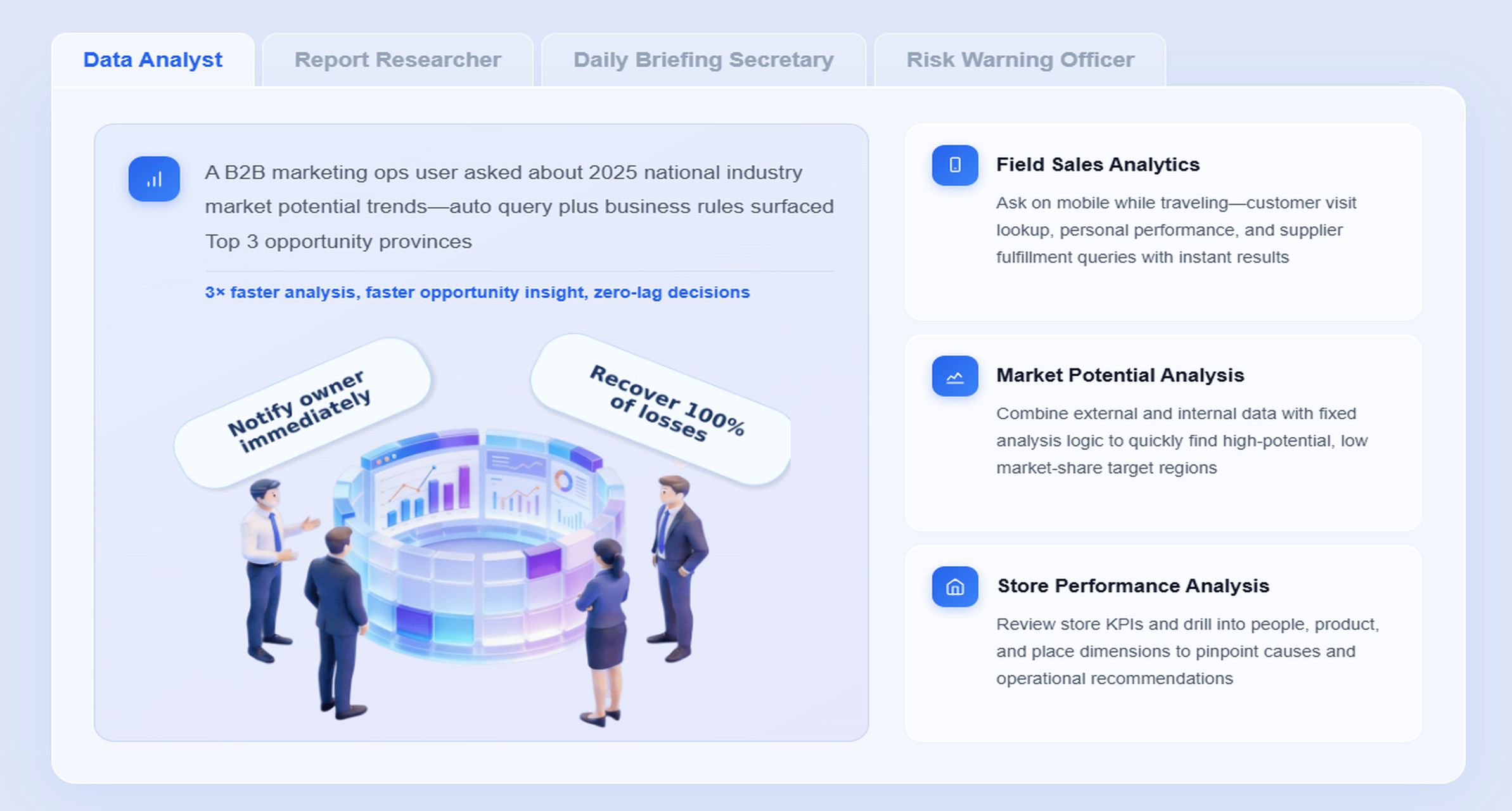
Dora builds on that foundation as a scenario-specific AI assistant or AI digital employee. For finance reporting, the most relevant digital employees are:
Risk Alert Officer for exception monitoring, overdue action follow-up, and alert push
A concrete finance scenario might look like this:
“Summarize this month’s finance pack, highlight margin and cash flow exceptions versus budget, list cost centers above threshold, and show which actions are still open from last month.”
Instead of manually reading through a full pack, a finance leader can ask that in chat and receive a structured, governed answer based on approved report assets.
Understand KPI definitions, template logic, and business rules Dora uses the trusted semantic layer to interpret terms such as gross margin, working capital, forecast variance, and exception threshold correctly.
Generate a structured report summary through chat Dora produces a concise monthly narrative, highlighting revenue, margin, cash, major variances, and outstanding issues.
Detect exceptions and overdue follow-up items Dora identifies threshold breaches, unresolved cost center overruns, delayed reconciliations, or open actions from prior cycles.
Push summaries and alerts to the right users
As a Daily Briefing Secretary or Risk Alert Officer, Dora can deliver scheduled briefings, notify owners, and route issue summaries to finance leadership or business managers.
Produce follow-up records and review summaries Dora can help create periodic summaries of unresolved items for the next review cycle, making reporting more operational and less passive.
This matters because enterprise finance reporting is not just about creating statements. It is about consuming reports faster, understanding them consistently, and turning them into follow-up action.
Compared with raw prompt-only tools, Dora is better suited to enterprise reporting scenarios because it works through governed workflows, reusable Skills, permissions, KPI definitions, and trusted report templates. That gives finance teams a more controllable and auditable path with lower token waste, faster execution paths, and more stable workflows than relying on unstructured prompts alone.
For finance users, the benefit is simple: less time hunting for answers. For IT and data teams, the benefit is also clear: they can focus on semantic design, data quality, and Skills governance instead of answering the same recurring report questions manually.
How to build and adapt templates for Excel and enterprise workflows
Finance teams still need flexible templates, especially when some parts of the process remain spreadsheet-driven. The goal is not to abandon Excel, but to standardize its role inside a controlled reporting workflow.
Structuring templates for usability and control
A good financial reporting template should be easy to update, hard to break, and simple to review.
Best practices include:
Consistent tab layouts across all packs
Locked formulas in calculation areas
Clear input assumptions sections
Version control and approval fields
Separation of raw data, calculations, and presentation pages
Defined refresh and review ownership
In enterprise settings, FineReport can take these principles further by turning recurring spreadsheet logic into governed report templates and formatted reporting outputs, reducing dependency on manual file assembly.
Customization options for different reporting audiences
The same base template should support different audiences without rebuilding the report from scratch.
Examples include:
CFO review packs with deeper variance commentary
Board packs with strategic summary pages
Business review packs with cost center ownership
Lender or parent reporting packs with covenant or compliance emphasis
The best financial reporting templates keep a common data backbone while allowing different output views. FineReport supports this through reusable report templates and governed presentation layers, while Dora helps generate audience-specific summaries from the same trusted reporting assets.
Common mistakes to avoid when designing reporting packs
Finance teams often overcomplicate reporting templates. Common design problems include:
Overcrowded pages
Inconsistent KPI definitions
Weak or missing commentary
No owner for exceptions
Metrics that do not drive decisions
Repeated manual formatting every cycle
No link between reported issues and corrective action
If a number does not support decision-making or accountability, it may not belong in the primary reporting pack. Keep the main pack focused, and use detailed appendices or drill-down reports where needed.
Choosing the right template resources and next steps
Not every finance team needs a fully custom enterprise reporting framework on day one. Some can start with free templates, especially for small-scale pilots or departmental reporting. But larger enterprises usually outgrow generic downloads quickly.
Free templates are useful when:
The reporting process is still being defined
Stakeholder requirements are simple
There are few entities or departments
Governance requirements are limited
Custom enterprise versions are usually needed when:
Multiple stakeholders need different pack views
KPI definitions must be standardized across teams
Permissions and audit trails matter
Reporting cycles require automation
Narrative commentary and action tracking need structure
The organization wants AI-assisted report consumption
Evaluation criteria should include:
Scalability: Can the template support multiple entities, periods, and audiences?
Flexibility: Can it adapt without constant rebuilding?
Governance: Are definitions, permissions, and approvals controlled?
Presentation quality: Is the output executive-ready?
Workflow fit: Can it connect with close, review, and follow-up processes?
AI readiness: Are report structures and KPI semantics clear enough for Dora to summarize and act on reliably?
A practical rollout plan looks like this:
Standardize the monthly pack first
Align KPI definitions, ownership, and commentary rules
To make financial reporting templates work in a real enterprise, finance teams should combine template discipline with reporting governance and AI readiness.
1. Standardize KPI definitions and commentary rules
Define core measures such as revenue, margin, EBITDA, free cash flow, working capital, and forecast variance once. Also standardize how commentary is written for unusual items, one-offs, and reclassifications. This gives both people and Dora a reliable semantic foundation.
2. Start with high-value recurring packs
Do not try to automate every finance report at once. Start with monthly management packs, quarterly leadership reviews, or recurring variance reviews where time savings and consistency gains are easiest to prove.
3. Build alert thresholds, ownership rules, and escalation paths
AI-assisted reporting works best when exceptions have clear rules. Decide what counts as a material variance, who owns the issue, when alerts should be pushed, and how unresolved items escalate.
4. Preserve permission governance in AI workflows
Dora should respect FineReport access boundaries. That is critical for finance reporting where entity-level, department-level, or confidential data access may differ across users. Governed AI workflow design is a major reason enterprise Data Agents land better than open-ended consumer AI tools.
5. Use human review before expanding AI-generated narratives
Dora can draft structured report summaries, chart explanations, and management narratives, but finance teams should validate outputs during rollout. Over time, as report templates, semantic rules, and Skills mature, automation can expand with better control.
Building this manually is complex. FineReport helps teams standardize trusted reports, operational cockpits, templates, and reporting workflows. Dora turns those assets into an AI assistant that can answer report questions in chat, generate structured summaries, push scheduled briefings, monitor exceptions, and follow up with responsible owners.
For enterprise finance teams, that means a better operating model for recurring reporting work:
FineReport builds the reporting foundation for monthly, quarterly, and annual packs
Dora turns those trusted report assets into an enterprise Data Agent experience
Finance leaders get faster report consumption and more consistent narrative output
IT teams shift from manual report support to data governance, semantic design, and reusable agent Skills
Business owners get timely summaries, exception alerts, and clearer accountability
FineReport + Dora is not only a reporting upgrade; it is a practical fourth-generation Agentic BI path.FineReport provides governed reports and operational cockpits. Dora provides the AI assistant layer for scenario execution, with more controlled Skills, lower token waste, faster execution paths, and more stable workflows than prompt-only agents.
Get Ready-to-Use Dashboard Templates in Fine Gallery
The strongest Dora pitch is scenario + product + service: FineReport provides the trusted reporting foundation, Dora provides the AI digital employee, and implementation service connects data, governance, semantic setup, Skills, report templates, permissions, and rollout.
A monthly financial reporting template should usually include an executive summary, KPI dashboard, income statement, balance sheet, cash flow view, variance analysis, and key action items. The goal is to show current performance, explain major changes, and highlight what needs immediate follow-up.
A quarterly pack is typically broader and more strategic than a monthly pack. It usually adds trend analysis, forecast updates, business unit performance, and leadership commentary for bigger decisions.
An annual pack should include full-year financial statements, year-end commentary, major risks, audit or reconciliation support, and any board or statutory reporting requirements. It is generally more detailed and governance-focused than monthly or quarterly reporting.
Standardized templates improve consistency, speed, and audit readiness across entities and reporting cycles. They also make it easier for executives and business owners to compare results and act on the same metrics each period.
FineReport helps teams build governed financial reports and dashboards, while Dora adds natural language summaries, scheduled briefings, and exception-based follow-up. Together they turn reporting templates into faster, more actionable workflows.
Product Trial
FineReport
Pixel-perfect reports · Interactive dashboards · Easy data entry · Digital twins