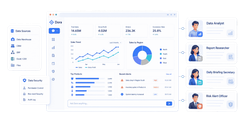
FineReport is an enterprise reporting and dashboard platform designed for building highly customized reports, visualizations, and data-driven business documents.
FineReport vs marketing agency reporting software: what agencies actually need
When agencies evaluate marketing agency reporting software, they are often comparing two very different product categories.
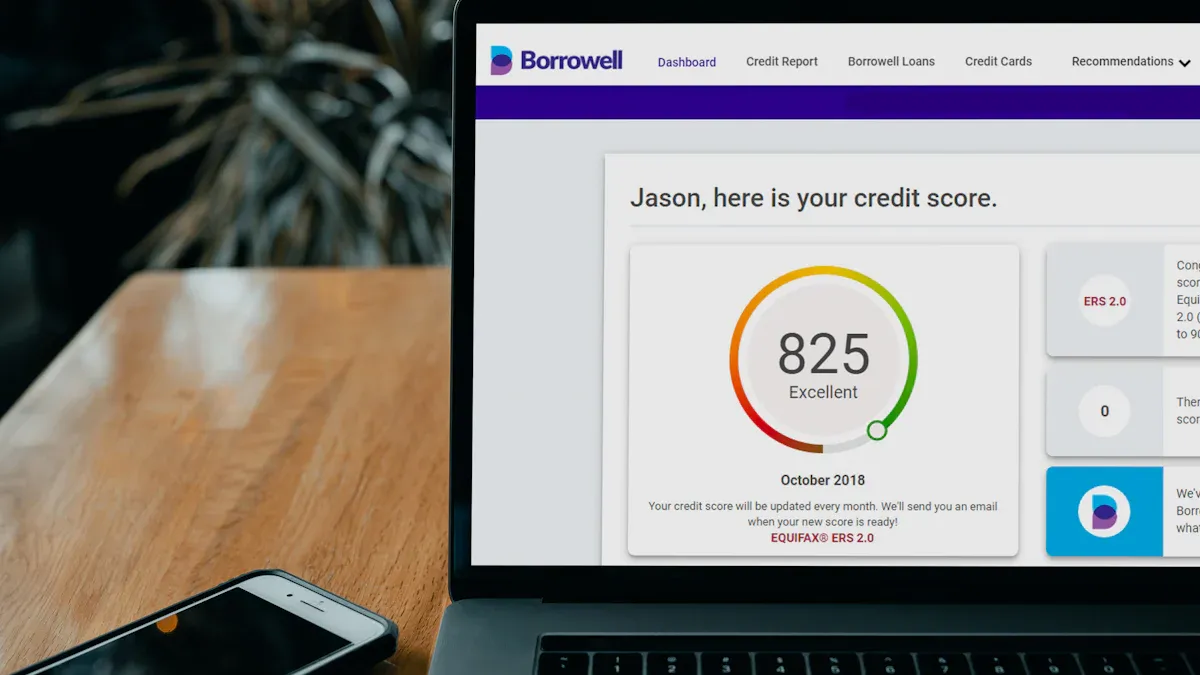
A general BI or reporting platform like FineReport is built for flexible data presentation, custom report logic, and tailored business reporting across many industries. By contrast, agency-focused reporting software is designed specifically for marketing teams that need to pull campaign data from common channels, automate recurring client reports, and deliver polished white-label dashboards with minimal setup.
For most agencies, the choice is not just about visualization quality. It is about operational fit.
The core use cases usually include:
- ROI analysis across paid, organic, social, email, and CRM data
- Recurring client reports delivered weekly or monthly
- Multi-channel dashboards that consolidate performance into one view
- White-label delivery through branded portals, custom domains, or agency-branded exports
This comparison is most relevant for:
- Agencies managing multiple client accounts
- Teams with regular reporting cadences
- Account managers who need repeatable reporting workflows
- Agency leaders balancing reporting depth with delivery speed
- Firms that must prove business impact, not just channel metrics
In practical terms, FineReport and agency-first platforms solve overlapping problems, but they approach them from different starting points. FineReport starts with customization. Agency reporting software starts with speed and repeatability.
How FineReport performs for custom client reporting and ROI analysis
Strengths in customization and data presentation
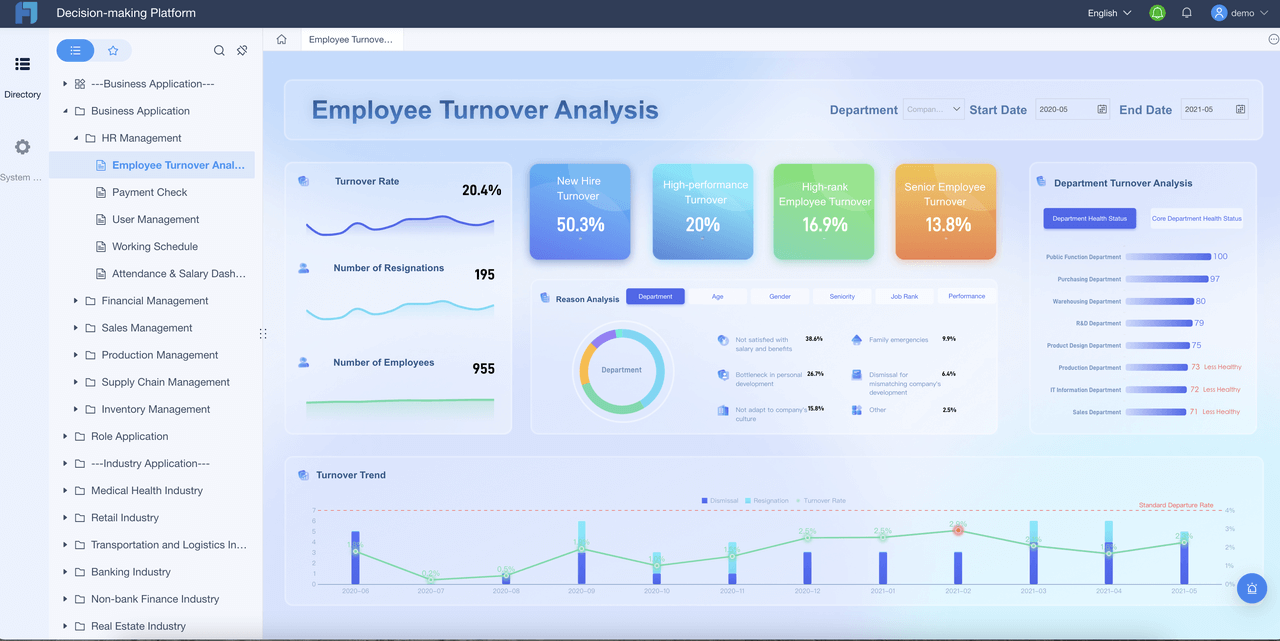
FineReport stands out when an agency needs reports that do not fit standard marketing dashboard templates.
One-sentence overview: FineReport is best suited for agencies that need deeply customized client reports, complex layouts, and flexible business reporting beyond standard marketing dashboards.
Key Features
- Highly flexible report design for custom layouts
- Advanced table, chart, and business document formatting
- Support for detailed, presentation-ready reports
- Ability to create tailored stakeholder views
- Strong fit for complex internal and external reporting structures
Pros & Cons
- Pros
- Greater freedom in report structure and visual arrangement
- Useful for agencies serving enterprise clients with strict formatting needs
- Better suited to combining marketing metrics with broader business reporting
- Strong option when agencies need more than simple template dashboards
- Cons
- Higher setup effort than many agency-first tools
- Less immediately optimized for recurring client reporting workflows
- May require more technical resources for maintenance and integration
Best For
- Agencies with custom reporting requirements
- Teams serving enterprise or highly specialized clients
- Organizations that need tailored layouts instead of prebuilt dashboard templates
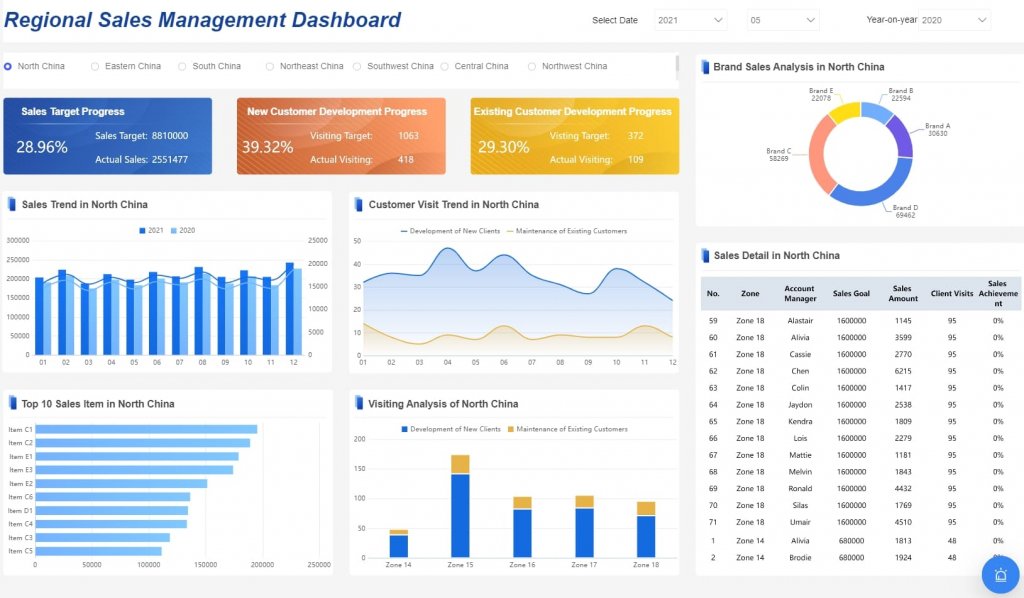
One of FineReport’s biggest advantages is control over how information is presented. If your agency needs to build client reports that resemble board-ready documents, operational summaries, or branded business reports with precise formatting, FineReport can be a strong fit.
That matters when reporting needs go beyond showing ad spend and conversions in a standard dashboard. Some agencies must combine marketing performance with sales pipeline data, financial summaries, service delivery metrics, or regional breakdowns in a single report. In those cases, a more flexible reporting engine can be valuable.
FineReport also makes sense when each client expects a different reporting style. Instead of forcing unusual reporting requirements into rigid widgets, agencies can design layouts around the client’s decision-making process.
Limits agencies may face in daily reporting workflows
The same flexibility that makes FineReport attractive can also create friction for agencies managing many accounts at once.
One-sentence overview: FineReport is powerful for customization, but agency teams may find it less streamlined for high-volume, recurring client reporting.
Key Features
- Custom report building with broad design freedom
- Support for structured business reporting
- Manual and technical configuration options
- Adaptability for complex data presentation needs
Pros & Cons
- Pros
- Strong reporting depth for nonstandard requirements
- Good fit for agencies with in-house technical capability
- Can support sophisticated client-specific reporting models
- Cons
- Setup can be time-intensive across many client accounts
- Ongoing maintenance may require technical oversight
- White-label portals and automated client delivery may not feel as turnkey as agency-first software
Best For
- Agencies with reporting specialists or BI support
- Teams where customization outweighs speed
- Firms willing to invest more effort upfront for tailored outputs
For day-to-day agency operations, the challenge is scale. If an account team has to onboard many clients, connect common marketing channels quickly, clone templates, schedule recurring reports, and deliver them with minimal manual intervention, FineReport may require more effort than purpose-built marketing agency reporting software.
Agencies may also need additional support for:
- Integration setup across multiple marketing sources
- Template reuse at scale
- Report maintenance as client KPIs change
- Scheduling and branded delivery workflows
- Handling many accounts without increasing manual workload
This does not make FineReport a weak option. It simply means its strengths are more aligned with reporting depth than with agency-style reporting automation.
How agency-focused reporting tools compare
Where agency-first platforms stand out
Agency-focused platforms are built around the operational reality of managing multiple marketing clients.
One-sentence overview: Agency-first reporting tools prioritize fast setup, automation, and client-ready delivery for common marketing reporting workflows.
Key Features
- Prebuilt integrations for major ad, analytics, SEO, social, and CRM platforms
- Ready-made templates for common campaign reporting use cases
- Automated report scheduling and alerts
- White-label dashboards, portals, and branded exports
- Reusable dashboard cloning for multi-client scale
Pros & Cons
- Pros
- Faster time to value for agency teams
- Lower reporting workload for account managers
- Easier recurring delivery for monthly or weekly reports
- Better built-in support for client-facing white-label experiences
- Cons
- Less flexibility for unusual report structures
- Some metrics and views may be template-constrained
- Advanced customization can vary significantly by vendor
Best For
- Agencies managing many clients and channels
- Teams needing repeatable reporting operations
- Firms prioritizing speed, automation, and white-label delivery
This category typically performs well when agencies need to move quickly. A good agency reporting platform usually helps teams connect standard data sources, launch a dashboard fast, and automate recurring reporting without significant custom development.
That is especially useful for agencies handling:
- PPC reporting
- SEO reporting
- social media performance summaries
- multi-channel monthly client recaps
- executive summaries for stakeholders
- branded client portals
Because these tools are designed for agency workflows, they tend to reduce repetitive manual work. That often translates directly into better margins and more time spent on strategy rather than assembling reports.
Trade-offs compared with FineReport
Agency-first software is not automatically better in every scenario.
One-sentence overview: Agency-focused platforms are more efficient for standardized reporting, but they often trade away some of the design freedom and structural flexibility available in FineReport.
Key Features
- Template-driven report assembly
- Preconfigured KPI sets and widgets
- Automation-first workflow design
- Client-sharing and white-label options
Pros & Cons
- Pros
- Easier to deploy and scale across accounts
- Better for teams with limited technical resources
- Strong alignment with recurring agency reporting
- Cons
- Unusual data models can be harder to support
- Deeply customized report structures may be limited
- Vendor feature depth can differ widely by plan and pricing
Best For
- Agencies with standard marketing channel reporting needs
- Teams that value speed over bespoke report architecture
- Organizations aiming to reduce reporting labor quickly
If your agency frequently builds highly customized layouts, combines nonmarketing operational data, or requires complex business-document formatting, some agency tools may feel restrictive.
Most agency-first platforms work best when the reporting model is relatively repeatable. They shine when dashboards can be cloned, KPIs can be standardized, and summaries can be sent on schedule. They are less ideal when every client requires a fundamentally different reporting structure.
That is where FineReport remains relevant. It offers more room for tailored report design, especially when agency work extends into broader analytics and formal business reporting.
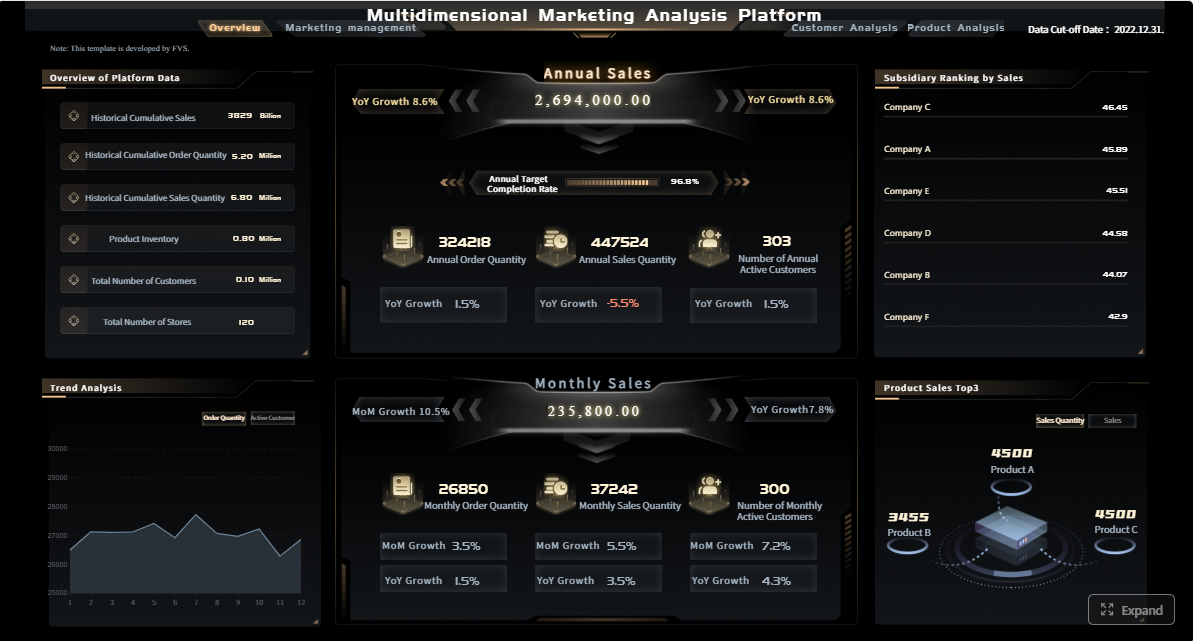 Click To Try The Dashboard
Head-to-head comparison: ROI analysis, automation, and white-label reporting
ROI analysis and attribution visibility
For ROI analysis, both FineReport and agency-focused tools can help agencies connect spend, conversions, and outcomes. The difference is usually in how quickly teams get there and how much customization is required.
- Better when ROI reporting needs highly specific layouts or custom business logic
- Useful for combining marketing metrics with finance, operations, or internal business data
- Stronger for agencies that want more control over how ROI is framed for each client
Agency-focused marketing agency reporting software
- Faster for standard ROI dashboards across common channels
- Usually better for quick visibility into spend, conversions, ROAS, and channel performance
- More practical when account managers need a repeatable framework across many clients
If the main goal is to clearly connect channel performance to business impact for clients, agency-first tools often reach a usable result faster. If the goal is to produce more tailored ROI narratives or blend broader operational datasets into reporting, FineReport can offer more flexibility.
Reporting automation and operational efficiency
This is often where the gap becomes most visible.
- Strong reporting engine, but setup and maintenance may be more hands-on
- Better for custom-built workflows than fast out-of-the-box agency automation
- Can require more oversight for report updates across multiple client accounts
Agency-focused marketing agency reporting software
- Typically stronger in scheduled exports, recurring email delivery, alerting, and dashboard cloning
- Better suited to agencies trying to scale reporting across many accounts
- Reduces repetitive work for account managers and analysts
For agencies measuring ROI not only in campaign performance but also in internal labor savings, automation matters. A platform that saves several hours per client per month can generate significant operational return.
That is why many agencies favor purpose-built reporting tools even if they are less flexible. The software does more of the reporting work automatically.
White-label client experience
White-label delivery is another major decision point.
- Can support polished outputs and customized presentation layers
- Better for tailored report design than for turnkey agency branding workflows
- May require more configuration to create a fully streamlined client-facing experience
Agency-focused marketing agency reporting software
- Usually built with agency branding in mind
- More likely to include custom domains, branded portals, logo controls, and client-ready access options
- Better fit for agencies that want reporting to feel like part of their own productized service
A strong white-label experience helps agencies reinforce brand value. It can also reduce friction in client communication by giving stakeholders a consistent place to review results. If branded portals and client-friendly dashboards are central to your service model, agency-focused tools generally have the edge.
What to consider when choosing a client reporting tool for marketing agencies
Questions to ask before selecting a platform
Before choosing a platform, agencies should evaluate both reporting complexity and workflow requirements.
Key questions include:
- How many clients will the team manage at once?
- Which channels and data sources need to be supported?
- Does the agency need simple drag-and-drop reporting or deeper customization control?
- How often will reports be updated and delivered?
- How important are white-label dashboards, custom domains, and branded portals?
- Do stakeholders need executive summaries and narrative reporting?
- Does the team have technical resources to build and maintain more advanced reporting setups?
- What is the expected ROI from reducing manual reporting hours?
These questions help separate a customization-first decision from an efficiency-first decision.
Best-fit scenarios
Here is the simplest way to think about platform fit.
Choose FineReport if:
One-sentence overview: FineReport is the stronger option for agencies that prioritize reporting depth, presentation flexibility, and tailored client layouts.
Key Features
- Deep customization for report structure and layout
- Strong business-report formatting
- Support for client-specific presentation logic
Pros & Cons
- Pros
- Excellent fit for custom reporting requirements
- Useful for combining marketing and broader business data
- More adaptable for specialized client needs
- Cons
- Slower to deploy for repetitive reporting at scale
- Requires more setup and support than many agency-first tools
Best For
- Agencies with complex client reporting requirements
- Teams with technical or BI resources
- Firms treating reporting as a highly customized deliverable
Choose agency-focused marketing agency reporting software if:
One-sentence overview: Agency-first platforms are the better option for agencies that need speed, automation, and standardized client delivery.
Key Features
- Fast dashboard creation
- Automated recurring reports
- White-label portals and branded exports
- Scalable multi-client workflows
Pros & Cons
- Pros
- Faster setup across common marketing channels
- Better for recurring client reporting cadences
- Stronger operational efficiency for growing agencies
- Cons
- Less ideal for highly unusual reporting structures
- May limit report design freedom compared with FineReport
Best For
- Agencies managing many accounts
- Teams wanting to reduce manual reporting work
- Firms that view reporting automation as a direct ROI lever
A practical shortlist should be based on:
- Reporting complexity
- Internal technical resources
- Number of clients and channels
- White-label expectations
- Time savings potential
- Client presentation requirements
Final verdict: which option wins for your agency
There is no universal winner. The right choice depends on whether your agency values reporting flexibility or operational efficiency more.
FineReport wins when:
- Your agency needs highly customized client reports
- Standard templates are too limiting
- You must combine marketing data with broader business reporting
- Presentation quality depends on custom layouts and precise formatting
- Your team can support more advanced setup and maintenance
Agency-focused marketing agency reporting software wins when:
- You need fast deployment across many clients
- Reporting automation is a major source of ROI
- White-label dashboards and branded portals are essential
- Account managers need reusable templates and scheduled delivery
- Your reporting model is standardized enough to benefit from prebuilt workflows
A practical decision framework looks like this:
- If customization depth is the priority, choose FineReport
- If automation and scalability are the priority, choose agency-focused marketing agency reporting software
- If white-label client experience is central to retention and presentation, agency-first tools usually have the advantage
- If ROI visibility depends on unusual metrics, client-specific layouts, or blended business data, FineReport may be the better fit
For many agencies, the real question is not which platform is more powerful in theory. It is which one helps the team prove ROI consistently, deliver reports efficiently, and create a client experience that supports retention.
If your agency wants maximum control over report design and tailored business storytelling, FineReport is a strong contender worth serious consideration. If your agency wants a faster path to recurring reports, lower reporting overhead, and polished white-label delivery, dedicated marketing agency reporting software will usually be the more practical choice.
FAQs
FineReport can work well for agencies that need highly customized reports and complex business-style layouts. It is usually a better fit for teams with technical resources than for agencies that need fast, repeatable reporting across many clients.