Monthly financial reporting should do more than package an income statement, balance sheet, and cash flow statement. Finance managers need a reporting framework that helps leadership catch margin erosion, cash timing pressure, receivables risk, overspending, and forecast drift before they become quarter-end surprises.
With FineReport + Dora, teams can ask for a report summary in chat, generate structured narratives from trusted report assets, receive scheduled briefings, and push exceptions to the right owner. That makes monthly financial reporting more actionable for finance managers, controllers, executives, and business owners who need both trusted numbers and faster follow-up.
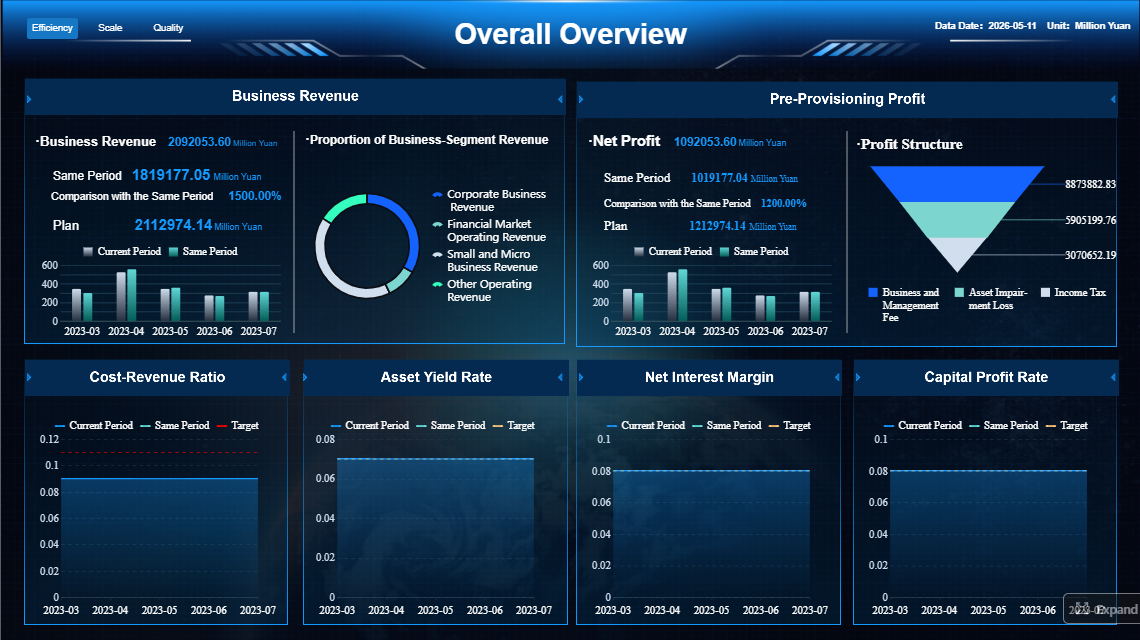
Click To Try The Dashboard
All reports in this article are built with FineReport
Why monthly financial reporting should go beyond the 3 core statements
The three core statements are essential. They show profitability, financial position, and cash movement. But for monthly decision-making, they are not enough on their own.
A finance manager who reviews only the core statements may see that profit declined, cash tightened, or liabilities increased. What the statements often do not show clearly enough is why that happened, where the issue sits, and who needs to act next.
Early gross margin pressure from discounting or input cost increases
Slower collections from key accounts
Expense overruns hidden inside department totals
Inventory buildup that ties up cash
Debt covenant risk before lender discussions become urgent
Capital projects drifting above budget
Forecast assumptions that no longer fit current performance
Quarterly reviews often surface these issues too late. By then, three months of weak pricing, poor collections, excess stock, or uncontrolled expenses may already be embedded in results. A practical monthly framework gives finance teams a repeatable way to detect problems early, explain them clearly, and support timely action.
For finance managers, controllers, and business owners, the goal of monthly financial reporting is not just compliance or bookkeeping hygiene. The goal is better operating decisions. That requires a reporting package that combines financial statements, supporting schedules, business KPIs, and concise management commentary.
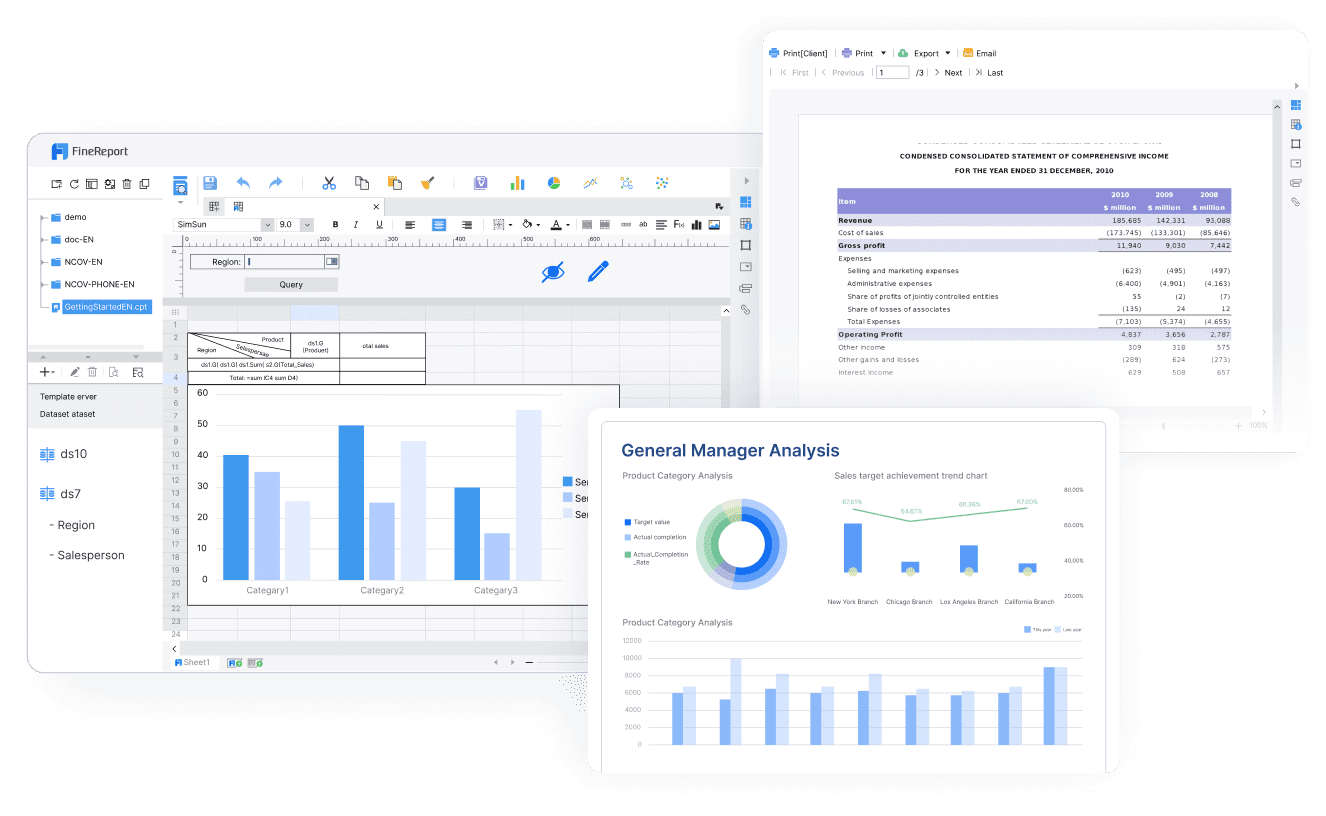
FineReport supports that foundation by standardizing formatted financial reports, supporting schedules, dashboards, and executive cockpits. Dora upgrades the experience by acting as an enterprise AI assistant over those trusted reporting assets, helping users consume reports faster through chat, summaries, alerts, and follow-up workflows.
The 12 things finance managers should review every month
A strong monthly financial reporting package should move from results to drivers, then from drivers to actions. The following 12 review areas give finance leaders a practical structure.
1. Revenue quality and sales mix
Revenue should be reviewed against budget, forecast, prior month, and prior year. But total revenue alone is not enough. Finance managers should also assess the quality of that revenue.
Definition: Revenue by product, service, customer, contract type, region, and channel, segmented into recurring, one-time, delayed, or non-core revenue.
Business value: This reveals whether top-line performance is sustainable, concentrated, or becoming less profitable.
AI use:Dora can summarize revenue shifts, explain which segments drove variance, and highlight whether growth came from recurring business or one-off transactions.
Important questions include:
Did actual revenue meet plan?
Has mix shifted toward lower-margin products or customers?
Are a few large customers driving too much concentration risk?
How much revenue was pulled forward, delayed, or non-recurring?
A FineReport monthly financial reporting cockpit can display revenue bridges, mix charts, and customer concentration tables. Dora can then generate a structured report summary for management, such as which product families underperformed and whether the shortfall is timing-related or structural.
2. Gross margin trends
Gross margin deserves a dedicated monthly review because it often signals trouble before bottom-line profit fully reflects it.
Definition:Gross profit and gross margin by product line, business unit, location, customer segment, or channel.
Business value: Margin analysis helps identify pricing weakness, discounting pressure, cost inflation, and operational inefficiencies.
AI use:Dora can compare margin performance across segments, explain abnormal changes, and flag areas requiring pricing or cost review.
Finance teams should investigate:
Pricing changes
Discounting levels
Material or input cost increases
Labor productivity issues
Freight or fulfillment cost shifts
Production scrap, rework, or inefficiency
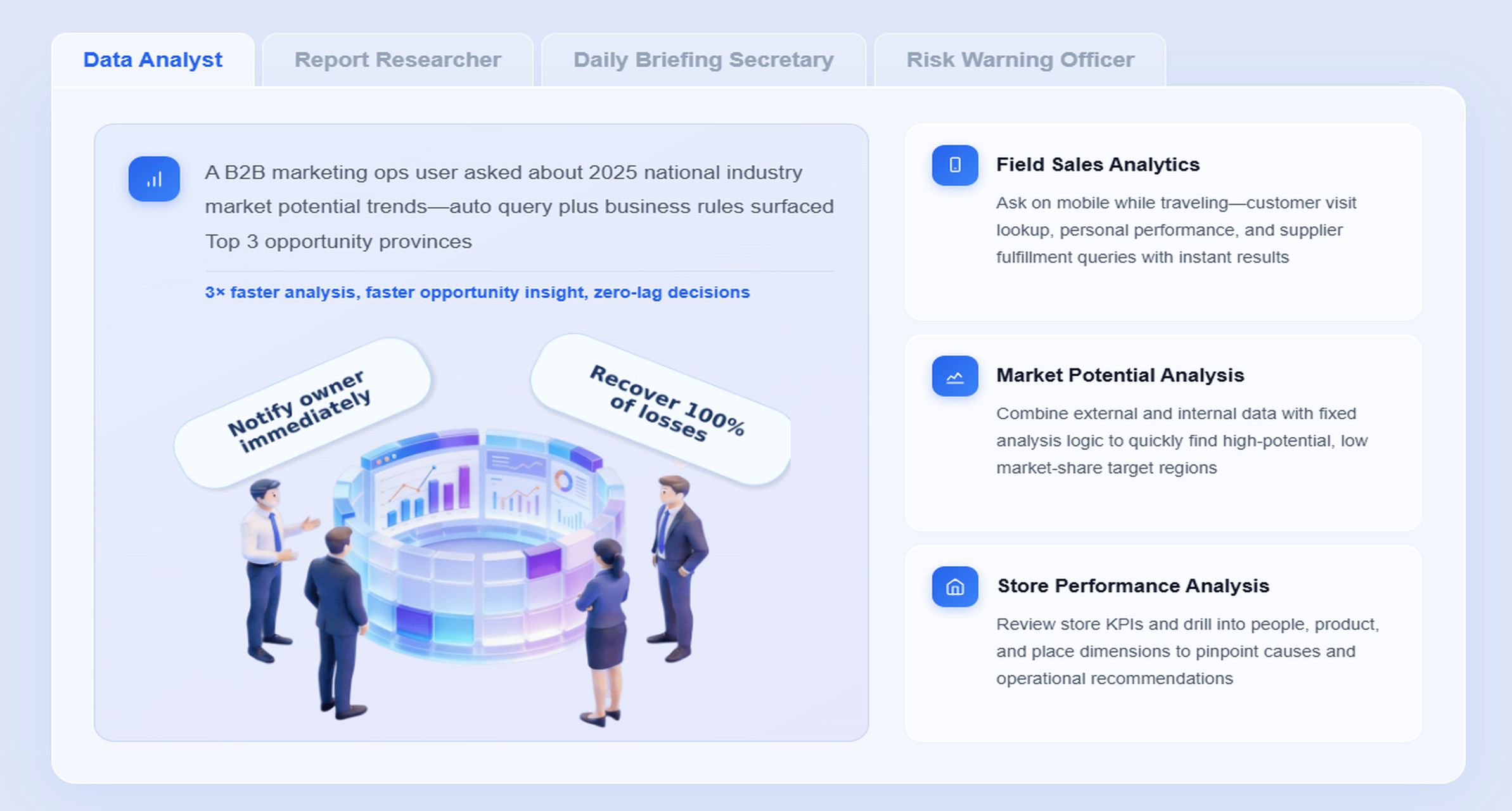
FineReport can present margin waterfalls, segment comparisons, and trend charts. Dora can act as a Data Analystdigital employee, answering natural-language questions such as why margin dropped in a specific product line and linking users back to the source report.
Expense control is one of the most common monthly review needs, yet many reporting packs still bury overspending in large departmental totals.
Definition: Actual operating expenses versus budget and forecast, split by department, cost center, and fixed versus variable categories.
Business value: This helps management isolate controllable variances and prevent spending drift.
AI use:Dora can summarize unusual spikes, classify major variances, and prepare commentary for management review.
Finance managers should identify:
Departments exceeding plan
Temporary versus recurring overspend
Hiring-related variance
Marketing or travel spikes
Professional services overages
Cost items that should have scaled down with revenue but did not
A well-designed FineReport package can include variance thresholds, drill-down schedules, and departmental owner views. Dora can generate monthly variance narratives and route exception summaries to responsible managers for follow-up.
4. Cash flow drivers and liquidity position
The cash flow statement is necessary, but monthly liquidity management requires more detail than the standard statement alone provides.
Definition: Cash movement drivers including collection timing, disbursement timing, funding inflows, and short-term liquidity availability.
Business value: This helps determine whether the business can comfortably support payroll, debt service, and near-term obligations.
AI use:Dora can produce a cash position briefing, explain short-term pressure points, and push alerts when liquidity thresholds are at risk.
Finance teams should review:
Current unrestricted cash
Upcoming payroll and debt obligations
Customer collection timing
Vendor payment patterns
One-time cash uses
Near-term working capital pressure
FineReport can combine cash trends, bank balances, weekly outlook schedules, and obligation calendars into a finance cockpit. Dora can then deliver a scheduled Daily Briefing Secretary summary each morning or week, making monthly financial reporting more continuous instead of a once-a-month document exercise.
5. Accounts receivable aging
Receivables are one of the clearest monthly indicators of future cash pressure.
Definition: AR aging by customer, aging bucket, amount overdue, collection owner, and days sales outstanding.
Business value: This identifies collection risk, customer behavior changes, and likely cash delays.
AI use:Dora can summarize overdue balances, list accounts with worsening payment patterns, and generate exception push notifications for collection owners.
Finance managers should monitor:
Total overdue receivables
Changes in DSO
Concentration in a few overdue customers
Disputed invoices
New slow-paying behavior among previously reliable accounts
FineReport can provide AR aging schedules, customer risk heatmaps, and trend analysis. Dora can act as a Risk Alert Officer, detecting overdue thresholds and pushing follow-up tasks to the right owner.
Payables should not be reviewed only as a working capital lever. Payment timing also affects supplier relationships and continuity risk.
Definition: AP aging, vendor concentration, due dates, overdue liabilities, and upcoming payment commitments.
Business value: This balances cash preservation with vendor trust and supply continuity.
AI use:Dora can identify overdue payable risk, summarize supplier exposure, and highlight where delayed payment may create operational issues.
Monthly reporting should show:
What is due this month and next
Which vendors are concentrated or critical
Whether overdue balances are increasing
Whether payment timing reflects deliberate strategy or unmanaged backlog
FineReport can standardize vendor obligation schedules and payment dashboards. Dora can summarize which liabilities need attention and whether delayed payment could create escalation with critical suppliers.
7. Inventory levels and inventory turns
For product-based businesses, inventory is both an operating asset and a cash risk.
Definition: Inventory by category, location, age, turns, slow-moving items, obsolete stock, and variance versus demand expectations.
Business value: This reveals whether cash is tied up in the wrong stock and whether purchasing assumptions still fit demand.
AI use:Dora can explain inventory buildup, highlight low-turn categories, and connect inventory risk to margin and cash implications.
Monthly review areas include:
Slow-moving and obsolete inventory
Excess stock relative to forecast
Stockouts affecting revenue
Purchasing patterns that do not align with demand trends
Inventory turns by category
FineReport can support inventory aging reports, turns dashboards, and supply-demand comparison views. Dora can generate chart-based summaries for management, explaining why inventory rose and where corrective purchasing action may be needed.
8. Budget-to-actual performance
Budget-to-actual review is often the center of monthly financial reporting because it creates accountability and links performance to plan.
Definition: Comparison of actual monthly results to approved budget, including revenue, margin, expenses, cash, and key KPIs.
Business value: This identifies where results diverge materially from plan and whether the issue is temporary or structural.
AI use:Dora can generate structured budget variance commentary and group variances into timing issues, volume issues, pricing issues, and structural gaps.
Finance leaders should distinguish:
Timing differences that may reverse next month
Volume shortfalls or demand weakness
Margin pressure from cost or pricing
Structural overspend requiring policy or staffing changes
FineReport can automate consistent budget-to-actual pages and exception tables. Dora can then turn those assets into a readable executive narrative instead of forcing finance teams to manually write the same commentary every month.
FineReport can integrate monthly financial reporting with rolling forecast templates and management report layouts. Dora can help explain what changed in forecast assumptions and where attention is needed next.
10. Debt, covenants, and financing obligations
Debt review is easy to underemphasize until the business gets close to a covenant breach or refinancing event.
Business value: This helps the finance team manage lender communication, financing flexibility, and risk exposure.
AI use:Dora can monitor covenant thresholds, summarize financing obligations, and push alerts when metrics approach risk limits.
Monthly reporting should highlight:
Debt service due dates
Interest cost trends
Covenant calculations
Leverage and liquidity metrics
Upcoming maturities or renewal points
FineReport can present debt schedules, covenant dashboards, and financing summaries in a controlled management report. Dora can act as a governed AI digital employee that watches thresholds and supports more timely escalation.
Capex should be reviewed not only as a ledger category but as an investment portfolio.
Definition: Approved versus actual capital spending, project progress, committed amounts, timeline status, and expected return assumptions.
Business value: This helps prevent budget drift and keeps leadership aligned on investment priorities.
AI use:Dora can summarize overspend, flag delayed projects, and prepare monthly project investment status updates.
Review points include:
Capex versus approved budget
Projects behind schedule
Scope changes driving overspend
Return assumptions that may need revision
Cash impact of upcoming project milestones
FineReport can structure project spending reports with milestone indicators and variance tables. Dora can convert those reports into management-ready narratives and identify which projects require decision-making this month.
12. KPI dashboard and business health indicators
Not every problem shows up first in accounting lines. Monthly financial reporting should include operational indicators that explain future financial performance.
Definition: Business model-specific KPIs such as customer churn, utilization, backlog, headcount efficiency, order conversion, service delivery performance, and cash conversion.
Business value: These indicators connect operations to future revenue, margin, and cash outcomes.
AI use:Dora can synthesize operational and financial signals into one structured management briefing.
Distribution: fill rate, aged stock, supplier performance, cash conversion
FineReport is especially useful here because it can combine formatted financial statements with operational cockpits in one governed environment. Dora can then summarize both financial and operational context together, which makes monthly financial reporting far more decision-ready.
How to structure monthly financial reports for clear decision-making
A reporting package should help leaders understand what happened, why it happened, and what needs to happen next. Structure matters as much as content.
The first page should give decision-makers a concise view of the month.
Include:
The biggest favorable and unfavorable movements
Key risks and emerging issues
Cash and liquidity status
Forecast or outlook changes
Actions requiring leadership attention
This page should answer three questions quickly:
What changed?
Why did it change?
What needs attention next?
FineReport helps standardize this executive summary as a formatted monthly management report. Dora can generate a draft structured report summary from trusted report sections, helping finance teams reduce manual narrative work while preserving governance and review.
Use a consistent monthly reporting package
Consistency makes trend analysis easier. If section order, KPI definitions, thresholds, and commentary format change every month, executives spend too much time reorienting themselves.
FineReport supports consistent templates, schedules, variance logic, permissions, and reporting workflows. That is important because Dora works best when the reporting foundation is standardized and trusted.
Add commentary, not just numbers
Numbers alone rarely create action. Commentary should explain the business meaning of the metric.
For each major section, include:
What changed
Why it changed
Business impact
Whether the issue is one-time or ongoing
Owner and next step
This is also where AI can help materially. Dora can turn report outputs into structured explanations, chart-based answers, and management narratives. Finance still reviews and approves the final message, but the drafting and summarization burden becomes much lighter.
Monthly financial reporting often breaks down not because reports are missing, but because decision-makers do not consume them fast enough. Executives may not open every schedule. Department heads may not know which variance matters. Controllers may spend too much time explaining the same changes repeatedly.
“Summarize this month’s financial report, highlight gross margin deterioration, list overdue receivables above threshold, and show which departments need follow-up on expense variance.”
Retrieve trusted FineReport assets such as the monthly financial reporting package, supporting schedules, AR aging report, and KPI cockpit.
Understand KPI definitions and business rules including margin logic, variance thresholds, overdue aging buckets, and responsibility mapping.
Generate a structured report summary with management narrative, chart explanations, and section-level insights in natural language.
Detect exceptions and risk items such as margin decline, overdue receivables, weak liquidity signals, or departmental overspend.
Push findings to responsible users through scheduled briefings, alerts, and owner-specific follow-up messages.
Create follow-up records and review summaries for the next finance meeting or weekly management check-in.
This is where the combination matters.
FineReport provides the trusted reporting and semantic foundation. It holds the formatted monthly reports, supporting schedules, KPI definitions, report templates, and permission controls.
Dora provides the AI assistant layer for execution. It lets users interact with those trusted assets through chat, receive structured summaries instead of raw tables, and get scheduled or exception-based pushes without manually pulling every report.
This approach is more enterprise-ready than using a raw prompt-only assistant against spreadsheets or disconnected data. Dora is designed for governed AI workflow execution with Skills, permissions, semantic rules, and reusable report logic. That leads to better landing capability than feature-only agent comparisons because the AI is operating on trusted report assets rather than improvising from ungoverned inputs.
Explaining chart changes in plain business language
Producing a monthly management narrative draft
Sending scheduled finance briefings before review meetings
Monitoring overdue AR, covenant exposure, or cash thresholds
Pushing follow-up reminders to owners after the monthly review
For executives, this means faster understanding of what matters. For finance teams, it reduces repetitive reporting explanation work. For IT and data teams, it shifts effort from one-off report requests toward stronger templates, KPI governance, data quality, permissions, and reusable AI Skills.
FineReport can help smaller teams standardize this package without building separate files every month. Dora can further reduce workload by preparing structured summaries and alerting owners to overdue items or unexpected cash pressure.
How templates can improve consistency
Templates help finance teams move faster and improve interpretation quality.
FineReport is well suited for this because it supports formatted reporting, management report templates, and operational cockpits in one reporting foundation. Dora then turns those templates into a repeatable AI-assisted reporting workflow.
Where benchmark report formats can be useful
Finance leaders can borrow structure ideas from institutional reporting packages, lender packs, investor decks, or well-run controller teams. But benchmarks should be adapted, not copied blindly.
Useful benchmark practices include:
Clear summary-first format
Consistent variance definitions
Focus on material movements
Supporting schedules in appendices
Accountability through owners and due dates
The key is relevance. Monthly financial reporting should reflect the company’s business model, not generic measures that create noise.
Common mistakes in monthly review cycles and how to avoid them
Even well-intentioned finance teams can undermine monthly reporting by making the process too slow, too accounting-only, or too passive.
Reviewing data too late
If the reporting package arrives too late, managers lose the ability to act in time.
Common causes include:
Weak close process
Manual reconciliations
Too many spreadsheet handoffs
Unclear ownership for supporting schedules
The solution is a close calendar, a reporting deadline, and standardized report preparation. FineReport helps automate recurring report production. Dora can help shorten consumption time further through scheduled summaries instead of waiting for everyone to read the full pack manually.
Focusing only on accounting outputs
Core statements are essential, but they do not fully explain what will happen next.
This is also where AI value becomes practical. Dora can synthesize financial and operational report sections into one management briefing, which helps bridge the gap between accounting outputs and business action.
Reporting without action items
A monthly package without ownership is just documentation.
Dora can support this by pushing summaries, reminders, and follow-up records after the meeting. Instead of finance manually chasing every owner, the enterprise AI assistant helps operationalize the monthly review.
2. Build a semantic layer inside the reporting workflow
AI should not guess what “margin,” “cash available,” or “overdue” means in your business.
Use FineReport to organize trusted reports, templates, and KPI logic. Then use Dora on top of that foundation so natural-language requests map to governed definitions and approved report assets. This is one reason FineReport + Dora is more practical than relying on generic prompt-only agents.
3. Treat data quality as part of the AI implementation
If receivables aging is inconsistent, department coding is unreliable, or inventory status is incomplete, AI summaries will only surface those weaknesses faster.
Building this manually is complex. FineReport helps teams standardize trusted reports, operational cockpits, templates, and reporting workflows. Dora turns those assets into an AI assistant that can answer report questions in chat, generate structured summaries, push scheduled briefings, monitor exceptions, and follow up with responsible owners.
For monthly financial reporting, that matters because finance teams are not just building reports. They are also:
Explaining variances
Preparing management narratives
Monitoring AR and cash risk
Following up with department owners
Updating forecasts
Escalating exceptions
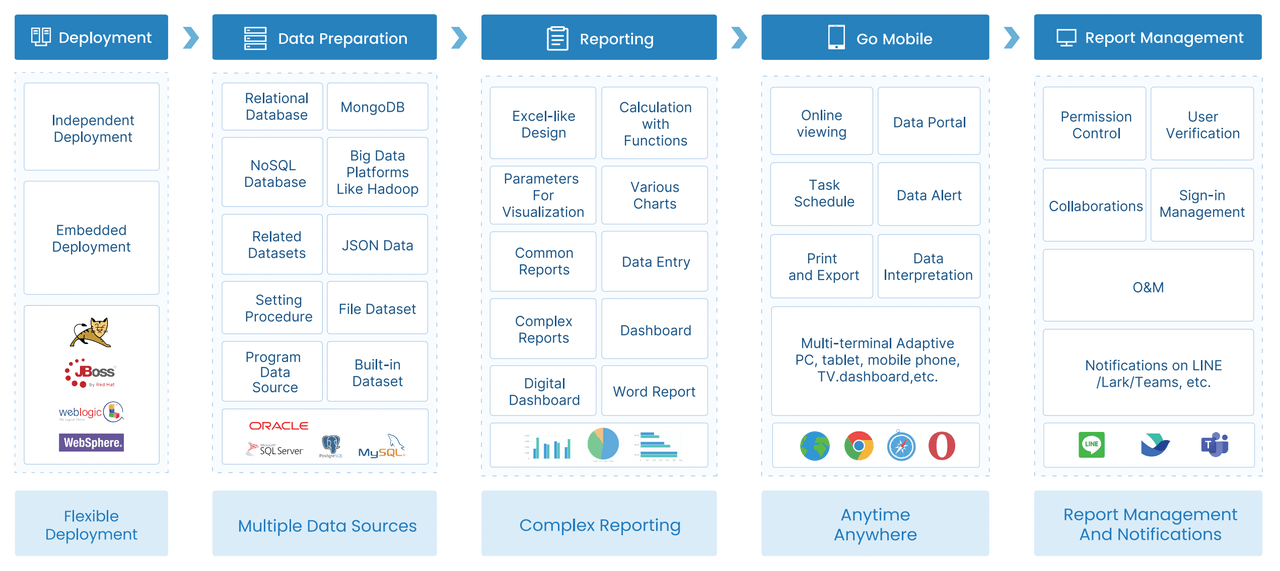
FineReport provides the reporting foundation for all of that work. It supports formatted reports, complex financial schedules, management packs, operational cockpits, data entry and workflow scenarios, and enterprise reporting automation.
Dora adds the Agentic BI layer. It allows natural-language requests over trusted reporting assets, governed query and Skill execution, structured report summaries, exception push, owner notification, and follow-up records. In other words, it helps enterprises move from people manually preparing and explaining reports to AI helping people query, summarize, report, push, alert, and follow up.
FineReport + Dora is not only a reporting upgrade; it is a practical fourth-generation Agentic BI path.FineReport provides governed reports and operational cockpits. Dora provides the AI assistant layer for scenario execution, with more controlled Skills, lower token waste, faster execution paths, and more stable workflows than prompt-only agents.
This is especially valuable for finance leaders because monthly financial reporting is highly repetitive, highly structured, and highly dependent on governed definitions. That makes it an ideal scenario for a Report Researcher, Daily Briefing Secretary, Data Analystdigital employee, or Risk Alert Officer.
For executives, the value is concrete scenario ROI: timely summaries, fewer surprises, and better follow-through on recurring financial work.
For IT teams, the value is a more scalable role in the AI era: less manual report servicing, more focus on connectors, semantics, data quality, permissions, report templates, and reusable Skills.
For business users and department owners, the value is lower friction: they receive timely report summaries, chat-based answers, exception pushes, and clear action items without hunting through spreadsheets or waiting on analysts.
Get Ready-to-Use Dashboard Templates in Fine Gallery
The strongest Dora pitch is scenario + product + service: FineReport provides the trusted reporting foundation, Dora provides the AI digital employee, and implementation service connects data, governance, semantic setup, Skills, report templates, permissions, and rollout.
If your current monthly financial reporting process still depends on manual data collection, spreadsheet stitching, repetitive commentary writing, and late follow-up, this is the practical upgrade path.
It should include supporting schedules, variance analysis, KPI dashboards, and management commentary that explain what changed, why it changed, and what action is needed. Common additions include revenue mix, gross margin, operating expense variance, receivables, inventory, and forecast performance.
Monthly reporting helps teams detect issues like margin pressure, cash strain, and overspending earlier, before they become larger quarter-end problems. It gives leadership more time to investigate causes and correct course.
Finance managers typically focus on revenue quality, gross margin, operating expenses, cash flow, accounts receivable, accounts payable, inventory, debt, capital spending, and forecast versus actual results. The right mix depends on the business model, but the goal is to connect financial outcomes to operating drivers.
Many teams aim to complete the monthly close and deliver reports within 5 to 10 business days. The exact timing depends on data quality, reconciliation complexity, and how automated the reporting workflow is.
FineReport helps standardize dashboards, statements, and supporting schedules from trusted data sources. Dora adds faster report consumption through chat summaries, exception alerts, scheduled briefings, and follow-up workflows.
Product Trial
FineReport
Pixel-perfect reports · Interactive dashboards · Easy data entry · Digital twins