If you lead finance across multiple entities, monthly reporting breaks down for familiar reasons: one subsidiary closes on day three, another on day seven, account mappings differ, commentary is inconsistent, and leadership receives a pack that looks polished but is hard to compare. The result is not just slower close. It is weaker decisions, repeated reconciliation work, and unnecessary debate about numbers that should already be trusted.
This is where strong financial report services matter. The goal is not only to produce monthly packs. It is to create a repeatable management reporting model across entities, supported by consistent definitions, standardized workflows, and governed reporting tools. With FineReport + Dora, teams can ask for a report summary in chat, generate structured narratives from trusted report assets, receive scheduled briefings, and push exceptions to the right owner.
Click To Try The Dashboard
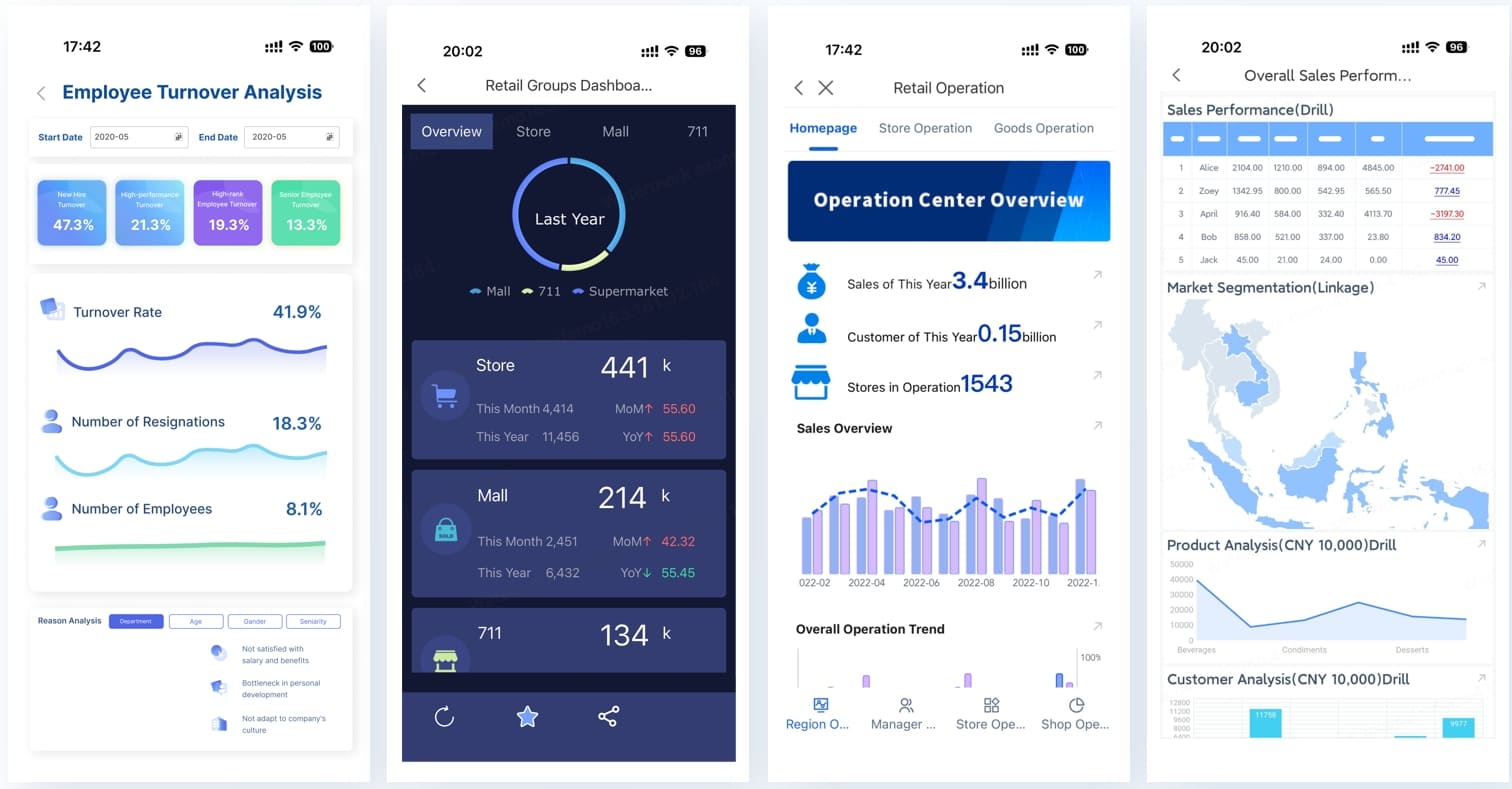
All reports in this article are built with FineReport
Why CFOs need standardized monthly reporting across entities
Multi-entity reporting fails when the organization treats each entity’s close and management pack as a local exercise. That approach may work when the company is small, but it does not scale across regions, legal structures, currencies, or business models.
The hidden cost of inconsistent definitions, timelines, and reporting formats
When different entities define revenue, gross margin, operating expense, working capital, or cash metrics differently, leadership spends too much time interpreting instead of deciding. A late entity pack can delay the group view. A different report format can hide risk. A spreadsheet adjustment with unclear ownership can undermine confidence in the entire reporting cycle.
The real cost shows up in several ways:
delayed monthly review meetings
repeated rework by group finance
inconsistent board narratives
weak accountability for entity performance
lower trust in variance explanations
higher audit and control risk around manual adjustments
For CFOs, standardization is not about cosmetic uniformity. It is about preserving comparability and decision quality.
Common cross-entity issues: different charts of accounts, local close routines, and spreadsheet-driven adjustments
Most finance organizations run into the same friction points:
Different charts of accounts: local structures do not align neatly to group categories
Different close routines: some entities post accruals earlier, others rely on late manual journals
Spreadsheet-driven adjustments: offline files become the unofficial source of truth
Uneven commentary quality: some controllers provide useful analysis, others only restate the numbers
Fragmented review cycles: reviewers chase missing submissions through email and chat
Inconsistent presentation: board and executive packs lack a common management lens
This is exactly where financial report services can help bring structure, discipline, and repeatability.
What good standardization looks like for leadership, boards, and operating teams
A mature monthly reporting model is recognizable. Every entity submits on the same cadence, uses the same reporting logic, and supports the same management pack structure. Group finance can compare numbers with confidence. Entity leaders understand what must be explained. Executives receive a consistent narrative, not just a stack of files.
How financial report services help build a consistent reporting framework
Standardization usually fails not because finance teams do not understand the need, but because recurring execution is harder than expected. Collecting entity submissions, reconciling issues, consolidating views, preparing narratives, and distributing management packs all take time and coordination.
Where internal teams usually struggle: data collection, reconciliation, review cycles, and presentation consistency
Even capable internal teams often face bottlenecks in four areas:
Data collection: entity trial balances, accruals, supporting schedules, and adjustments arrive in different formats
Review cycles: reviewers spend too much time chasing owners, checking completeness, and clarifying commentary
Presentation consistency: final packs vary in layout, structure, and level of analysis
These are not isolated process issues. They affect leadership visibility every month.
The role of financial report services in reducing manual work and improving reporting discipline
Well-designed financial report services help finance teams move from ad hoc reporting to controlled reporting operations. That includes:
designing the standard reporting pack
aligning reporting definitions across entities
building mapping rules and validation checks
setting monthly calendars and workflow controls
improving consolidation discipline
creating board-ready and management-ready outputs
supporting recurring pack preparation and review
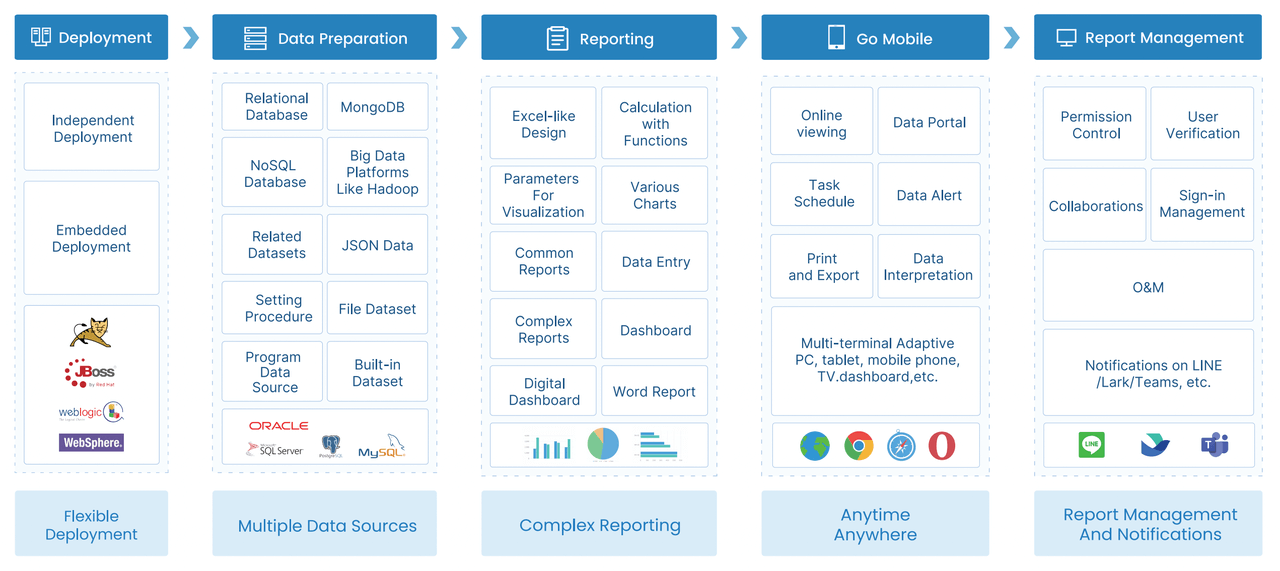
In an enterprise setting, this becomes stronger when reporting services are paired with a governed reporting platform. FineReport provides the reporting foundation, while Dora adds an enterprise Data Agent layer for AI-assisted report query, summary, alerts, and follow-up.
When to centralize, automate, or use external support for recurring management reports
CFOs do not need to centralize everything. The better question is what should be standardized, what should be automated, and what should be supported externally.
Automate: data collection workflows, report generation, validation checks, exception alerts, and scheduled briefings
Use external support: recurring pack production, specialized technical accounting analysis, board pack formatting, and process redesign during rapid growth or acquisition phases
The right operating model depends on entity complexity, internal team capacity, and leadership expectations.
Step 1–3: Set reporting standards before the monthly close
The best time to improve monthly reporting is before the close begins, not after the first set of inconsistent submissions arrives.
Step 1: Define one management reporting pack for all entities
Every entity should work toward the same core pack, even if local operating detail differs.
Standardize the core P&L, balance sheet, cash flow, and KPI views required each month
Your standard pack should cover the minimum set of decision-relevant views required by group leadership.
Report Element: Monthly P&L view Definition: Standard income statement by entity, business unit, and group category. Business value: Enables comparable performance review across revenue, margin, and operating cost lines. AI use:Dora can summarize P&L changes, explain material variances, and include them in a scheduled management briefing.
Report Element: Balance sheet view Definition: Standardized month-end asset, liability, and equity view with key working capital lines. Business value: Helps leadership track liquidity, leverage, and control risks. AI use:Dora can explain unusual balance movements, identify missing support items, and highlight review priorities.
Report Element: Cash flow view Definition: Monthly cash movement summary by operating, investing, and financing activity. Business value: Supports liquidity management and funding decisions. AI use:Dora can generate a structured cash flow narrative and flag unfavorable trends or timing issues.
Report Element: KPI view Definition: Agreed management metrics such as EBITDA, gross margin, DSO, inventory turns, or operating cash conversion. Business value: Gives executives a fast way to compare operating health across entities. AI use:Dora can answer natural-language metric questions and produce chart-based explanations from FineReport assets.
Separate statutory reporting needs from management reporting needs to avoid clutter
A common mistake is forcing statutory detail into every management pack. Monthly management reporting should be designed for decisions, not for filing completeness. Keep the pack focused on the metrics and narratives leadership actually uses.
That separation improves:
reporting speed
readability
executive attention
quality of commentary
consistency across entities
Step 2: Create a common chart of accounts and mapping logic
Without account harmonization, standard reporting becomes fragile.
Align entity-level accounts to group reporting categories without losing local detail
You do not need to erase local accounting structures. You need a controlled mapping layer that translates local accounts into group management categories.
This mapping should define:
local account to group category relationships
segment and cost center tagging rules
treatment of shared services allocations
product or regional reporting dimensions where needed
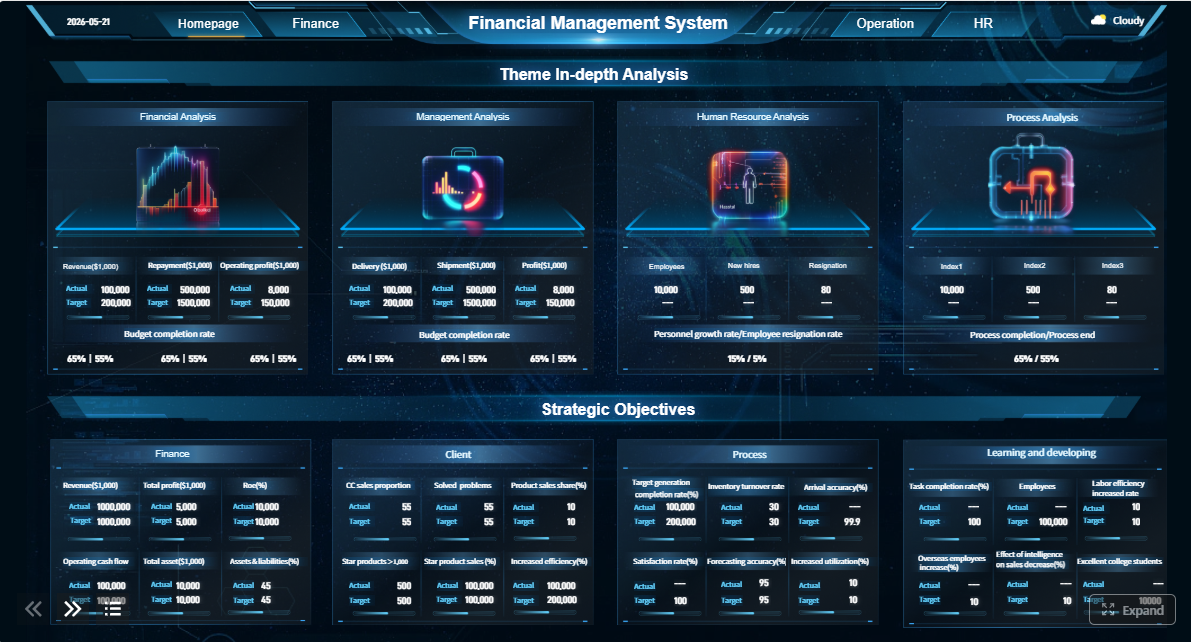
FineReport can present this reporting logic in standardized reports and cross-entity cockpits, giving finance teams a trusted semantic foundation for comparison.
Establish clear rules for reclasses, eliminations, and segment tagging
Reporting breaks when reclass logic lives in people’s memory instead of documented rules. CFOs should require explicit policies for:
recurring reclasses
intercompany eliminations
FX translation treatment
segment attribution
exceptional or one-off items
These rules should flow into templates, workflows, and governed reports so that the same issue is handled the same way every month.
Step 3: Lock reporting definitions, owners, and deadlines
Even the best templates fail if accountability is vague.
Assign responsibility for submissions, reviews, commentary, and final approval
Define who owns each monthly step:
entity finance owner for source submission
controller or finance manager for review
group finance for consolidation
business leader for commentary
CFO or delegated approver for final sign-off
Ownership reduces last-minute confusion and creates a stronger review culture.
Publish a monthly reporting calendar with cutoffs and escalation points
Your calendar should specify:
entity close deadlines
submission cutoffs
validation review windows
commentary due dates
consolidation completion targets
executive pack release date
escalation path for late or incomplete submissions
This is where financial report services often add immediate value by converting informal routines into documented cadence.
Step 4–6: Improve data quality, analysis, and consolidation
Once standards are set, the next priority is quality and repeatability.
Step 4: Standardize source data and submission templates
The more freedom entities have in how they submit data, the more time group finance spends cleaning it.
Use consistent entity reporting templates for trial balances, accruals, and supporting schedules
Standardized submission templates should cover:
trial balance upload structure
accrual and provision schedules
intercompany schedules
headcount or operational drivers if used in KPI analysis
supporting notes for large journal entries
commentary fields for material movements
FineReport can support structured reporting workflows and formatted reports that make these submissions easier to review and compare.
Build validation checks to catch missing fields, mapping errors, and unusual movements early
Basic validation should happen before group review begins. Examples include:
missing mandatory fields
unmapped accounts
intercompany mismatches
variance threshold breaches
unsupported balances
incomplete commentary on material changes
This reduces the cost of late-stage rework and improves trust in final outputs.
Step 5: Add a repeatable financial reporting analysis process
Standard reporting without standard analysis still leaves too much subjectivity.
Compare actuals to budget, forecast, and prior periods using one variance logic across entities
All entities should use the same variance framework, such as:
actual vs budget
actual vs forecast
month over month
year over year
actual vs prior rolling average where relevant
The point is not to create more views. It is to create consistent interpretation.
Report Element: Variance analysis section Definition: Standard comparison of actuals against plan and prior periods using defined materiality thresholds. Business value: Makes entity performance comparable and highlights issues faster. AI use:Dora can summarize the biggest movements, explain chart changes, and prepare a concise narrative for monthly review meetings.
Require concise management commentary for material changes, risks, and one-off items
Commentary should answer three questions:
What changed?
Why did it change?
What needs follow-up?
A short, structured narrative is more useful than a long descriptive paragraph. This is also where AI can help by turning trusted report outputs into consistent management summaries.
Step 6: Strengthen consolidation and review controls
Cross-entity credibility depends on disciplined consolidation.
Formalize intercompany matching, eliminations, and FX translation procedures
These steps should not be dependent on individual experience alone. They need documented procedures, thresholds, and review evidence. That reduces key-person risk and improves reporting continuity during team changes.
Introduce reviewer checklists so every entity pack meets the same quality threshold
A good reviewer checklist includes:
completeness of submission
mapping validation completed
major balances supported
material variances explained
intercompany differences addressed
one-off items labeled correctly
final pack formatting checked
sign-off recorded
Review checklists are simple, but they are one of the most effective ways to improve monthly reporting discipline.
Focus on fit with your close process rather than chasing feature-heavy tools
A finance reporting platform is valuable when it supports your actual monthly cadence. The best tool is the one that reduces reporting friction without forcing finance teams into disconnected workarounds.
Step 8: Decide between in-house delivery and outsourced support
Finance leaders should assess what must remain close to the business and what can be delivered through repeatable service support.
Identify which activities can be retained internally and which can be outsourced for speed or specialist expertise
Often retained internally:
final management judgment
business interpretation
CFO review and sign-off
sensitive board communication
Often suitable for service support:
recurring pack assembly
template maintenance
validation and QA checks
presentation formatting
periodic technical reporting support
process redesign during ERP or entity integration projects
Assess service models for recurring reporting, analysis, board packs, and technical accounting support
The best financial report services model is one that complements the finance team rather than replacing ownership. It should strengthen timeliness, consistency, and governance while leaving decisions with accountable business leaders.
Step 9: Track adoption and refine the reporting process monthly
Standardization is not finished after rollout. It must be measured.
Measure timeliness, error rates, rework, close duration, and stakeholder satisfaction
Useful metrics include:
percent of entities submitting on time
number of mapping or validation errors
volume of late adjustments
days to issue management pack
rework requests from reviewers
stakeholder rating of pack usefulness
frequency of unresolved intercompany differences
Report Element: Reporting operations scorecard Definition: Monthly operational view of reporting timeliness, quality, and workflow adherence. Business value: Helps CFOs manage the reporting process itself, not just financial outcomes. AI use:Dora can prepare a periodic summary of close delays, recurring issue patterns, and owners needing follow-up.
Update templates, definitions, and controls as the business adds entities or changes structure
Acquisitions, reorganizations, and ERP changes all affect reporting logic. A controlled monthly refinement cycle keeps the reporting model useful as the company evolves.
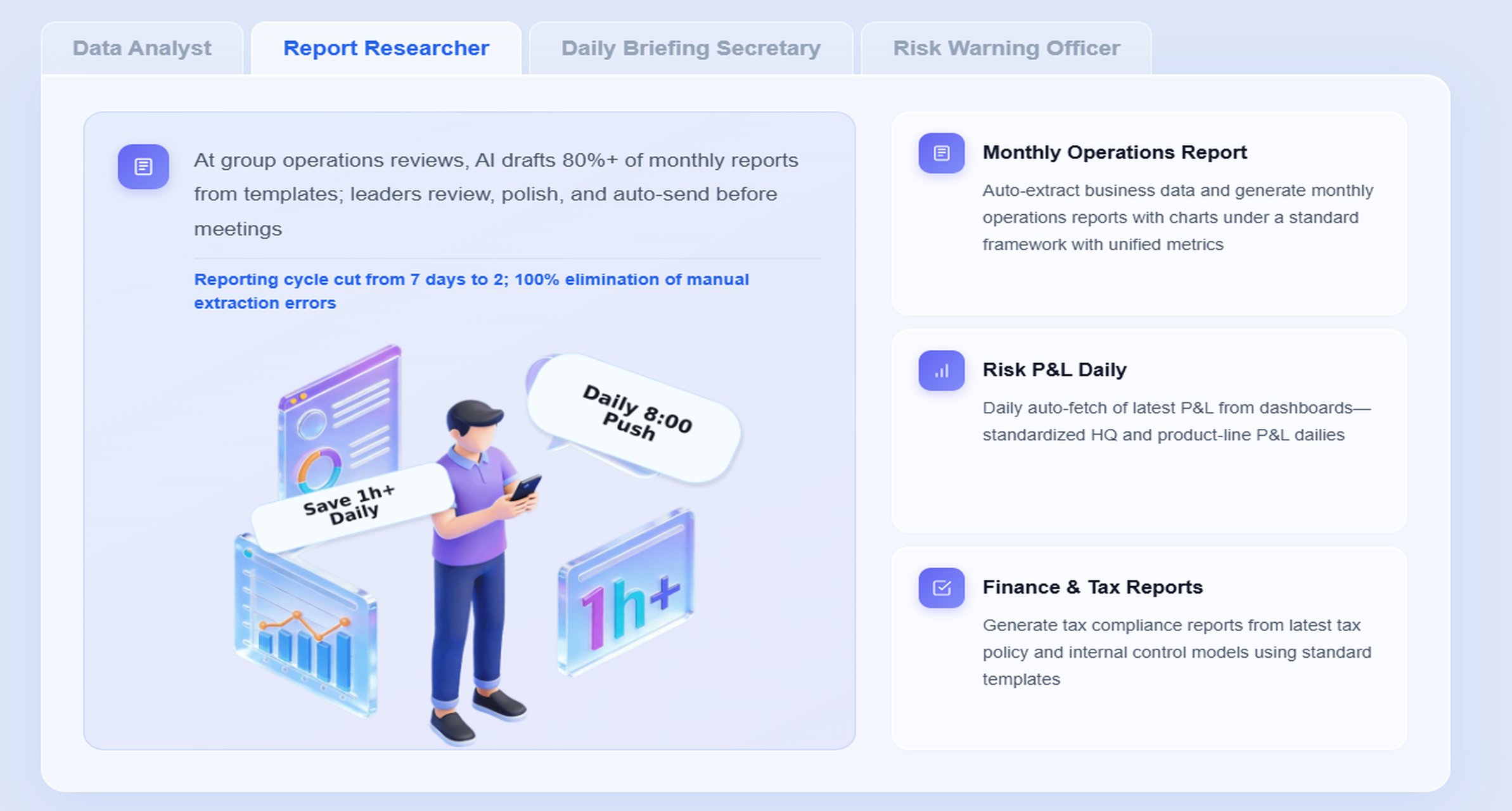
Once CFOs standardize monthly reporting, a second problem usually appears: people still spend too much time reading, explaining, forwarding, and chasing reports. This is where Dora adds enterprise value. Dora is not a replacement for FineReport. FineReport builds the trusted reporting and operational cockpit foundation. Dora turns that foundation into a scenario-specific AI assistant or digital employee for report consumption and follow-up.
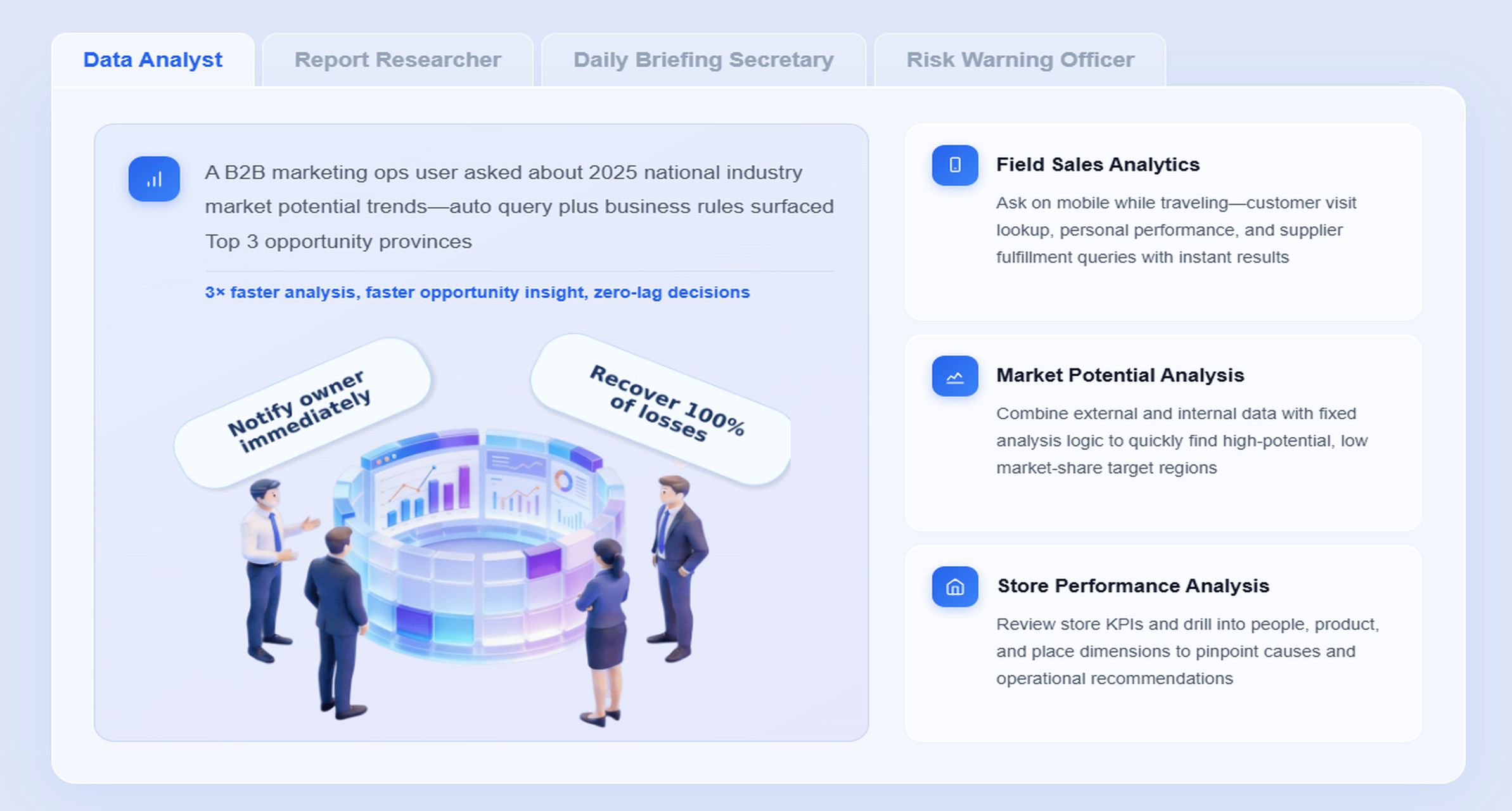
For a multi-entity monthly reporting scenario, the most relevant Dora digital employees are:
Daily Briefing Secretary for scheduled reporting summaries and meeting preparation
Report Researcher for structured report summaries from trusted report outputs
Risk Alert Officer for threshold-based exception monitoring and owner notification
“Summarize this month’s group management report, highlight entities with EBITDA below plan by more than 8%, explain the main working capital changes, and list the owners who need follow-up before tomorrow’s review.”
This is a high-value, repeatable reporting use case. It is exactly where Agentic BI lands better than a generic assistant because the workflow depends on governed definitions, trusted reports, permissions, and reusable execution logic.
A practical 6-step Dora workflow for monthly management reporting
Retrieve trusted FineReport report or cockpit data Dora accesses the approved monthly management reporting pack, entity variance reports, cash flow views, and exception lists built in FineReport.
Understand KPI definitions, templates, and semantic rules Dora uses governed business definitions such as EBITDA, working capital, materiality thresholds, entity ownership, and approved variance logic.
Generate a structured report summary Dora creates a concise management narrative covering group performance, entity outliers, key chart explanations, and notable one-off items.
Detect exceptions and review priorities Dora identifies threshold breaches, overdue submissions, unusual movements, intercompany mismatches, or commentary gaps where configured.
Push summaries and alerts to responsible users
The Daily Briefing Secretary or Risk Alert Officer can send scheduled briefings, monthly summary pushes, and follow-up reminders to entity controllers or finance owners.
Create follow-up records for review Dora can produce a structured list of issues, owners, and next actions for the CFO review meeting, supporting a more disciplined monthly close and reporting cycle.
Why FineReport is the trusted reporting foundation
Dora works best when the reporting layer is already governed. That is why FineReport matters. FineReport supports:
In other words, FineReport gives Dora trusted report assets, report templates, KPI definitions, filters, and semantic structure. Without that foundation, AI output becomes harder to govern and less useful in enterprise finance.
How Dora improves execution for CFOs, finance teams, and business leaders
Dora helps finance organizations move from “people manually preparing and reading reports” to “AI helping people query, summarize, report, push, alert, and follow up.”
For CFOs and executives:
receive timely, structured report summaries before review meetings
focus on comparable exceptions instead of searching through packs
improve meeting quality with clearer accountability
For IT and data teams:
shift effort from manual pack distribution to data connections, semantic setup, permissions, and reusable agent Skills
enable governed AI workflows rather than isolated prompt experiments
For business users and entity leaders:
ask questions in natural language over trusted reporting assets
get chart-based answers without hunting through multiple reports
receive scheduled briefings and exception pushes without waiting on analysts
This is why Dora should be positioned as fourth-generation Agentic BI: natural-language request, trusted semantic layer, governed query or Skill execution, and structured output with alerts and follow-up. Compared with raw prompt-only agents, this approach offers better landing capability, more controllable workflows, lower token waste, faster execution paths, and stronger enterprise fit through permissions, KPI governance, report templates, and data quality discipline.
CFOs do not need a massive transformation program to improve monthly reporting. They need practical controls that create consistency and support enterprise-ready AI use.
1. Standardize report templates, KPI definitions, business terms, and exception rules
If “gross margin,” “adjusted EBITDA,” or “material variance” means different things across entities, neither human reviewers nor AI assistants can produce consistent output. Lock the definitions first.
2. Build a semantic layer inside the reporting workflow
This is essential for AI. FineReport reports should reflect governed dimensions, mappings, filters, and KPI logic so Dora can answer finance questions from trusted reporting assets instead of improvising from raw data.
3. Treat data quality as part of the AI implementation
AI cannot fix weak source data, broken mappings, or undocumented adjustments. Build validations into submissions, reconciliations, and exception handling before expanding Dora workflows.
4. Start with high-value recurring reports instead of automating every report
These are repeatable, decision-relevant, and easier to govern than one-off requests.
5. Preserve permission governance and human review
AI outputs should respect FineReport access boundaries. Start with AI-generated summaries, exception pushes, and structured narratives that are reviewed by finance owners. Then gradually expand reusable Skills as confidence grows.
What a standardized monthly reporting model delivers
When CFOs standardize the monthly reporting process across entities, the payoff is operational as well as strategic.
Faster decision-making with comparable numbers across business units and geographies
Leadership can compare entities using one management lens. That shortens review cycles and improves action quality.
Better accountability through clear ownership, review discipline, and documented assumptions
When owners, cutoffs, mappings, and commentary rules are explicit, it becomes easier to identify who needs to respond and what must be fixed.
A practical roadmap CFOs can use to scale reporting without sacrificing accuracy or insight
This is the real value of mature financial report services. They create a reporting model that can absorb growth, acquisitions, and complexity without collapsing into manual chaos.
Building this manually is complex. FineReport helps teams standardize trusted reports, operational cockpits, templates, and reporting workflows. Dora turns those assets into an AI assistant that can answer report questions in chat, generate structured summaries, push scheduled briefings, monitor exceptions, and follow up with responsible owners.
finance teams use chat-based report consumption instead of manually reading every page
executives receive scheduled briefings and targeted exception summaries
reviewers get clearer follow-up lists and owner notifications
FineReport + Dora is not only a reporting upgrade; it is a practical fourth-generation Agentic BI path. FineReport provides governed reports and operational cockpits. Dora provides the AI assistant layer for scenario execution, with more controlled Skills, lower token waste, faster execution paths, and more stable workflows than prompt-only agents.
Get Ready-to-Use Dashboard Templates in Fine Gallery
The strongest Dora pitch is scenario + product + service: FineReport provides the trusted reporting foundation, Dora provides the AI digital employee, and implementation service connects data, governance, semantic setup, Skills, report templates, permissions, and rollout.
For CFOs, that matters because Dora is not an AI experiment. It is a landed digital employee for recurring reporting work such as monthly management reports, finance risk summaries, close status briefings, exception alerts, and owner follow-up.
Financial report services help CFOs create consistent monthly management reporting across subsidiaries, regions, or business units. They typically cover report design, account mapping, workflow controls, validation, consolidation support, and executive-ready reporting outputs.
Standardization improves comparability, speeds up close, and reduces debate over definitions and adjustments. It also gives leadership a clearer view of performance, risk, and accountability across the group.
Common issues include different charts of accounts, uneven close timelines, spreadsheet-based adjustments, and inconsistent commentary. These gaps create rework, delay reviews, and weaken trust in the numbers.
FineReport can provide governed dashboards, standardized report packs, and trusted reporting assets across entities. Dora adds AI-assisted summaries, scheduled briefings, and exception follow-up so teams can consume and act on reporting faster.
Start by defining a common reporting pack, standard KPI definitions, and a controlled mapping from local accounts to group lines. Then set clear deadlines, ownership, review checkpoints, and reporting tools that enforce the process every month.
Product Trial
FineReport
Pixel-perfect reports · Interactive dashboards · Easy data entry · Digital twins