Month-end slows down when finance teams are forced to chase data, reconcile conflicting versions, explain the same variances repeatedly, and rebuild management narratives by hand. Finance managers do not just need faster close activities. They need a more agile financial reporting model that supports trusted dashboards, shorter review loops, and AI-assisted report consumption.
With FineReport + Dora, teams can ask for a report summary in chat, generate structured narratives from trusted report assets, receive scheduled briefings, and push exceptions to the right owner. That changes month-end from a document production exercise into a governed decision-support workflow.
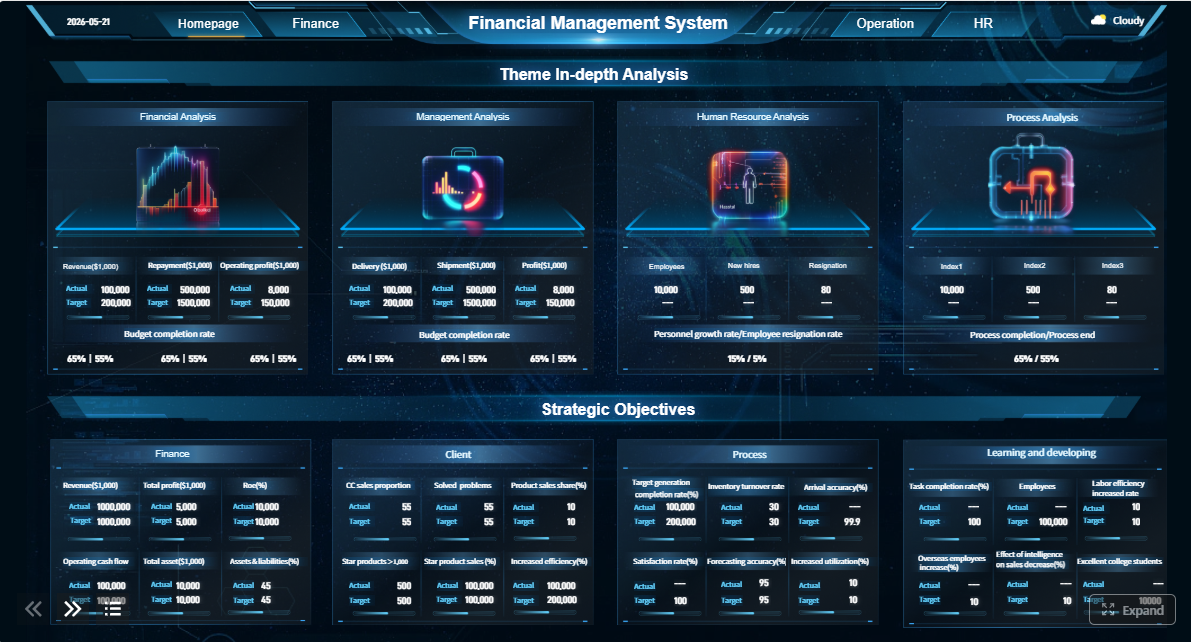
Click To Try The Dashboard
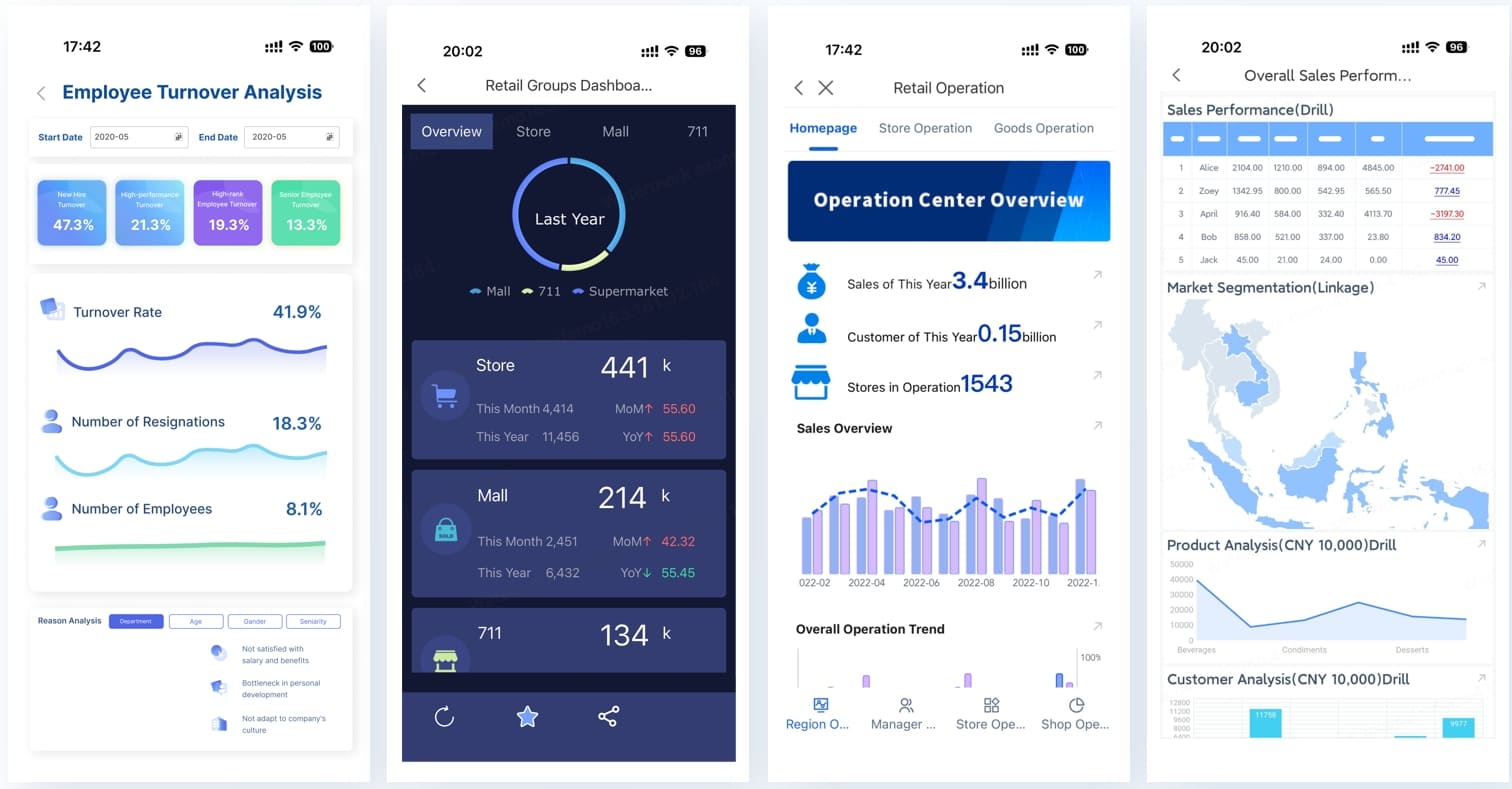
All reports in this article are built with FineReport
What Agile Financial Reporting Means for Modern Finance Managers
Agile financial reporting means delivering dependable financial insight in shorter, more iterative cycles instead of waiting for one large reporting event at the end of the month. For finance managers, that applies directly to month-end close, management reporting, budget-vs-actual reviews, variance analysis, cash visibility, and executive decision support.
In practice, agile financial reporting is not about sacrificing control. It is about improving speed with governance. Finance teams standardize KPIs, automate recurring report preparation, use trusted dashboards to monitor progress, and add AI briefings to explain what changed and what needs follow-up.
Traditional reporting cycles often look like this:
data is pulled from multiple systems
files are reconciled manually
report packs are updated in spreadsheets or slides
leaders ask follow-up questions
analysts redo summaries and commentary
adjustments arrive late
approvals slip
An agile model shortens that cycle. Instead of waiting until the final close window, teams work through interim dashboards, periodic reviews, and standardized variance logic. That makes the final month-end package easier to complete and easier to trust.
Trusted dashboards and AI briefings are becoming essential because finance leaders need more than raw numbers. They need:
a single view of core financial metrics
clear definitions behind every KPI
timely alerts when values move outside expected ranges
concise management narratives for executives
auditable follow-up on unresolved issues
This is where the combination of FineReport as the reporting foundation and Dora as the enterprise Data Agent layer becomes practical. FineReport organizes formatted reports, management reports, operational cockpits, and workflow-based reporting. Dora then helps finance teams consume those trusted assets through natural-language query, structured summaries, scheduled briefings, alerts, and follow-up.
Most month-end delays start before the report is ever drafted. Finance data usually lives across ERP systems, budgeting tools, operational systems, shared files, and manual adjustment sheets. That creates three common problems:
disconnected systems with different update timing
version-control confusion across files and email threads
manual handoffs that slow validation and reconciliation
When finance managers cannot see which source is current, they lose time confirming data instead of analyzing it. Even small mismatches create downstream rework because every dependent report and narrative must be checked again.
In an agile financial reporting model, the goal is to reduce this friction by building governed dashboards on reliable sources with clear refresh schedules and auditability.
Review cycles that create avoidable rework
Another hidden problem is the review loop itself. Many finance teams complete most of the report pack before stakeholders have aligned on definitions, owners, or thresholds. That creates late-stage surprises such as:
unexpected journal adjustments
last-minute requests for new breakdowns
debates over KPI definitions
unclear accountability for variance explanations
repeated formatting and presentation changes
The result is not just a slower close. It is a more fragile process.
Finance managers need review cycles that catch issues earlier. Shorter interim reviews help teams validate assumptions, identify anomalies, and resolve business questions before the final deadline.
Limited visibility for finance leaders
Delayed reporting affects more than operational efficiency. It directly impacts decision quality.
If finance leaders do not receive timely, trusted reporting, they struggle to:
refine forecasts
assess margin changes
plan cash more confidently
identify cost overruns early
explain performance clearly to executives
That reduces executive confidence and pushes finance into a reactive role. Agile financial reporting improves visibility by pairing trusted dashboards with timely AI-generated briefings that summarize what matters without waiting for manual commentary.
7 Ways to Speed Up Month-End With Trusted Dashboards and AI Briefings
1. Standardize core metrics and reporting definitions
Agile financial reporting starts with a shared KPI glossary. If revenue, gross margin, operating expense variance, working capital, or cash conversion are calculated differently across teams, speed will always create confusion.
Report Element: Revenue by entity, product, or region Definition: Recognized revenue based on approved accounting logic and mapped source systems. Business value: Supports performance tracking, executive reporting, and forecast updates. AI use:Dora can explain revenue movement by segment, summarize key drivers, and include it in a scheduled management briefing.
Report Element: Gross margin variance Definition: Difference between actual and planned or prior-period gross margin, with drill-down to product, customer, or business unit. Business value: Helps finance managers identify pricing, mix, or cost pressure early. AI use:Dora can highlight abnormal changes, explain major contributors, and push exceptions to the responsible owner.
Report Element: Operating expense trend Definition: Period-over-period or budget-vs-actual movement in controllable and non-controllable expense lines. Business value: Improves cost control and accountability. AI use:Dora can generate structured report summaries for expense changes and flag departments with overdue follow-up.
Report Element: Cash position and working capital indicators Definition: Current cash balance, receivable aging, payable timing, and inventory-related cash metrics where relevant. Business value: Supports cash planning and executive confidence. AI use:Dora can create a concise cash briefing, identify unusual movements, and support morning check-ins for finance leaders.
Report Element: Month-end close status tracker Definition: Progress status of reconciliations, adjustments, reviews, and approvals across entities or teams. Business value: Prevents hidden bottlenecks and improves accountability. AI use:Dora can summarize overdue tasks, surface blockers, and deliver periodic close-status updates.
For IT and finance systems teams, this standardization work is also the base for governed AI. Dora performs best when KPI definitions, business terms, report templates, and semantic rules are clear and reusable.
2. Build dashboards on governed, reliable data sources
A dashboard only accelerates month-end if people trust it. Finance managers should prioritize governed data pipelines over visual complexity.
That means dashboards should support:
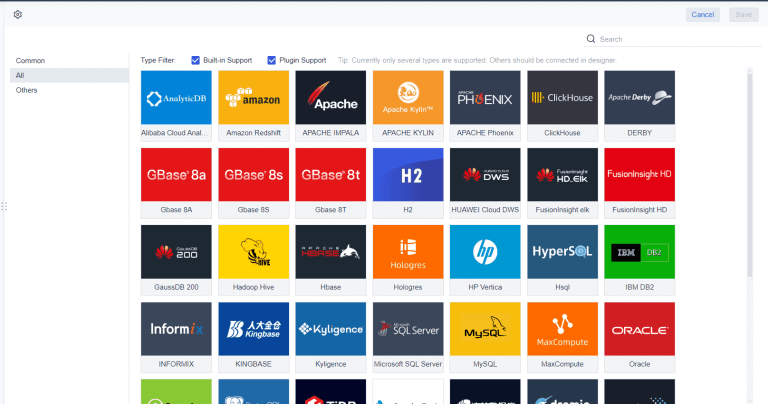
approved source connections
controlled refresh schedules
clear data lineage
permission-based access
reconciliation status indicators
audit trails for adjustments and updates
FineReport is designed for this reporting foundation. It helps teams build formatted financial reports, management dashboards, close-status cockpits, and reporting workflows that finance can govern with precision.
For finance users, the value is straightforward: less time asking whether the dashboard is correct, and more time acting on what it says.
For IT teams, this is the shift that matters in the AI era. Instead of manually fulfilling every reporting request, IT can focus on data integration, semantic setup, permission governance, template standardization, and reusable agent Skills that make AI execution more controlled and auditable.
3. Automate recurring data collection and variance analysis
Many month-end tasks are still repetitive:
collecting files from multiple owners
updating standard schedules
checking expected vs actual values
writing first-pass variance comments
identifying outliers that need explanation
These are ideal areas for workflow automation.
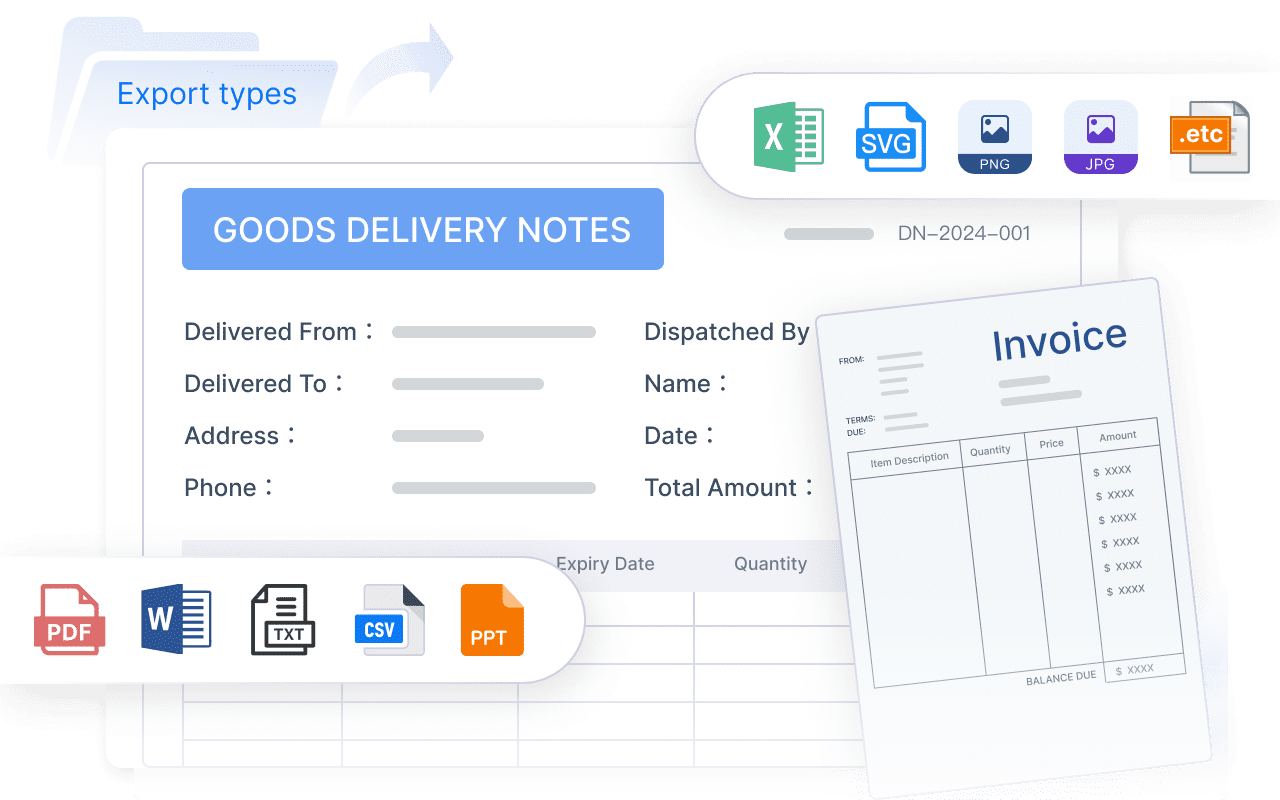
FineReport can support recurring reporting automation, formatted output, and operational cockpit views that reduce spreadsheet-based assembly work. Once the reporting structure is standardized, Dora adds the next layer: helping users query those trusted outputs, summarize variances, and follow up on unresolved items.
For example, a finance manager should not need to manually compare every cost center each month to find what changed. A governed AI workflow can retrieve the approved report, interpret KPI definitions, identify significant variance sections, and produce a structured summary for review.
That does not eliminate finance review. It reduces low-value preparation work so finance can focus on judgment and decision support.
4. Use AI briefings to summarize changes and highlight risks
This is where agile financial reporting becomes more practical for busy finance managers.
Trusted dashboards show the numbers. AI briefings explain the numbers in context. Instead of forcing managers to scan many tabs or ask analysts for commentary, Dora can turn FineReport outputs into structured report summaries, chart explanations, and management narratives.
Examples of high-value finance briefings include:
daily close-status summaries during month-end
executive briefings on revenue, margin, and expense movement
variance-focused reports for FP&A review
cash and liquidity summaries for finance leadership
risk alerts for threshold breaches or delayed reconciliations
This is not a generic chatbot use case. Dora acts as an enterprise Data Agent on top of governed report assets. It works with trusted reports, templates, metrics, permissions, and semantic rules, making the workflow more controllable than raw prompt-only AI use.
For executives, this is the ROI point: Dora is not an AI experiment. It is a landed digital employee for recurring reporting work such as monthly management reports, finance risk summaries, close-status alerts, and owner follow-up.
5. Run shorter reporting cycles with interim reviews
One of the simplest ways to speed up month-end is to stop treating the final close window as the only review moment.
Finance managers can run shorter cycles by introducing:
weekly or mid-month dashboard reviews
pre-close variance checks
interim close-status briefings
early owner confirmation for high-risk accounts
scheduled exception pushes for unresolved items
This approach helps teams catch issues when they are still manageable. It also reduces the common problem of discovering definition conflicts or unexplained movements too late.
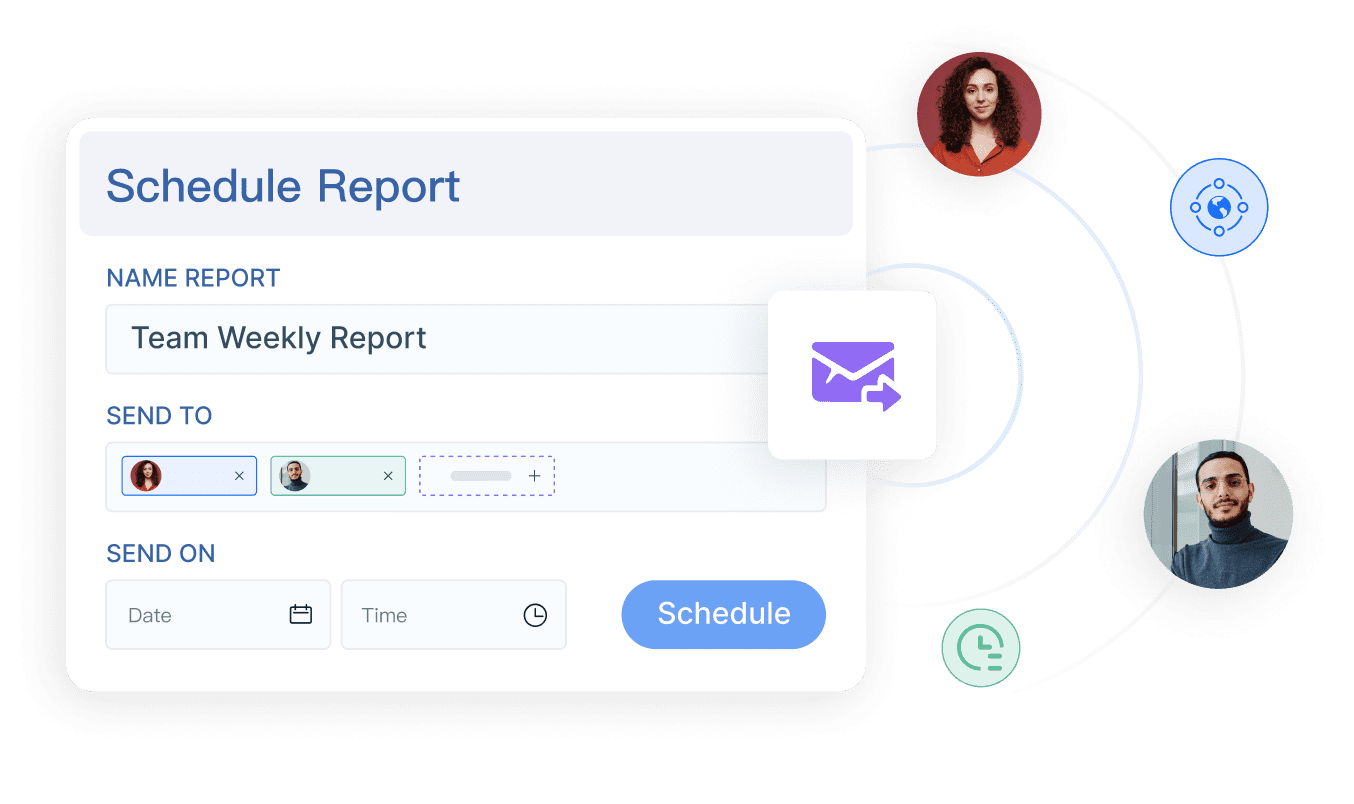
Dora supports this model well because it can produce scheduled summaries and push timely updates to stakeholders. A Daily Briefing Secretarydigital employee can prepare recurring close-status updates, while a Risk Alert Officer can monitor threshold-based exceptions that need attention before month-end pressure peaks.
6. Align finance, FP&A, and operations around one reporting cadence
Month-end reporting often slows down because finance is waiting on business context from FP&A or operations, while those teams are waiting on finance-confirmed numbers. Agile financial reporting works better when everyone follows the same reporting cadence.
Alignment usually requires:
common reporting dates
clear ownership of variance explanations
shared KPI definitions
standard escalation paths
one trusted dashboard or report package for review
This matters especially for metrics such as inventory impact, freight costs, labor efficiency, sales performance, and budget deviations that cross departmental boundaries.
With FineReport, teams can access the same governed report framework. With Dora, they can consume that framework through chat-based questions, structured summaries, and exception pushes that reduce the need for back-and-forth email chains.
For business users, the advantage is lower operating friction. They get timely report summaries, chart-based answers, scheduled briefings, and exception notifications without searching through report folders or waiting for analysts to manually prepare every explanation.
7. Track reporting performance and refine the process each close
Agile financial reporting is not a one-time redesign. It is a continuous improvement discipline.
Finance managers should track performance indicators such as:
close cycle time
time to produce executive report pack
number of late adjustments
rework caused by definition changes
number of manual spreadsheet steps
dashboard usage by role
number of unresolved exceptions at final review
These metrics help teams see whether month-end is truly becoming faster and more reliable.
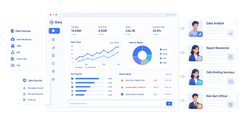
Dora can also help here by producing periodic summaries of reporting workflow performance. A Data Analystdigital employee can answer questions such as which entities consistently submit late, which dashboards are most used during close, or which exception types cause the most rework.
Agile financial reporting becomes much more scalable when finance teams improve not only report production, but also report consumption. In many organizations, reports already exist. The real bottleneck is that managers still need analysts to explain what changed, which risks matter, and who needs to act.
Risk Alert Officer for exception monitoring, threshold breaches, and owner notification
A concrete finance scenario might start with a finance manager asking:
“Summarize this month’s finance dashboard, highlight abnormal gross margin and operating expense changes, and list the business units that need follow-up before executive review.”
Understand KPI definitions, report templates, filters, and semantic rules.
Because FineReport provides the governed reporting foundation, Dora can interpret finance terms consistently instead of guessing at metric meaning.
Generate a structured report summary through chat. Dora produces a concise narrative that explains major changes, links commentary to charts or report sections, and keeps the answer tied to approved report logic.
Detect exceptions and threshold breaches.
If margin falls beyond an approved threshold, expense variance exceeds tolerance, or a close task is overdue, Dora can highlight the exception and classify it for follow-up.
Push summaries, alerts, or suggested actions to the right people.
Instead of waiting for a finance analyst to send manual updates, Dora can deliver scheduled briefings or targeted exception pushes to finance managers, FP&A leads, or department owners.
Produce follow-up records and recurring review summaries. Dora can support weekly or daily reporting rhythms by maintaining a consistent summary pattern for review meetings and close-status checkpoints.
This matters because enterprise finance does not need a novelty AI layer. It needs a governed AI workflow that respects permissions, uses trusted semantics, and works with approved reporting assets.
FineReport provides the trusted reporting and semantic foundation through formatted reports, dashboards, workflows, KPI logic, and permissions.
Dora turns that foundation into a scenario-specific AI assistant or AI digital employee that helps users query, summarize, alert, push, and follow up.
Compared with raw prompt-only agents, this approach is better suited to enterprise reporting because it relies on governed assets and Skills-based execution. That improves landing capability, reduces token waste, supports faster execution paths, and makes workflows more stable and auditable.
close-status cockpit for controllers and finance managers
This gives the project a clear business case and measurable adoption path. FineReport can standardize the report structure and dashboard presentation, while Dora can provide AI briefings and natural-language access for the same package.
A focused pilot is also the best way to prove that the AI layer is useful in real work, not just in demos.
Define controls that protect accuracy and accountability
Speed only works if controls remain clear. Finance teams should document:
approval rules for published reports
KPI definitions and glossary ownership
exception thresholds and escalation rules
variance commentary standards
review checkpoints for AI-generated narratives
access permissions by role and entity
This is essential because Dora should operate within enterprise governance, not outside it. AI outputs should respect FineReport access boundaries and use approved report templates and business rules.
Choose systems that support flexibility and scale
Finance managers should look for platforms that support:
integration with existing finance and operational data sources
formatted reporting and dashboard building
workflow automation
semantic consistency
auditability and permissions
AI assistant capabilities for report query, summary, push, and follow-up
FineReport + Dora is well suited to this path because it connects the reporting layer with the AI execution layer. FineReport handles the trusted report foundation. Dora handles the Agentic BI experience for report consumption and scenario execution.
Common Pitfalls to Avoid When Modernizing Month-End Reporting
Modernization efforts often fail not because the idea is wrong, but because teams move too quickly without fixing the foundation first.
Here are the most common mistakes:
Moving faster without improving data governance
Faster reporting on unreliable data only spreads confusion faster. Trusted dashboards require source control, reconciliation discipline, and semantic consistency.
Overloading dashboards with too many metrics and too little context
Finance dashboards should support decisions, not overwhelm readers. Focus on the metrics, trends, thresholds, and exceptions that actually matter.
Treating AI output as final without finance review and validation Dora can generate structured report summaries and management narratives, but finance should review outputs before formal distribution, especially early in rollout.
Ignoring change management, training, and stakeholder adoption
Even strong dashboards fail when users do not trust definitions or know how to use the workflow. Training, ownership, and feedback loops are part of the implementation.
Automating every report too early
Start with repeatable, high-value reporting scenarios. Build confidence with one or two packages before expanding AI Skills and reporting coverage.
Actionable Best Practices
1. Standardize report templates, KPI definitions, and business terms first
AI performance in finance depends on governance. Before expanding automation, align finance, FP&A, and business stakeholders on a shared glossary, template set, and variance rules.
2. Build a semantic layer inside the reporting workflow
Do not rely on users to remember what every metric means. FineReport should hold the trusted report logic, while Dora should reference that governed semantic foundation during chat-based queries and summaries.
3. Treat data quality as part of the AI implementation
If source data is delayed, duplicated, or inconsistent, AI will only summarize the confusion. Reconciliation discipline, refresh timing, and ownership should be part of the rollout plan.
4. Start with recurring, high-value month-end reports
The best first use cases are reports that repeat every close cycle and consume significant analyst time, such as executive management packs, variance summaries, close-status reporting, and cash briefings.
5. Use human review for AI-generated narratives and expand gradually
Start with AI-assisted first drafts, scheduled briefings, and exception summaries. Then expand Dora Skills once finance teams trust the workflow, permissions, and output consistency.
Building this manually is complex. FineReport helps teams standardize trusted reports, operational cockpits, templates, and reporting workflows. Dora turns those assets into an AI assistant that can answer report questions in chat, generate structured summaries, push scheduled briefings, monitor exceptions, and follow up with responsible owners.
For finance managers, that means a more practical path to agile financial reporting:
trusted month-end dashboards instead of fragmented spreadsheets
chat-based report consumption instead of waiting for manual explanation
scheduled AI briefings instead of last-minute narrative assembly
exception alerts and owner follow-up instead of passive reporting
FineReport + Dora is not only a reporting upgrade; it is a practical fourth-generation Agentic BI path. FineReport provides governed reports and operational cockpits. Dora provides the AI assistant layer for scenario execution, with more controlled Skills, lower token waste, faster execution paths, and more stable workflows than prompt-only agents.
Get Ready-to-Use Dashboard Templates in Fine Gallery
The strongest Dora pitch is scenario + product + service: FineReport provides the trusted reporting foundation, Dora provides the AI digital employee, and implementation service connects data, governance, semantic setup, Skills, report templates, permissions, and rollout.
Conclusion: Build a Faster and More Trusted Month-End Process
Agile financial reporting helps finance managers shorten the distance between close activity and decision-making. The real goal is not just faster output. It is a month-end process that is more consistent, more trusted, and easier to act on.
The seven improvements in this guide all reinforce that outcome:
standardize metrics
build on governed data
automate recurring reporting work
use AI briefings for explanation and risk visibility
shorten review cycles
align teams on one cadence
improve the process every close
With FineReport + Dora, finance teams can move from manually preparing every report to an enterprise-ready model where trusted dashboards support the numbers and AI digital employees help summarize, alert, push, and follow up.
For most organizations, the right next step is simple: begin with one high-impact month-end reporting package, prove the workflow, and expand based on measurable gains in cycle time, rework reduction, and executive trust.
FAQs
Agile financial reporting is a faster, more iterative approach to month-end that delivers trusted financial insight through standardized metrics, governed dashboards, and shorter review cycles. It helps finance teams reduce rework while keeping control and auditability intact.
Trusted dashboards give teams a single view of current metrics, exception status, and report readiness from reliable data sources. This reduces time spent chasing files, reconciling versions, and answering repeated follow-up questions.
Yes, if the AI is grounded in approved report assets and defined KPI logic. It can summarize variances, highlight exceptions, and support executive reporting while finance retains control over source data and definitions.
Delays often come from disconnected systems, manual reconciliations, version confusion, and late stakeholder requests. These issues create repeated validation work and slow down both report preparation and review.
FineReport provides the governed reporting foundation with dashboards, formatted reports, and workflow-based assets, while Dora helps users access summaries, scheduled briefings, and follow-up insights in natural language. Together they turn month-end reporting into a more responsive decision-support process.
Product Trial
FineReport
Pixel-perfect reports · Interactive dashboards · Easy data entry · Digital twins